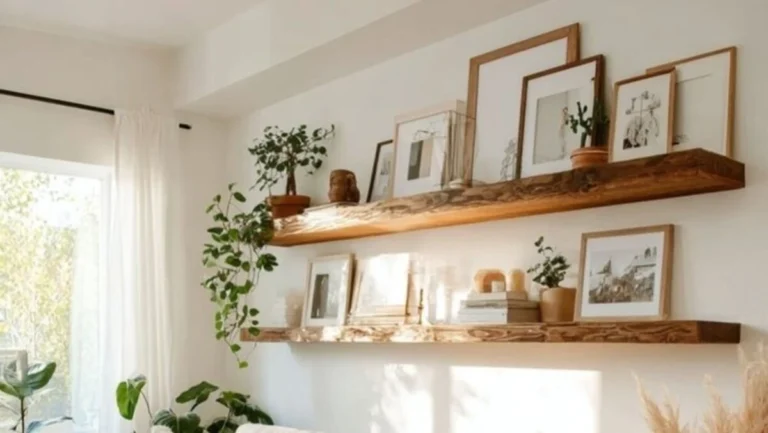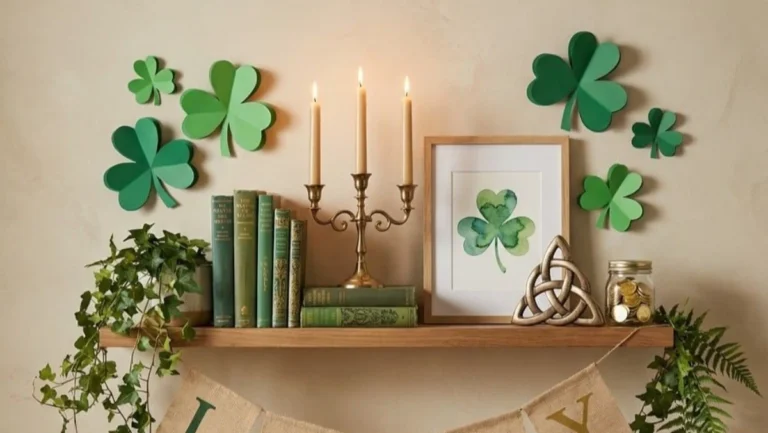
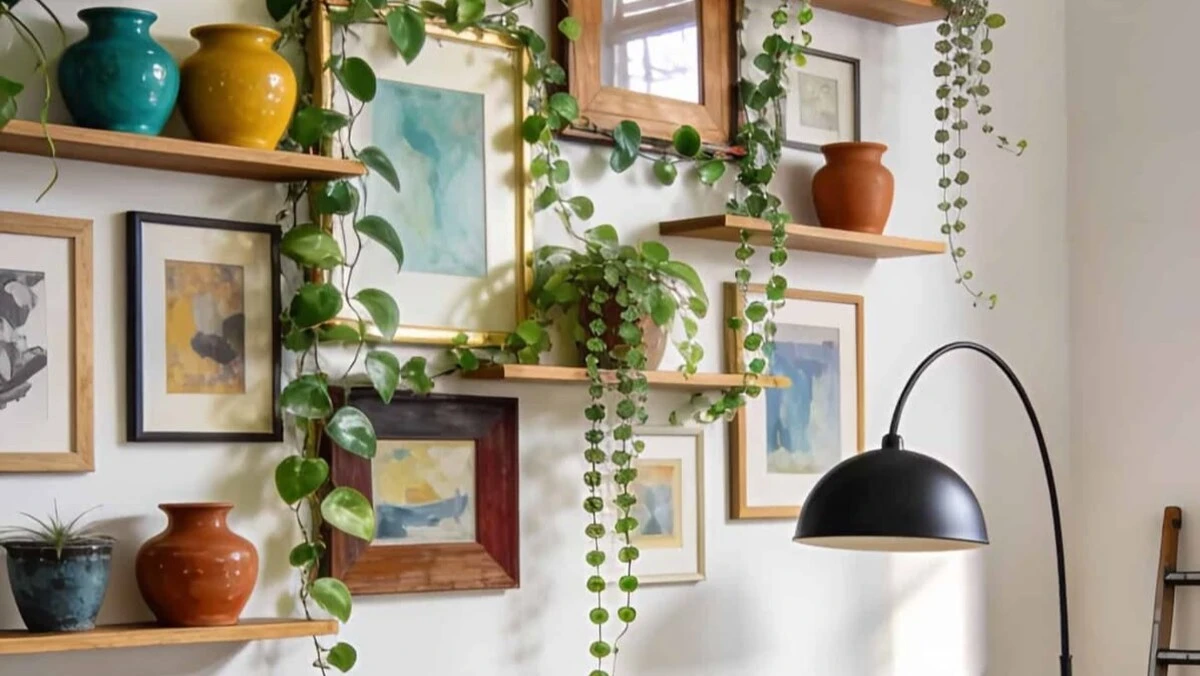
Floating shelves are a stylish and practical way to display your favorite decor while saving floor space. They’re sleek, modern, and versatile, making them a favorite in living rooms, bedrooms, kitchens, and even bathrooms. But decorating a floating shelf isn’t just about placing items on it—it’s about creating a visually balanced and eye-catching display that enhances your room’s overall aesthetic. Here’s a guide to help you decorate your floating shelf like a pro.
1. Choose the Right Shelf and Location
Before you start decorating, make sure your shelf suits your space. Floating shelves come in various sizes, materials, and colors, so select one that complements your room’s style.
Placement matters: Eye-level shelves are perfect for living rooms and bedrooms, while higher shelves work for kitchens or hallways. Think about symmetry—either align your shelf with other elements in the room or create an intentional asymmetrical look for a modern feel.
Also, consider function vs. style. If your shelf is mostly decorative, you can prioritize aesthetics. If it’s functional, like storing books or kitchenware, make sure there’s enough space for both storage and display items.
2. Start with a Base Layer
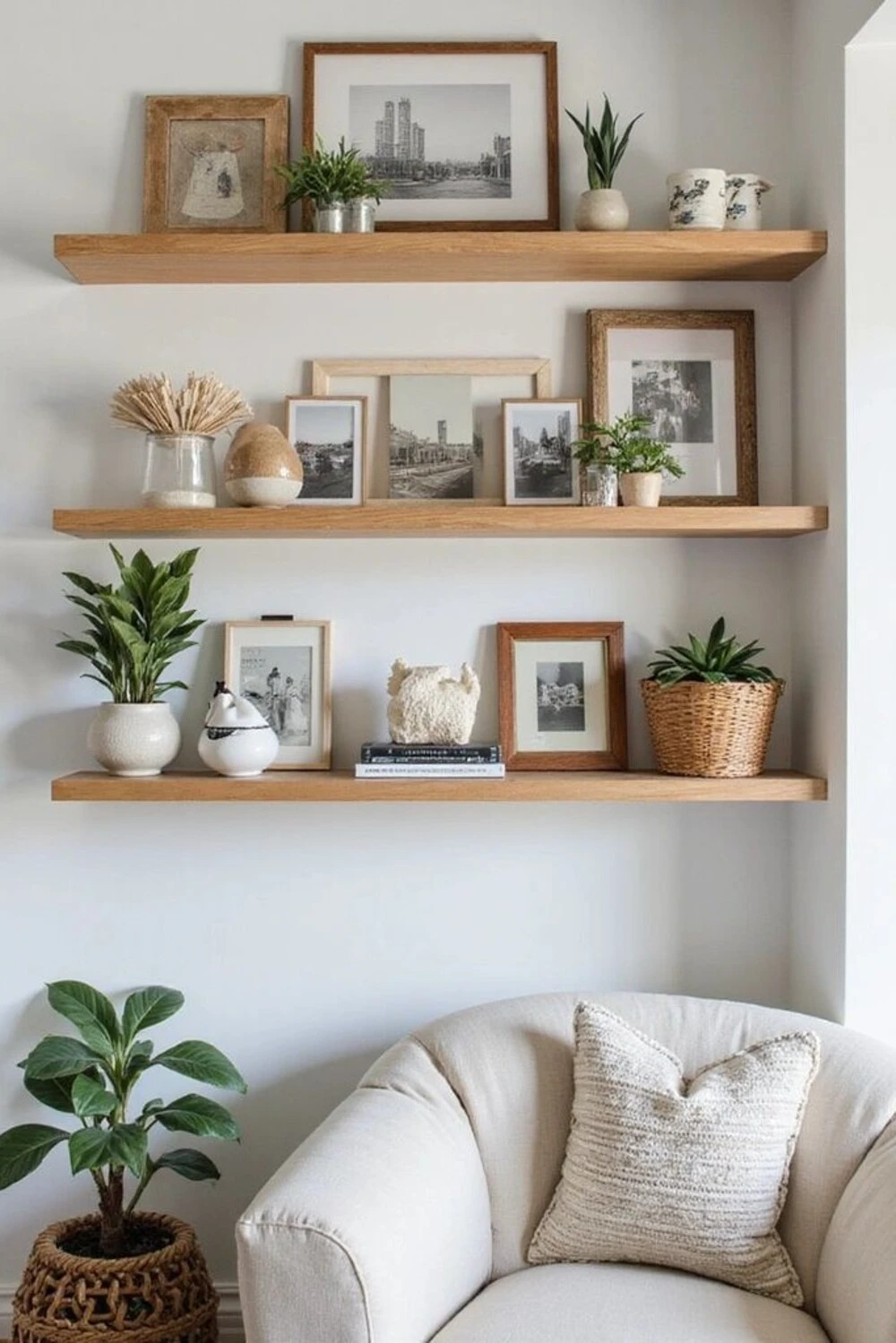
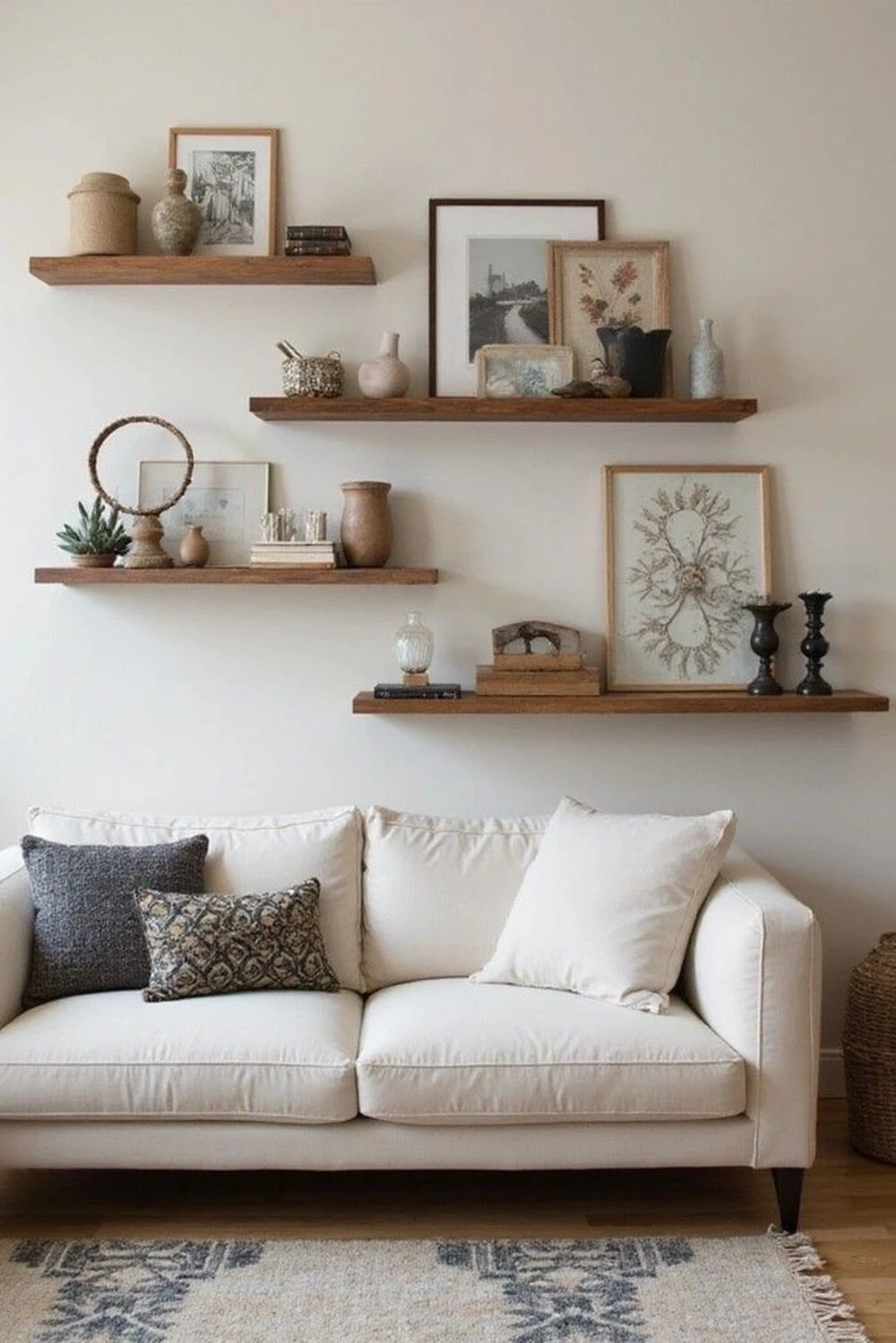
A solid base layer creates a foundation for the rest of your decor. Start with larger items that anchor the shelf visually.
Examples:
- Framed art or photos
- Larger vases or jars
- Horizontally stacked books
This base layer gives your eyes something to rest on and prevents the shelf from looking chaotic.
3. Add Height and Dimension
Variety is key to making your shelf visually interesting. Use objects of varying heights to create dimension.
Tips:
- Place taller items in the back, smaller items in front.
- Mix textures like ceramics, glass, metal, or woven materials.
- Don’t be afraid to layer—stack books, lean art against the wall, and overlap small accessories.
This approach creates depth and makes your shelf look curated, not cluttered.
4. Play with Color and Theme
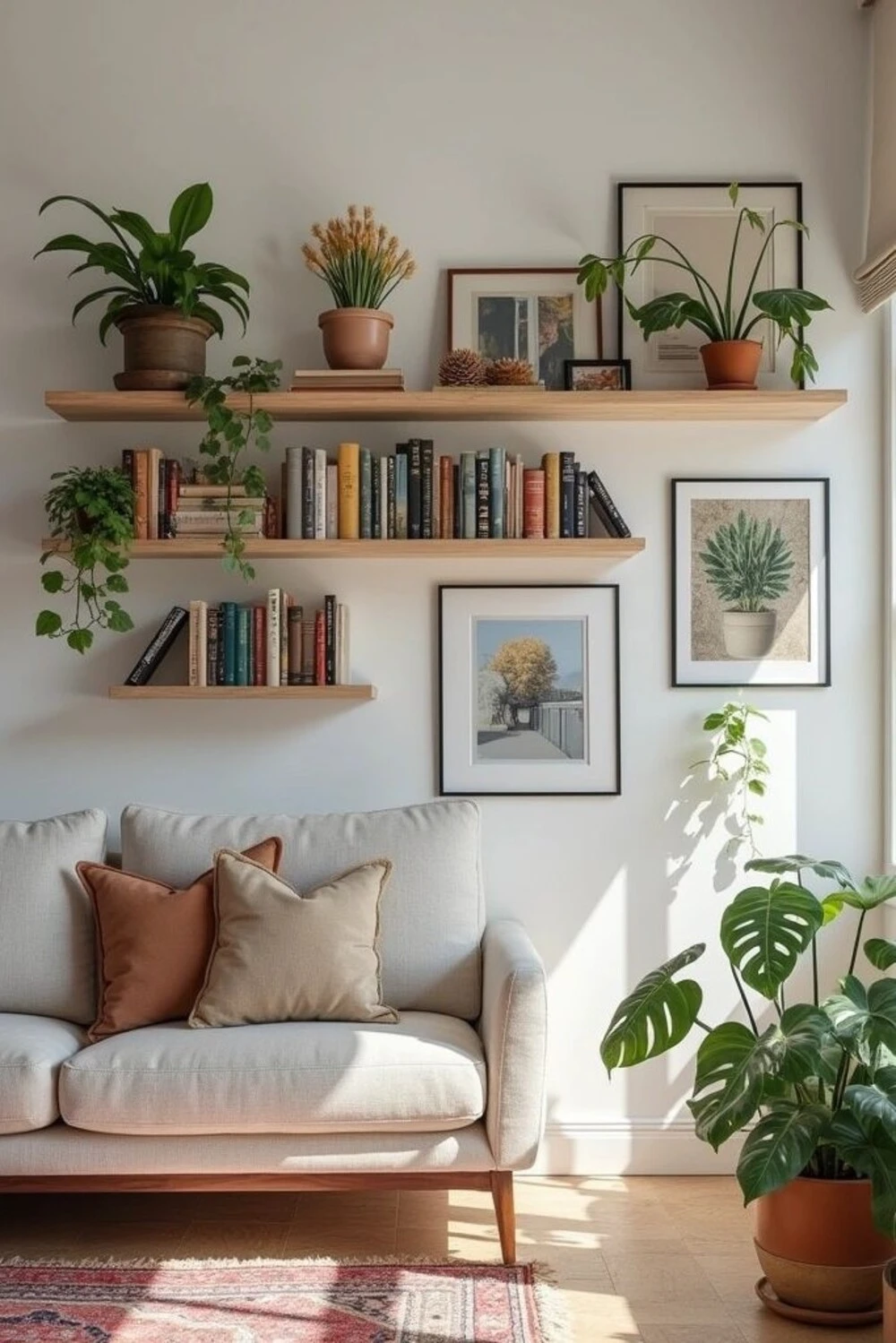
Decide on a cohesive color palette to tie your shelf together. You can use neutral tones for a minimalist look or add pops of color for vibrancy.
Theme ideas:
- Minimalist: clean lines, neutral tones, simple shapes
- Boho: natural textures, earthy colors, eclectic items
- Modern: geometric shapes, bold colors, metallic accents
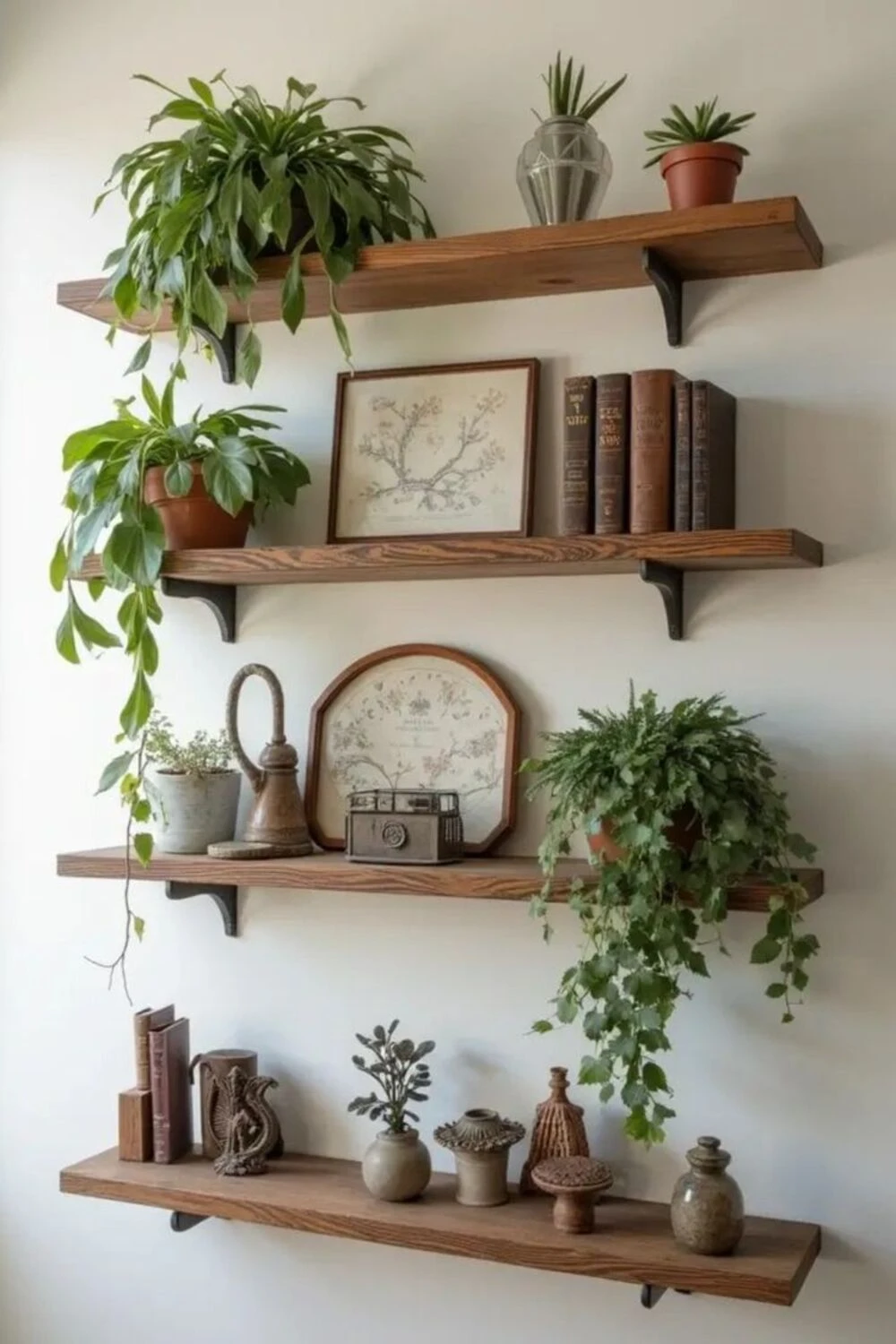
- Rustic: wood finishes, warm tones, vintage items
Sticking to a theme or color scheme makes your shelf look intentional and stylish.
For more shelf decor inspiration, check out 10 Stylish Shelf Decorating Ideas for Your Living Room
5. Mix Function and Decor
Your floating shelf doesn’t have to be purely decorative. Combining functional items with decor makes it practical and aesthetically pleasing.
Ideas:
- Stack books with small decorative objects on top
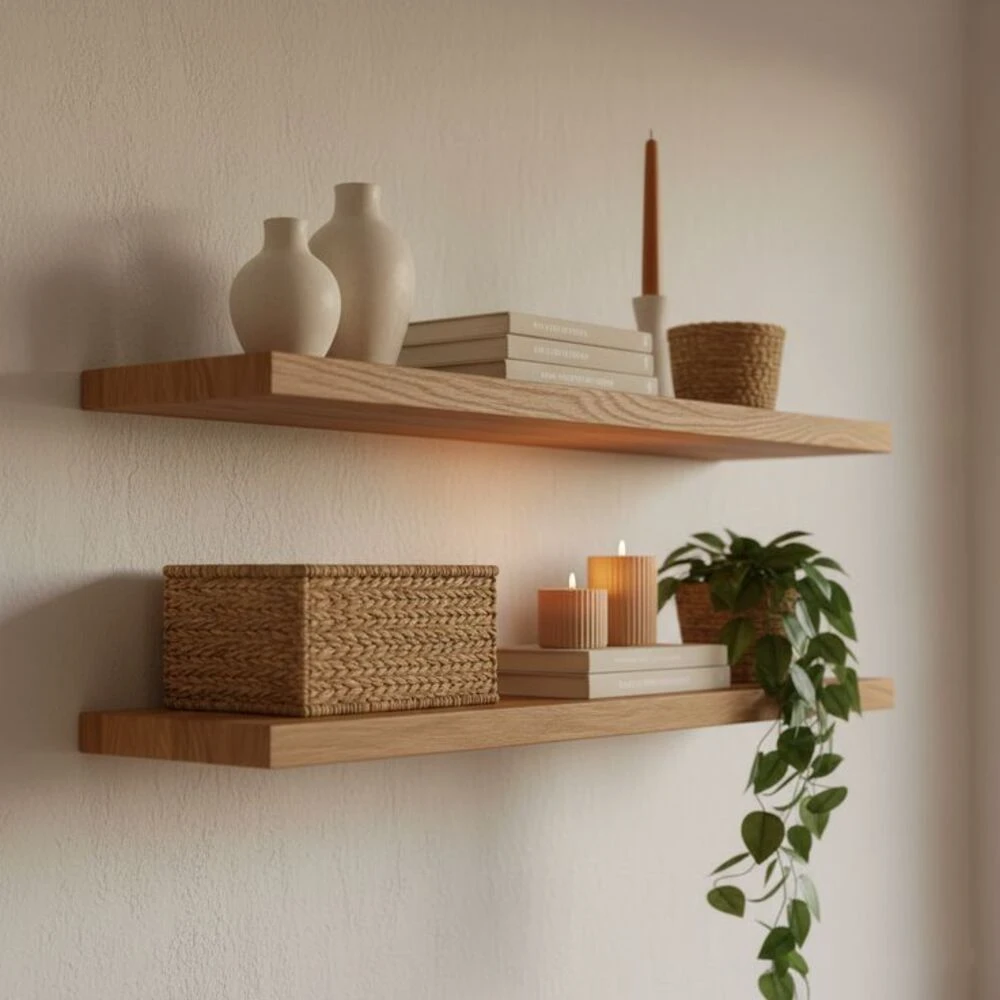
- Display candles or diffusers
- Use small trays to organize keys, jewelry, or office supplies
Rotate seasonal items, like holiday decor or seasonal plants, to keep your shelf fresh and relevant.
6. Use Odd Numbers and Grouping
Odd numbers are visually appealing—they feel balanced and natural. Arrange items in groups of three or five, mixing heights and textures.
Pro tips:
- Avoid lining everything in a straight row; stagger objects for a relaxed look.
- Group similar items together, but vary size and color to prevent monotony.
- Place a standout piece (like a unique sculpture) as a focal point.
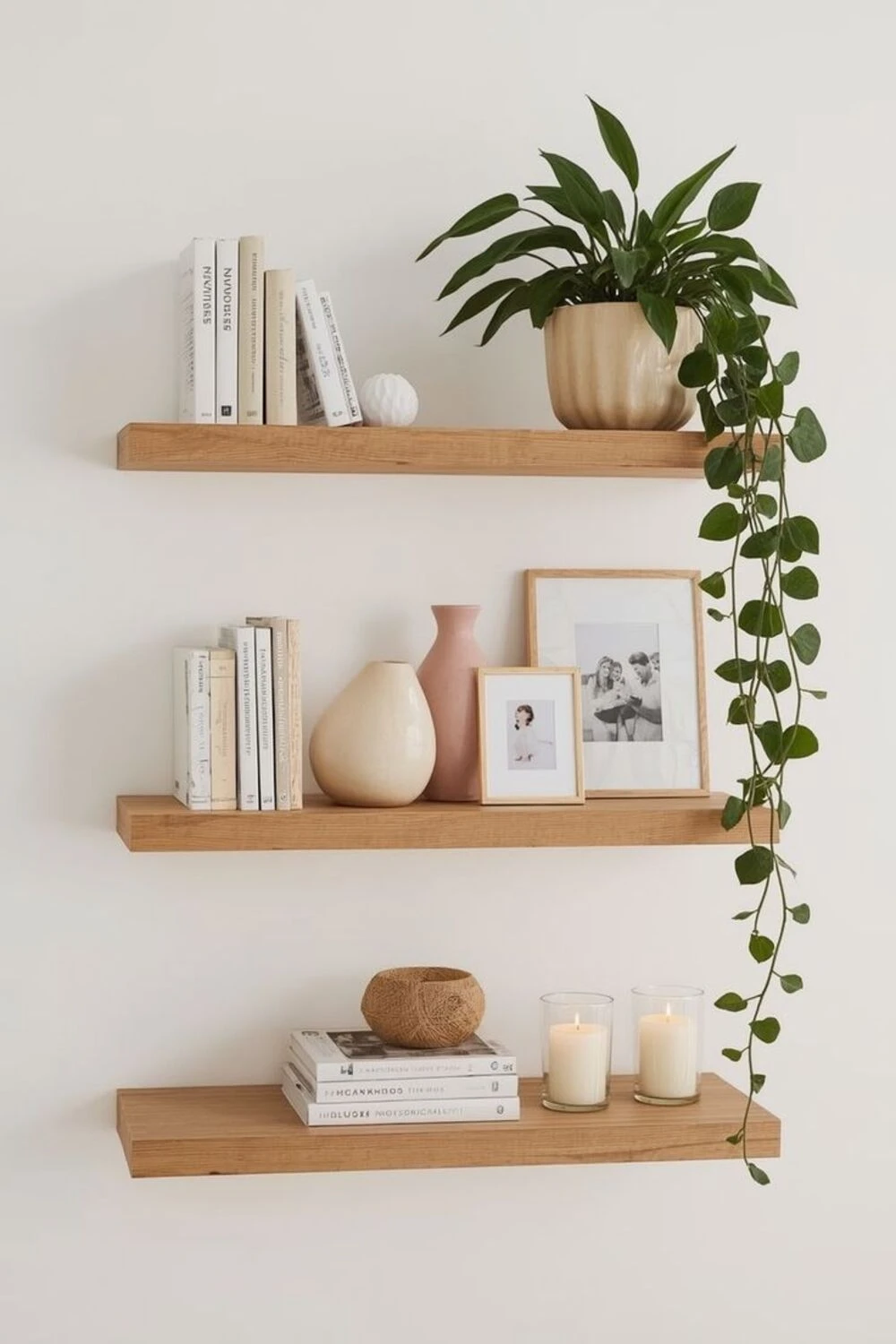
7. Add Greenery and Natural Elements
Plants bring life, texture, and a pop of color to any shelf. They also soften hard lines and make the space feel cozy.
Best options:
- Small potted plants or succulents
- Trailing plants like ivy or string-of-pearls
- Natural elements like driftwood, stones, or shells
Even a single small plant can make your shelf feel vibrant and inviting.
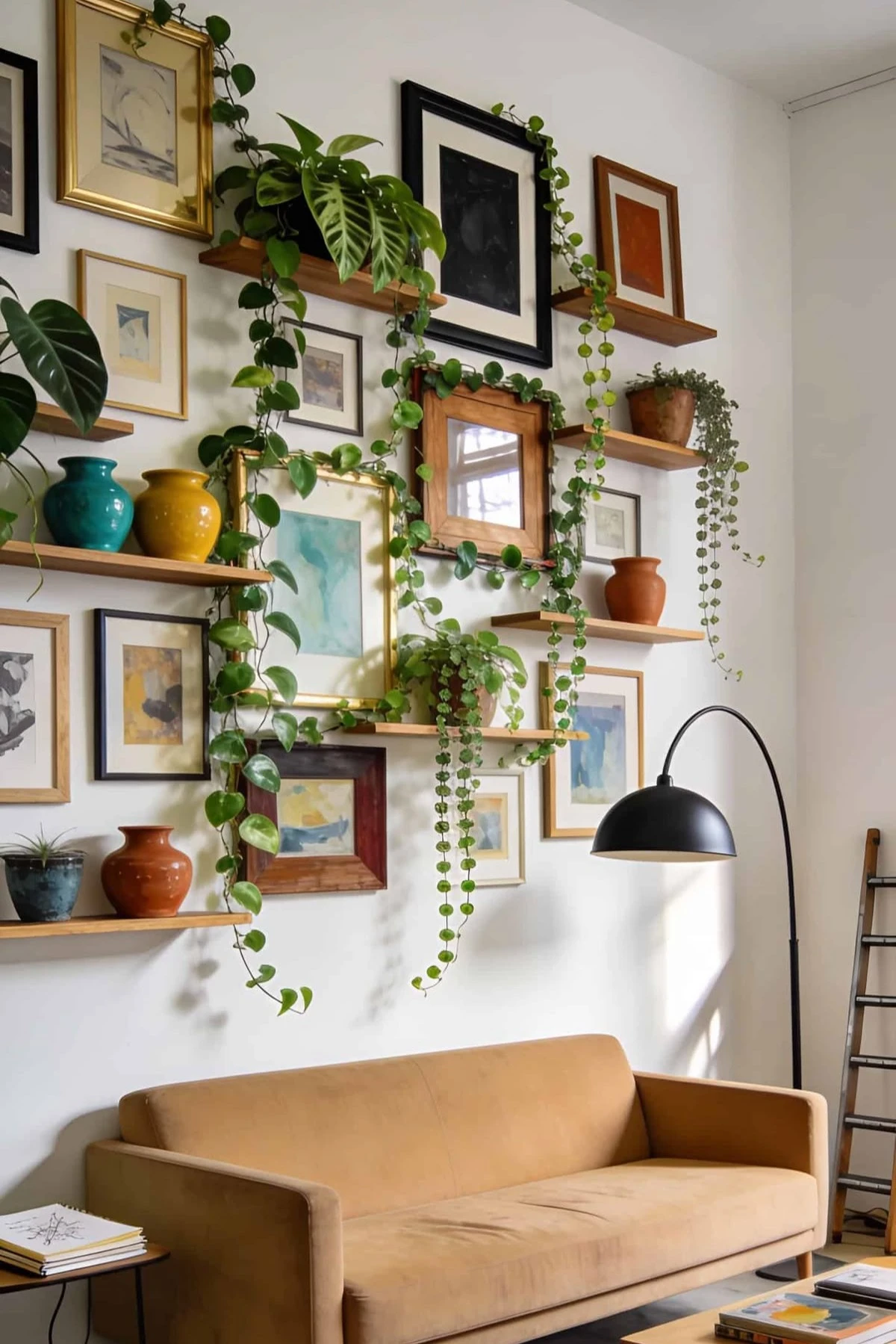
8. Finishing Touches
Add small decorative accents to personalize your shelf. These finishing touches make the space feel uniquely yours.
Ideas:
- Candles, figurines, or mini sculptures
- Framed photos or inspirational quotes
- Seasonal decor that reflects your style
Remember to leave breathing space—don’t overcrowd your shelf. Negative space is just as important as the items you display.
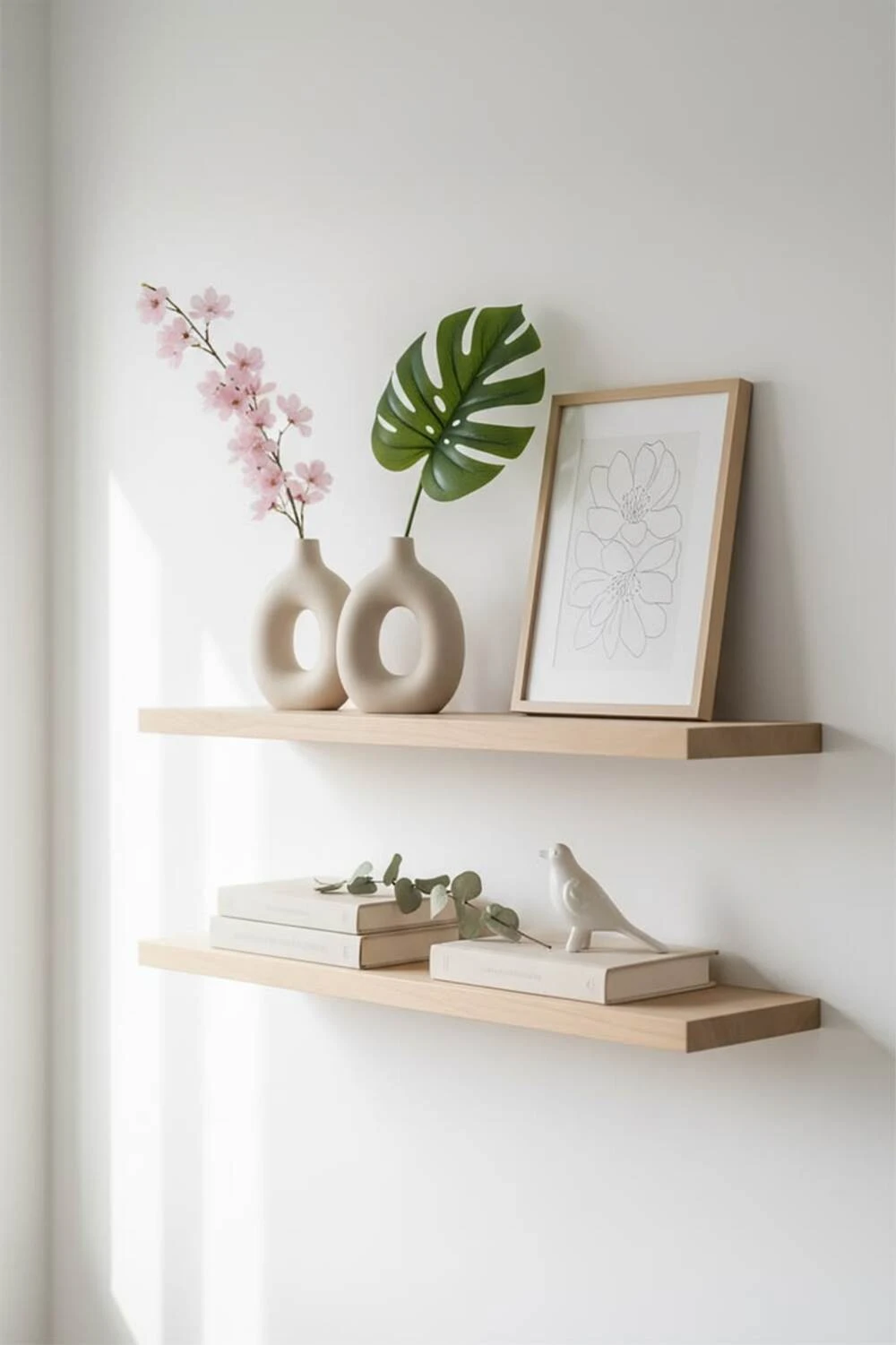
Conclusion
Decorating a floating shelf is all about balance, variety, and personal flair. Start with a base layer, add height and dimension, play with color and texture, and mix functional items with decor. Don’t forget odd numbers, greenery, and small finishing touches to make your shelf feel curated yet effortless.