A small bathroom doesn’t have to feel cramped or limiting. In fact, the right shower design can completely transform how the space looks and functions. Whether you’re renovating a tiny powder room, updating an apartment bathroom, or designing a compact ensuite, thoughtful shower choices can make every square foot work harder.
From frameless glass enclosures that visually expand the room to clever storage solutions that eliminate clutter, there are countless ways to create a shower that’s both practical and beautiful. The key is choosing designs that complement your bathroom’s layout while keeping the overall look open and uncluttered.
If you’re searching for inspiration, these small bathroom shower ideas prove that even the most compact spaces can feel bright, modern, and surprisingly spacious.
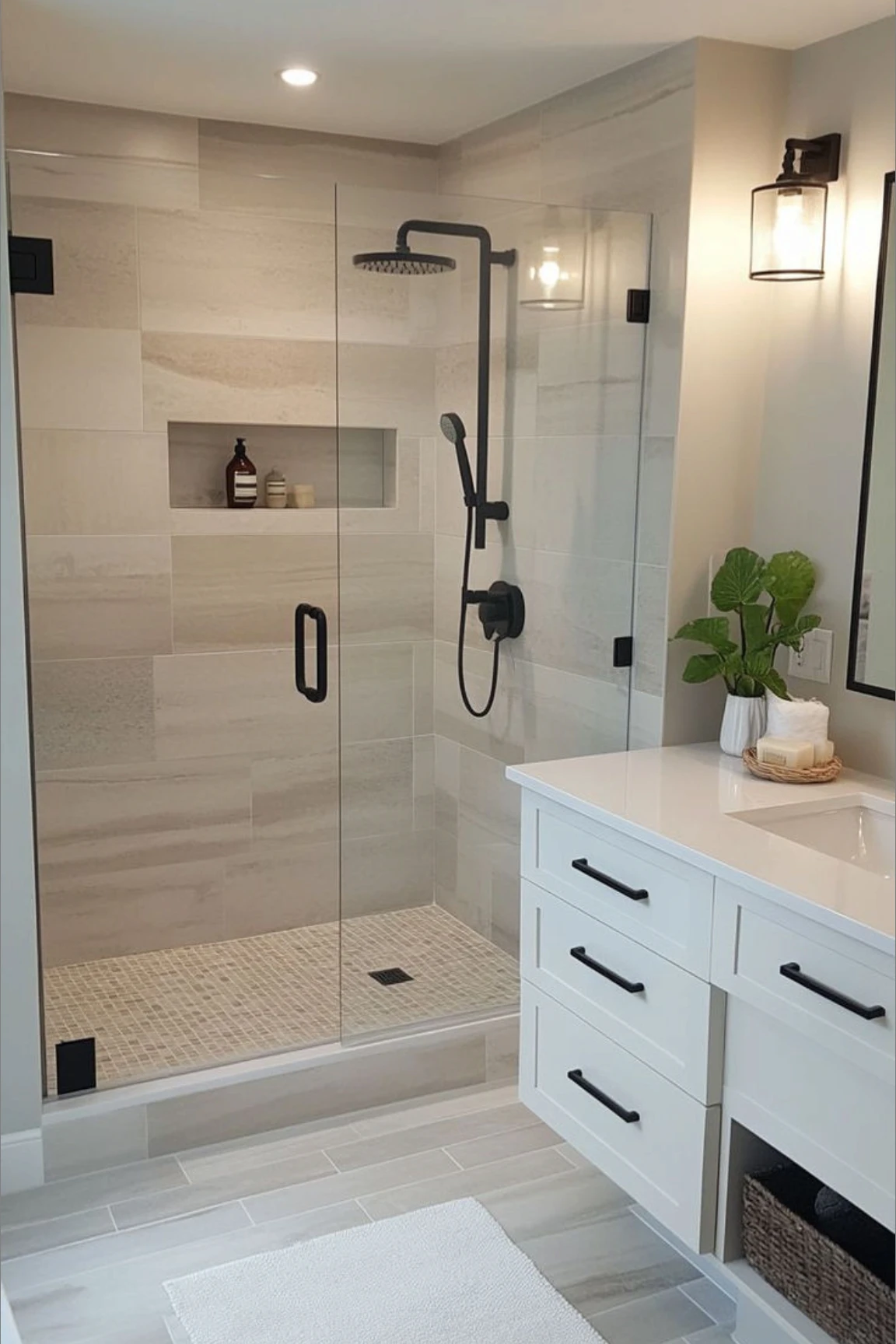
1. Choose a Frameless Glass Walk-In Shower
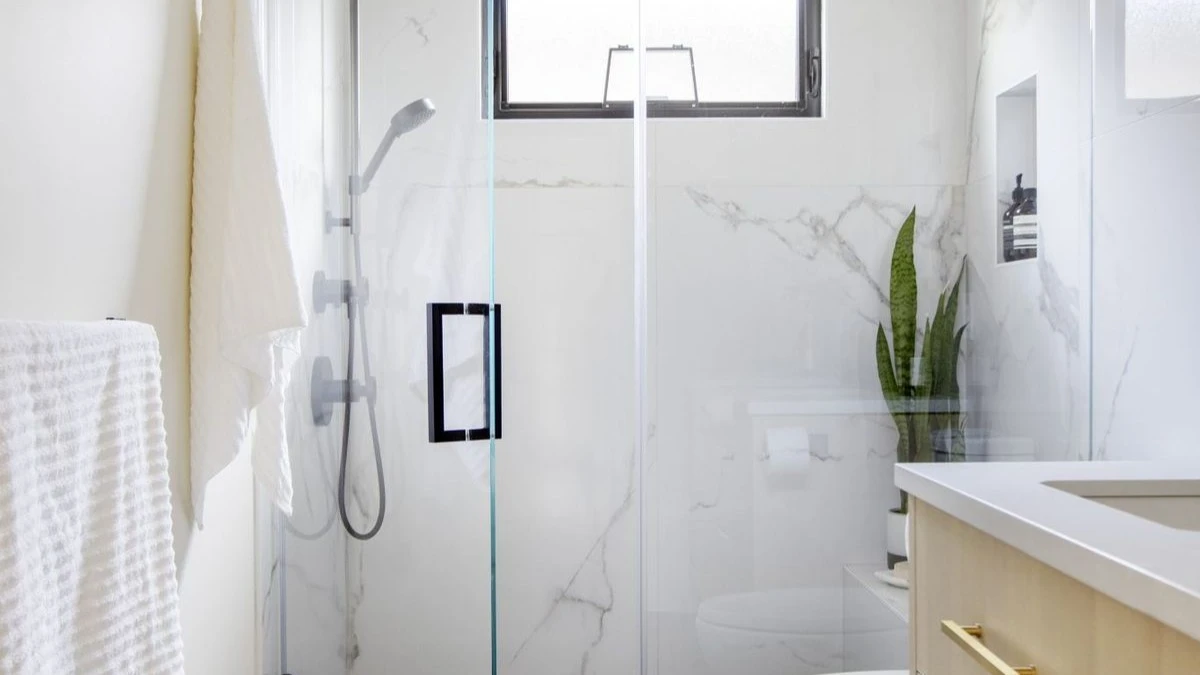
One of the easiest ways to make a small bathroom feel larger is by installing a frameless glass shower. Unlike traditional shower curtains or bulky framed enclosures, clear glass allows your eye to travel across the entire room without interruption.
This seamless look creates the illusion of more space while letting natural and artificial light reach every corner of the bathroom. Frameless showers pair beautifully with minimalist fixtures, floating vanities, and large-format tile for a clean, contemporary finish.
2. Make the Most of a Corner Shower
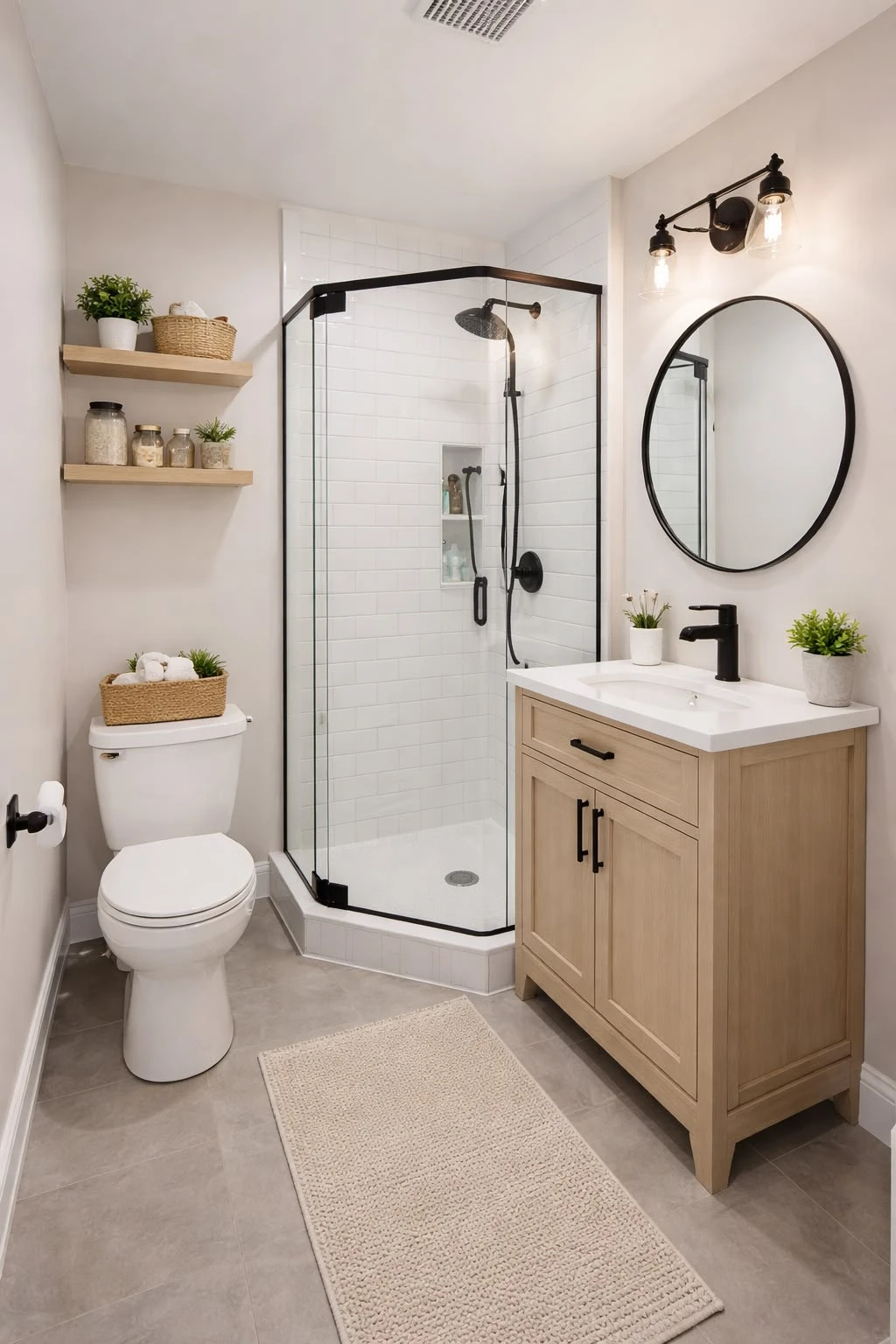
When every inch matters, corners become valuable real estate. A corner shower keeps the center of the bathroom open, creating better traffic flow without sacrificing functionality.
Many homeowners choose curved or neo-angle glass enclosures because they soften sharp corners while providing comfortable shower space. This layout works especially well in square bathrooms where a traditional rectangular shower would consume too much floor area.
Pair the shower with a floating vanity nearby to further enhance the open feeling.
3. Install a Curbless Shower
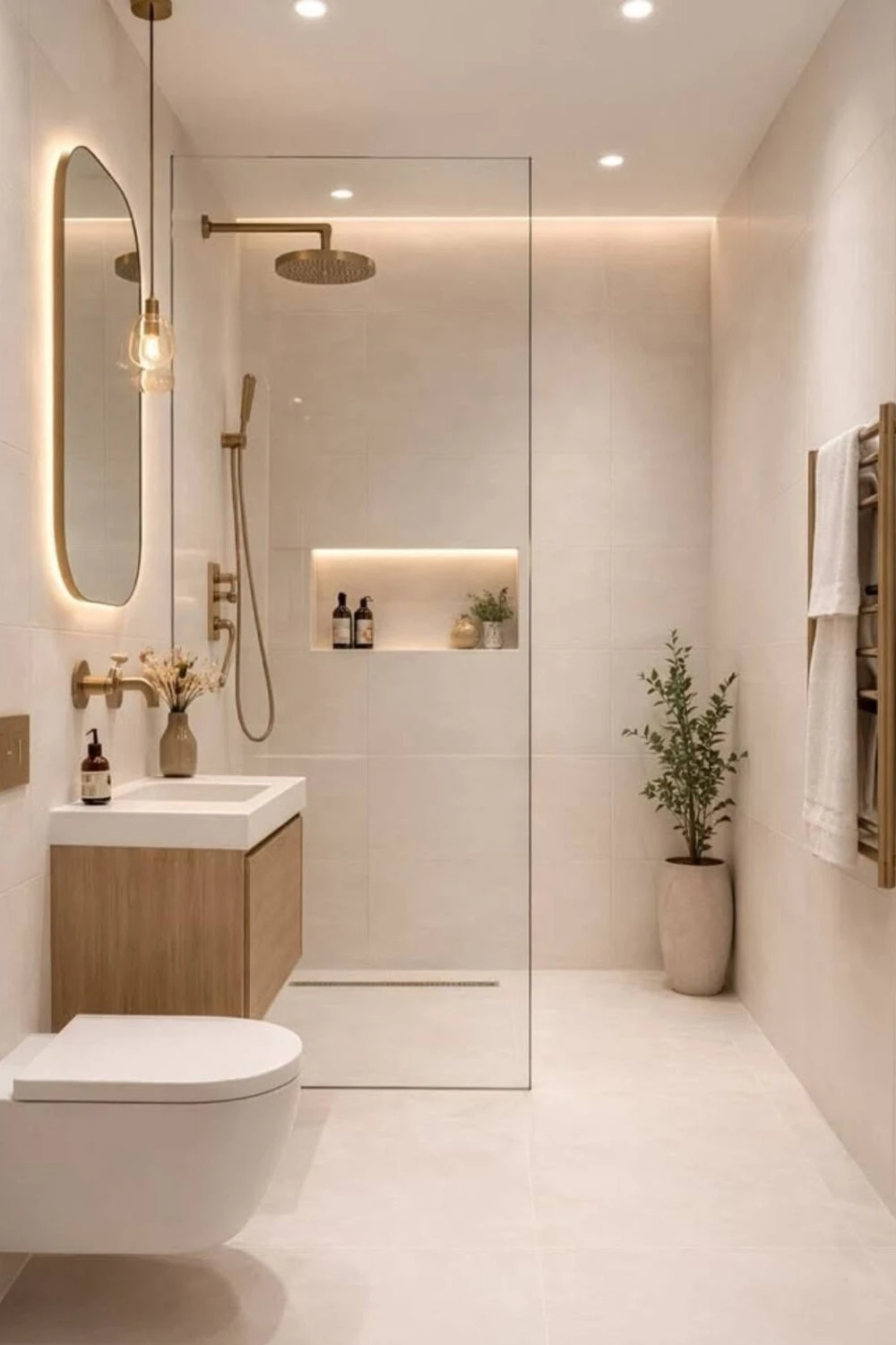
Curbless showers have become increasingly popular for good reason. By eliminating the raised threshold, the flooring flows continuously into the shower, making the bathroom appear significantly larger.
Beyond aesthetics, this design improves accessibility for people of all ages and creates a luxurious spa-like atmosphere. Large porcelain tiles extending from the bathroom floor into the shower further reinforce the seamless effect.
Linear drains also help maintain the sleek, uninterrupted design.
4. Save Space With Sliding Glass Doors
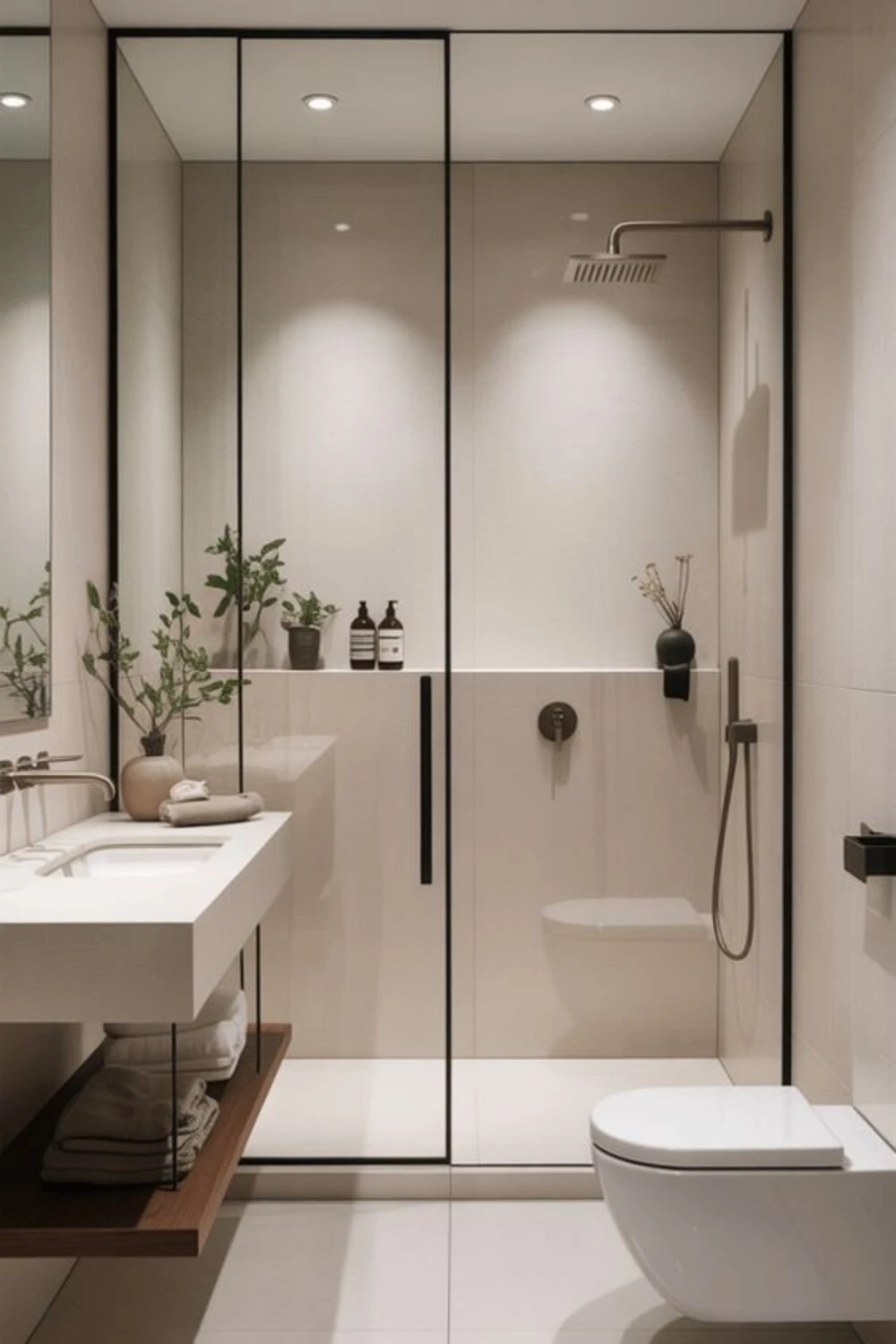
Traditional swinging shower doors require valuable clearance that many small bathrooms simply don’t have. Sliding glass doors solve this problem by operating within the shower enclosure itself.
Modern sliding systems feature slim hardware, smooth operation, and minimal visual bulk. They fit comfortably in narrow bathrooms while maintaining an elegant appearance.
For an even lighter look, choose low-profile tracks and clear tempered glass.
5. Extend Tile From Floor to Ceiling
Floor-to-ceiling tile instantly elevates the appearance of a small shower. Instead of breaking the walls into sections, continuous tile draws the eye upward, making ceilings feel noticeably taller.
Porcelain, ceramic, marble-look tile, or natural stone all work well depending on your preferred style. Keeping grout lines neat and consistent helps create an uninterrupted visual flow.
This approach also protects walls from moisture while giving the bathroom a polished, custom-built appearance.
6. Brighten the Space With White Finishes
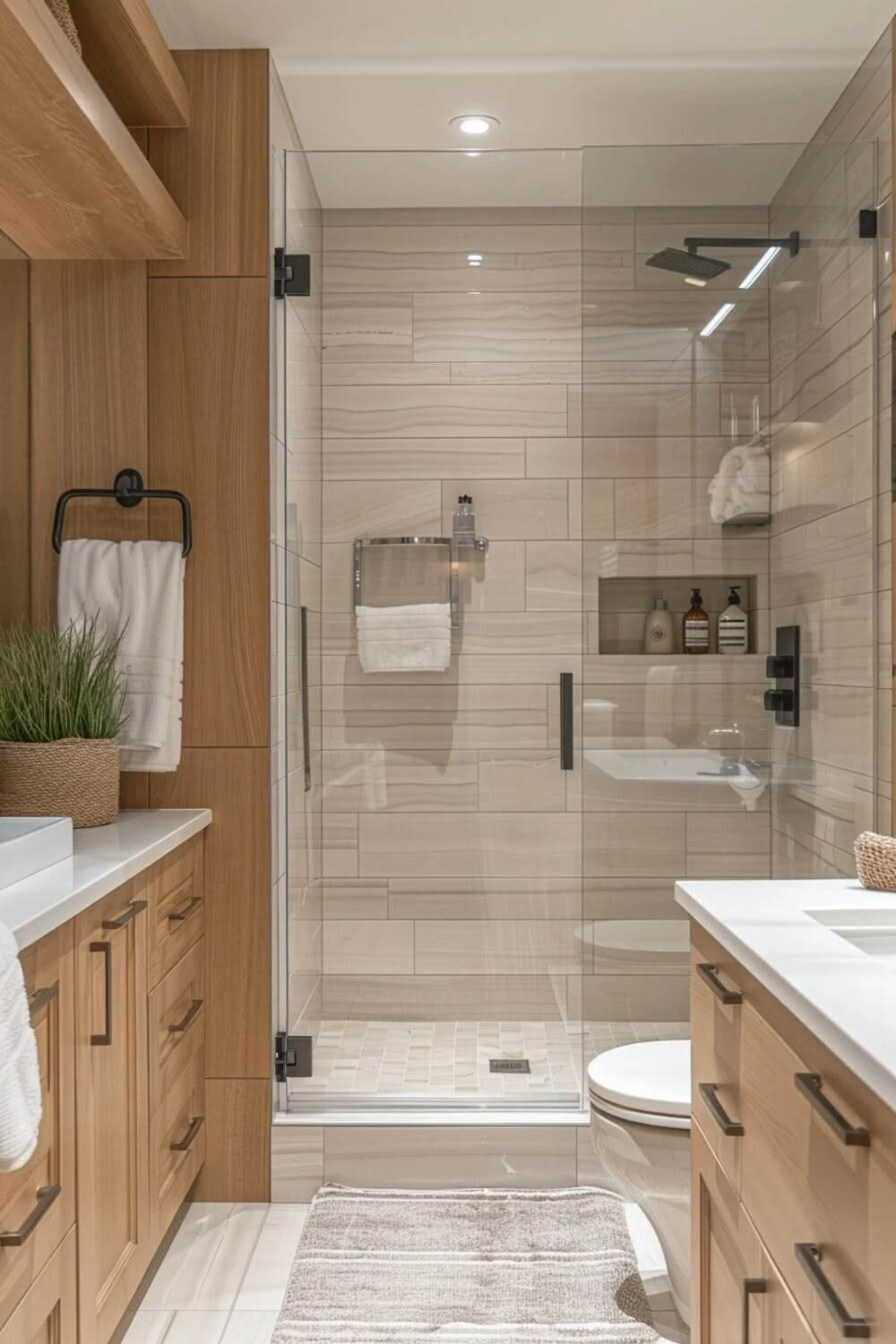
Light colors remain one of the most effective design tools for small bathrooms. White tile reflects available light, making compact showers feel brighter and more open.
To keep the space from feeling sterile, introduce warmth through natural wood accents, brushed brass fixtures, or soft gray flooring. A subtle mix of textures adds depth without overwhelming the room.
This timeless color palette works with nearly every design style, from Scandinavian to modern farmhouse.
7. Use Vertical Tile Patterns
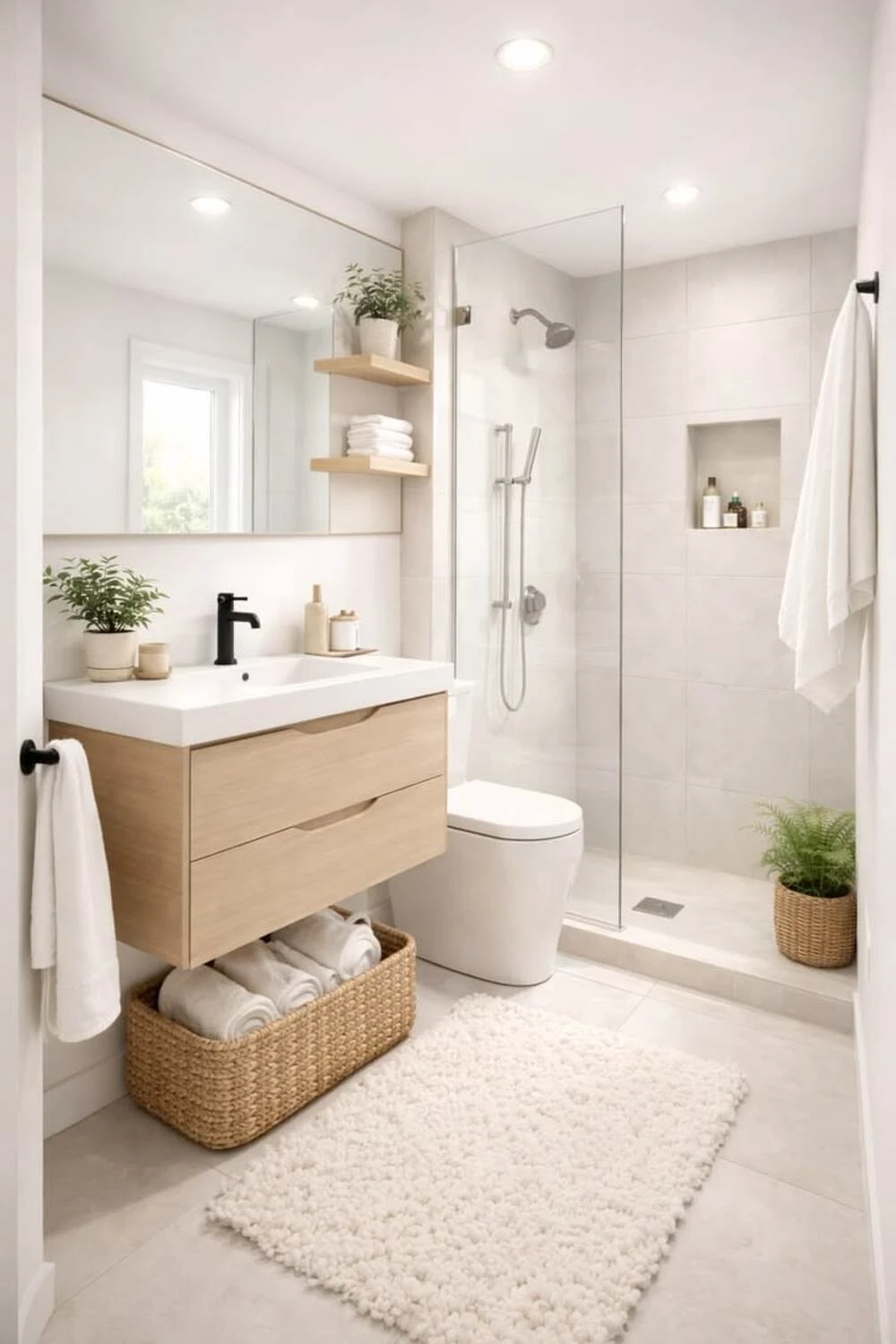
The direction you install tile has a surprising impact on how large a room appears.
Stacking rectangular tiles vertically naturally guides the eye upward, creating the illusion of higher ceilings. Tall porcelain tiles, elongated subway tiles, or slim finger mosaics all achieve this effect beautifully.
Keeping the shower walls relatively simple allows the vertical pattern to become the focal point without creating visual clutter.
8. Add Built-In Shower Niches
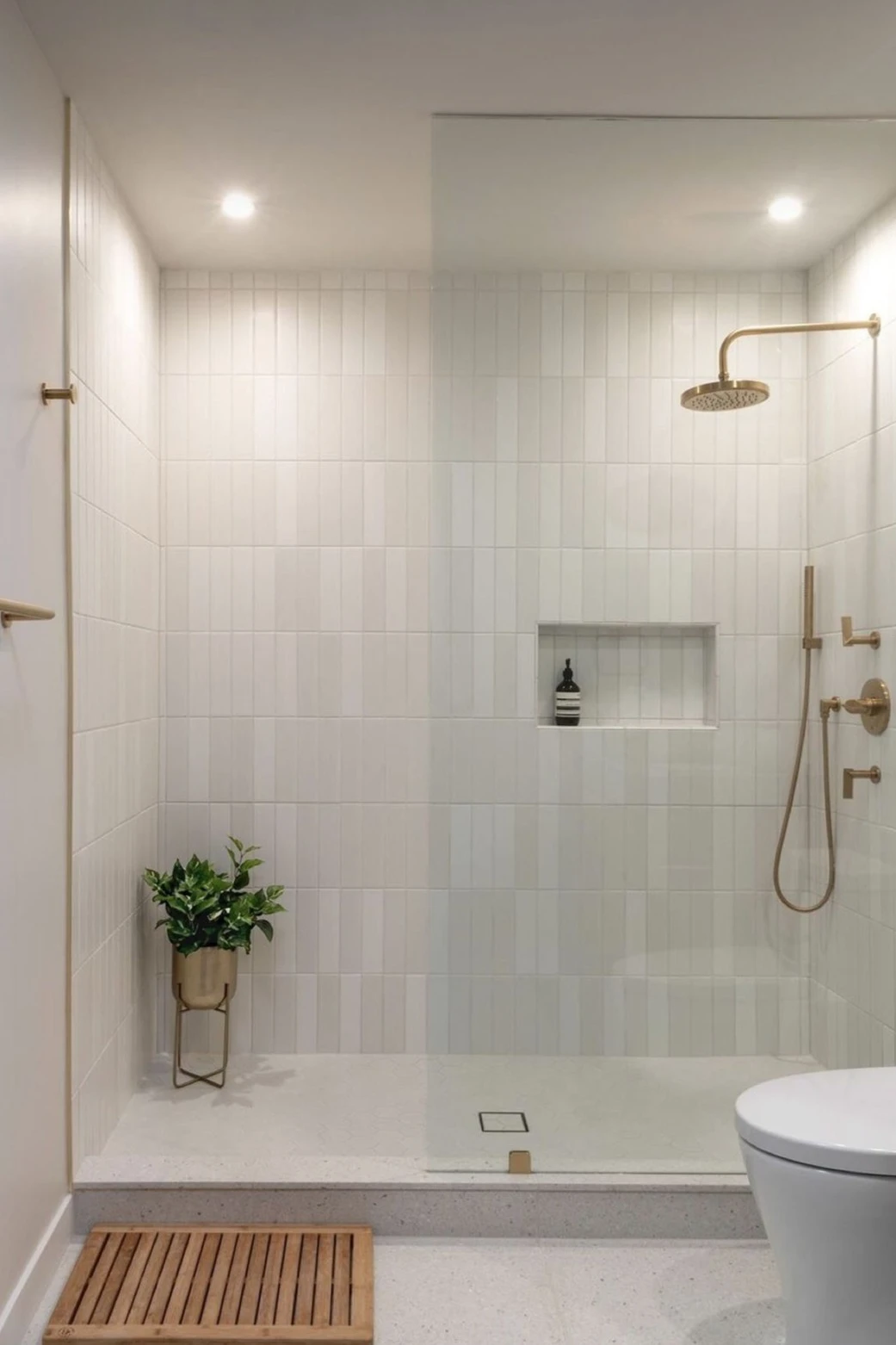
Storage often becomes a challenge in small bathrooms, but built-in shower niches offer an elegant solution.
Rather than hanging wire baskets or adding bulky corner shelves, recessed niches keep shampoo, soap, and skincare products neatly organized within the wall itself. This preserves valuable elbow room while maintaining clean lines.
For added interest, consider using a contrasting tile inside the niche or matching it seamlessly with the surrounding walls.
9. Include a Compact Shower Bench
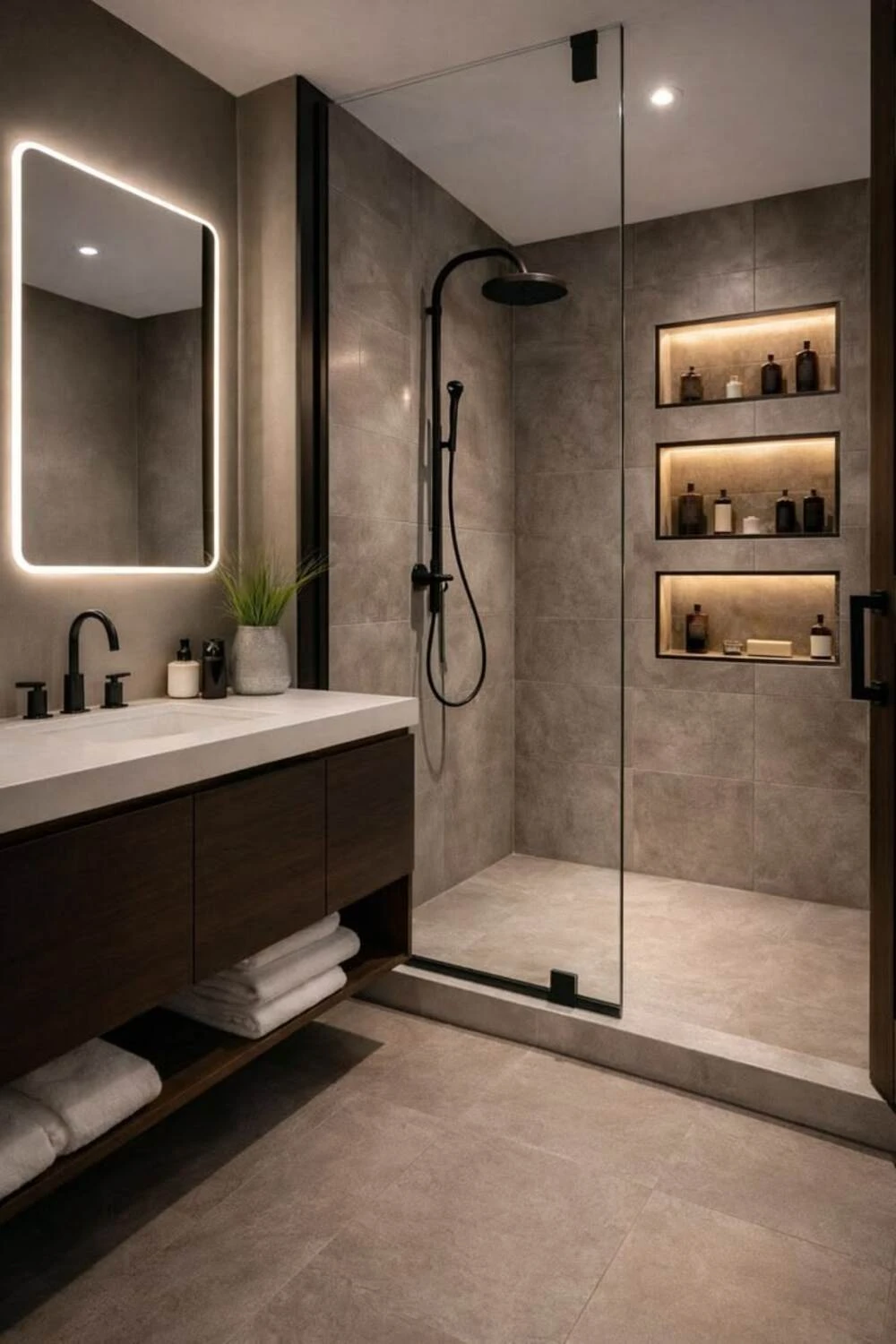
Even a small shower can benefit from a thoughtfully designed bench.
A floating bench provides a place to sit while showering, shave comfortably, or store towels temporarily. Because it doesn’t extend to the floor, it preserves visual openness and allows the flooring underneath to remain visible.
Using the same material as the shower walls creates a cohesive, built-in appearance.
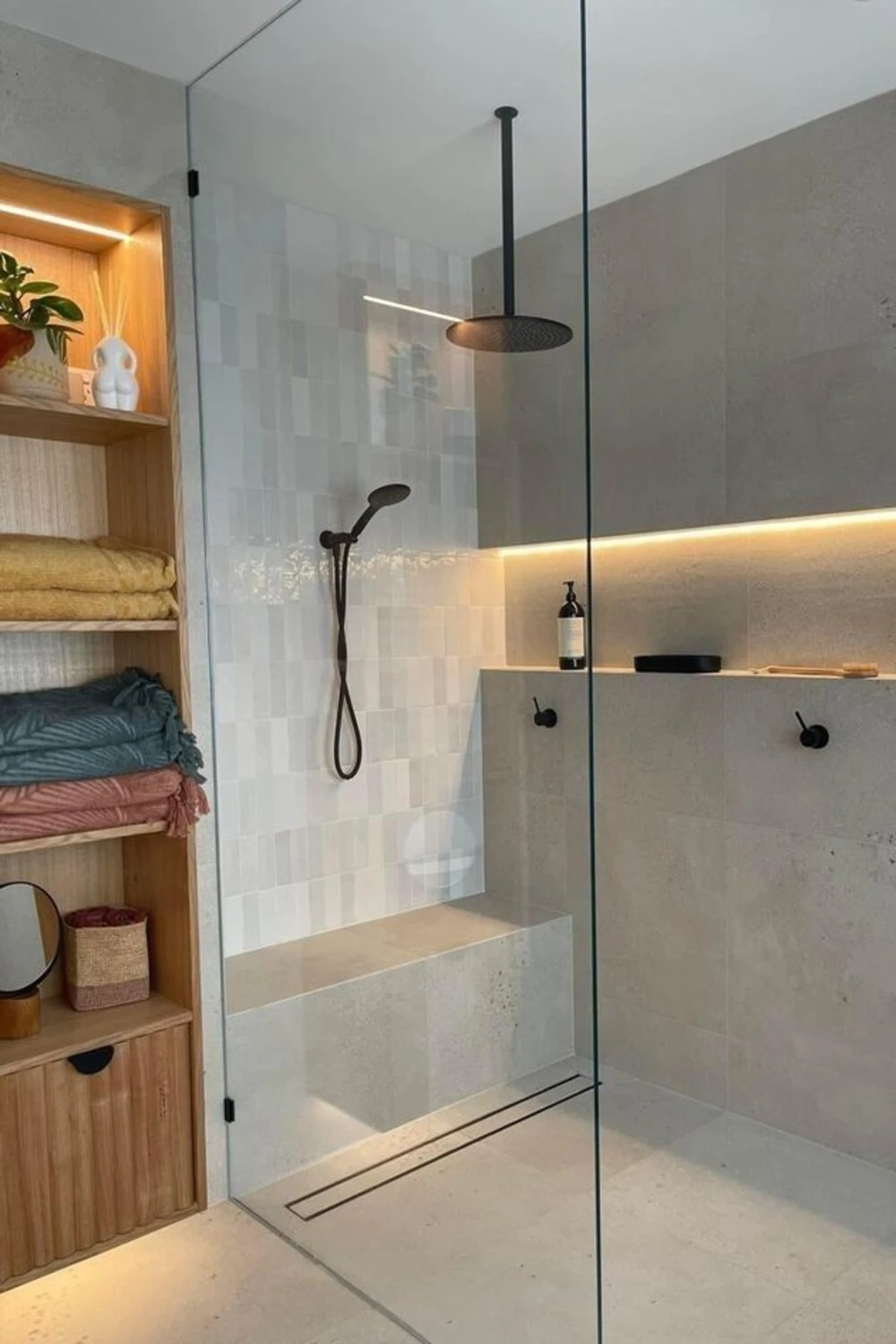
10. Create Contrast With Black-Framed Glass
Black-framed shower enclosures have become a favorite in modern interiors because they introduce architectural character without requiring bold colors elsewhere.
The slim metal grid adds definition while maintaining transparency through the glass. In smaller bathrooms, keeping the framing narrow prevents the shower from feeling heavy.
Balance the darker lines with white tile, light flooring, and simple fixtures for a sophisticated look.
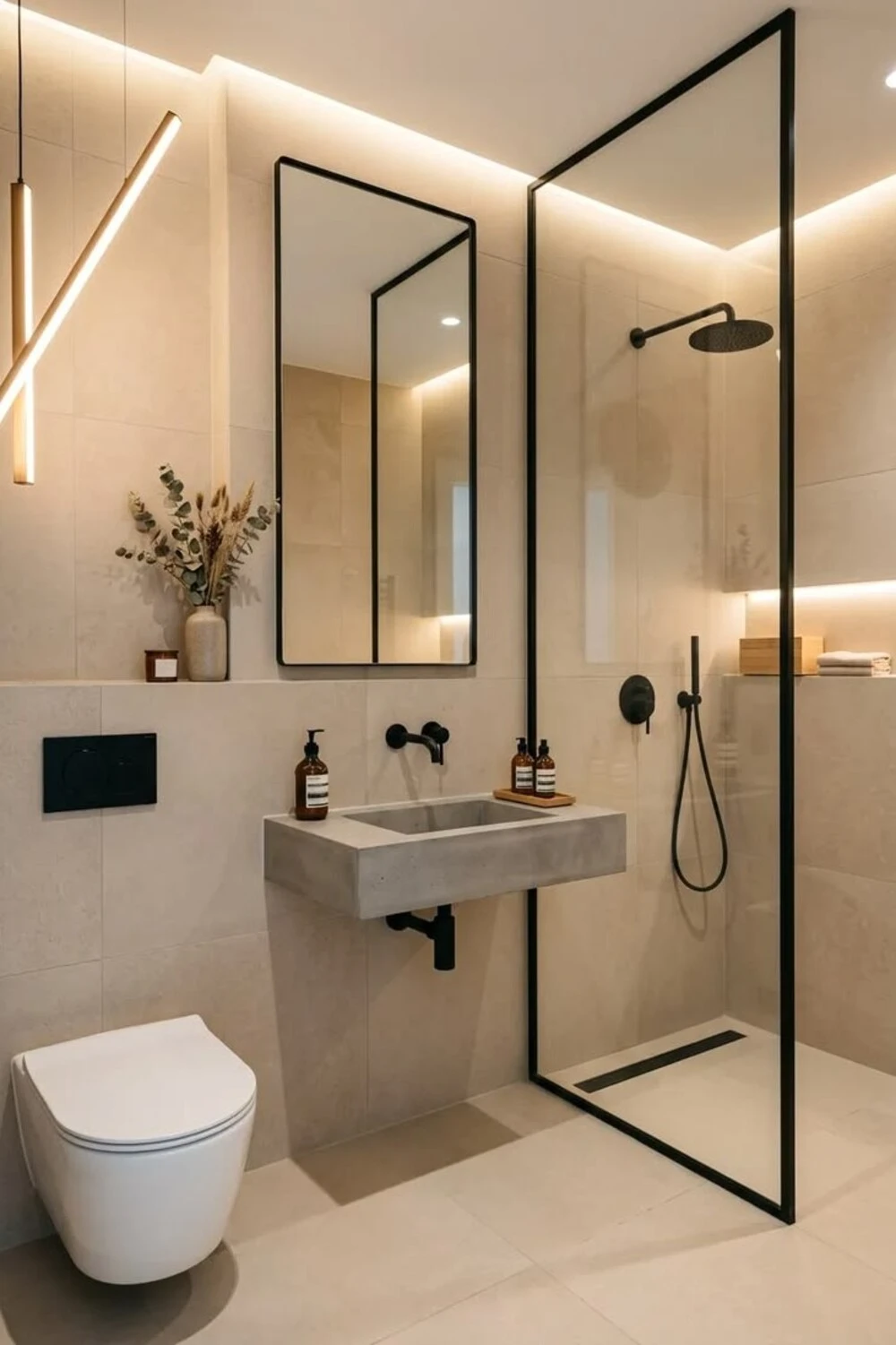
11. Choose Large-Format Tiles
Many homeowners assume small tiles work best in compact bathrooms, but large-format tiles often make the room feel bigger.
Because they have fewer grout lines, the walls appear smoother and less visually busy. Large porcelain slabs or oversized ceramic tiles create a clean, uninterrupted surface that expands the perceived size of the shower.
Neutral colors such as warm white, soft gray, beige, or natural stone finishes enhance the spacious effect even further.
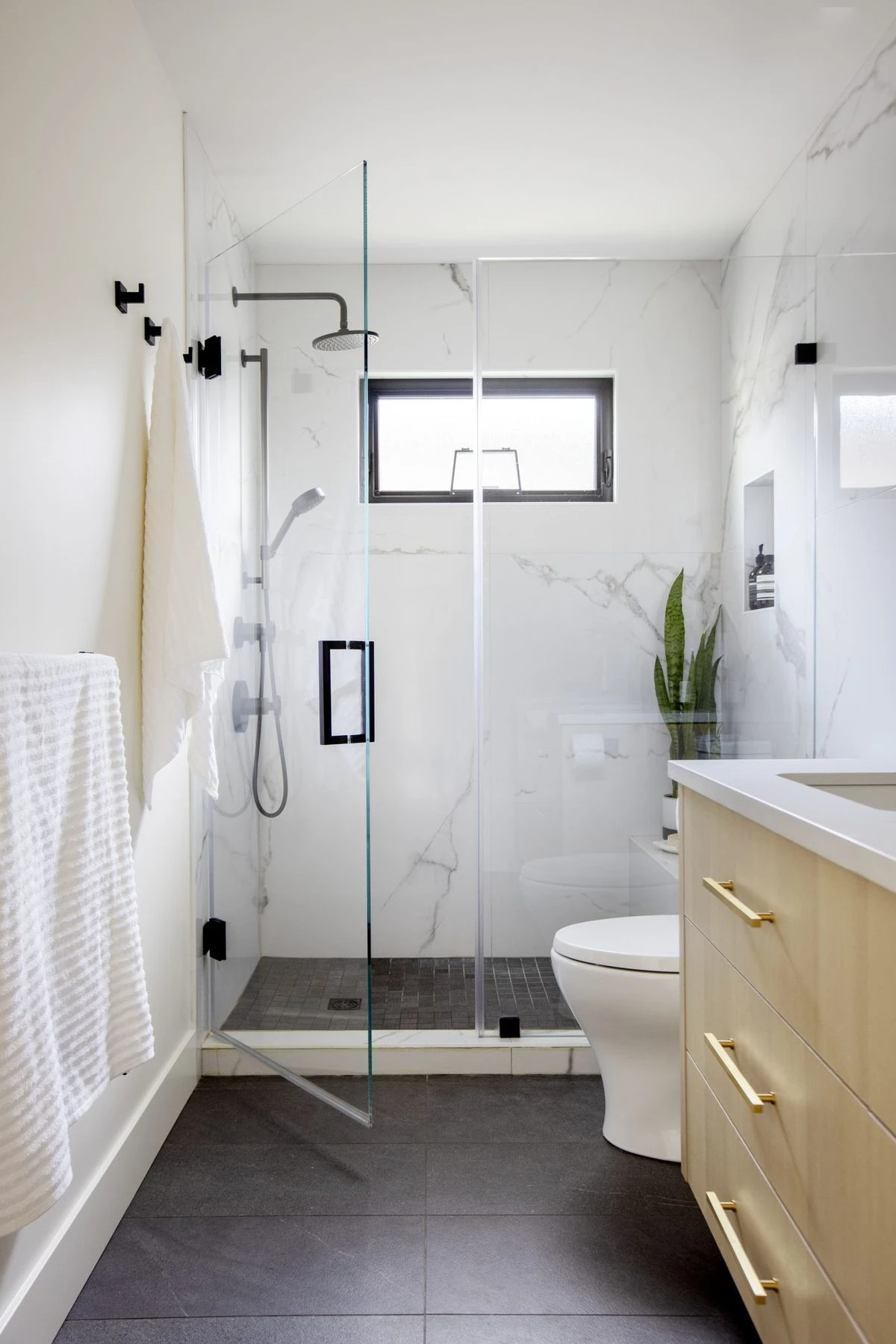
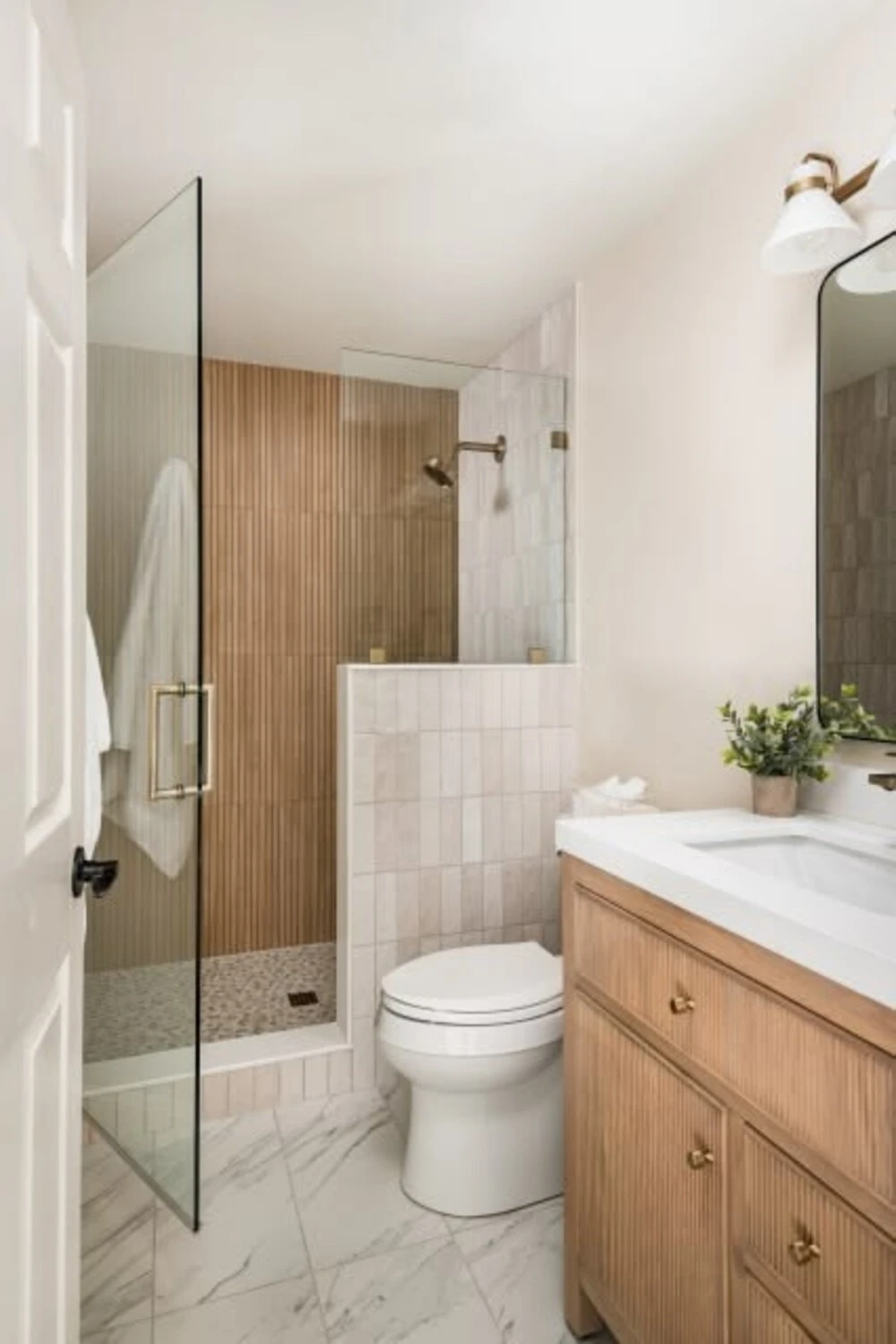
12. Add a Feature Wall for Personality
A small bathroom doesn’t have to be plain. A single feature wall inside the shower can introduce texture, color, and personality without overwhelming the space.
Consider vertical fluted tile, subtle geometric patterns, handmade zellige tile, marble-look porcelain, or textured stone. Keeping the remaining walls simple ensures the accent remains elegant rather than busy.
This strategy allows you to embrace current design trends while maintaining a timeless overall aesthetic.
How to Choose the Best Shower Design for Your Bathroom
The most successful shower design depends on more than style alone. Before beginning a renovation, evaluate how your bathroom functions on a daily basis.
Start with the layout. Long, narrow bathrooms often benefit from sliding doors, while square rooms can accommodate corner showers more efficiently. Think about who uses the bathroom as well. Families may prioritize storage, while guest bathrooms can focus more on aesthetics.
Material selection also plays an important role. Light-colored tile, clear glass, and consistent flooring all help visually enlarge the room. Built-in storage, recessed niches, and floating furniture reduce clutter while improving usability.
Finally, choose finishes that complement the rest of your home. Timeless materials tend to age better than highly trend-driven designs, making your investment feel fresh for years to come.
Final Thoughts
Designing a shower for a small bathroom is all about making smart choices rather than making compromises. Features like frameless glass, curbless entries, built-in storage, and light-reflecting finishes can dramatically improve both the look and functionality of a compact space.
Whether you’re planning a complete renovation or simply looking for fresh inspiration, these small bathroom shower ideas show that great design isn’t determined by square footage. With the right layout and thoughtful details, even the smallest bathroom can feel bright, comfortable, and beautifully finished.