Transforming a basement into a functional kitchen is a brilliant way to add home value, but low ceilings often create a cramped, “caved-in” feel. With standard heights frequently hovering around seven feet, design options can feel limited.
The good news? You don’t need a costly structural excavation to fix it. By utilizing clever optical illusions and strategic styling, you can shift the perception from subterranean to soaring. Here are 7 ways to make your basement kitchen feel twice as high.
1. Ditch the Upper Cabinets
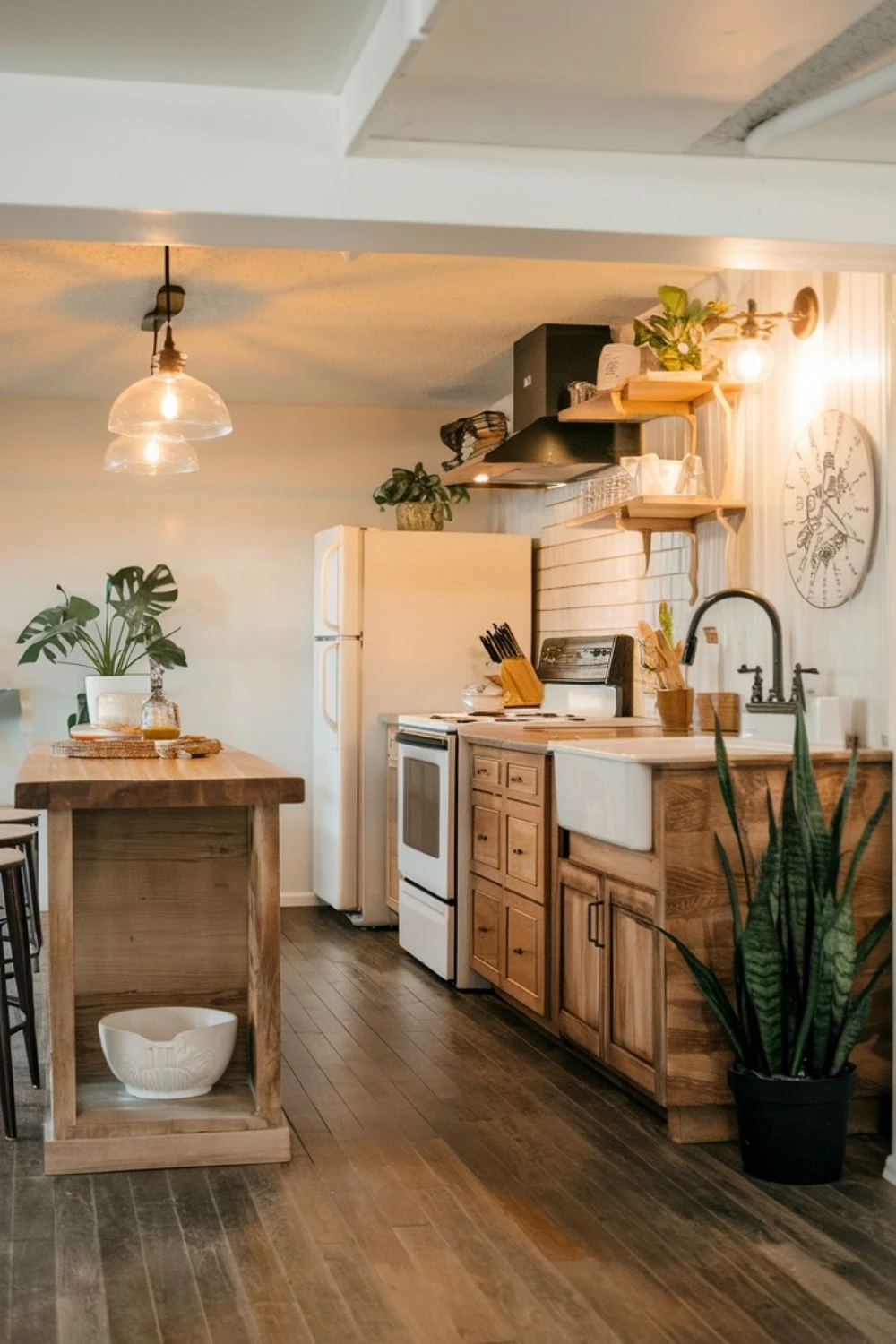
In a standard kitchen, upper cabinets are a storage staple. In a low-ceiling basement, they are a visual anchor that drags the room down. When heavy cabinets hang just a few inches from your head, they “clamp” the space and make the ceiling feel lower than it actually is.
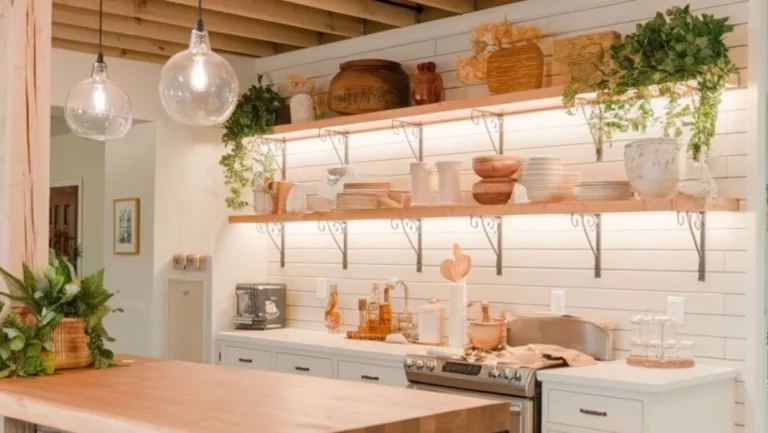
The Fix: Swap those bulky uppers for thin, floating shelves. Open shelving allows the eye to travel all the way to the back wall, creating a sense of depth. If you’re worried about storage, consider a single floor-to-ceiling pantry cabinet in a corner. This provides a strong vertical line that draws the eye upward without cluttering the entire perimeter.
2. Embrace “Wafer” Lighting
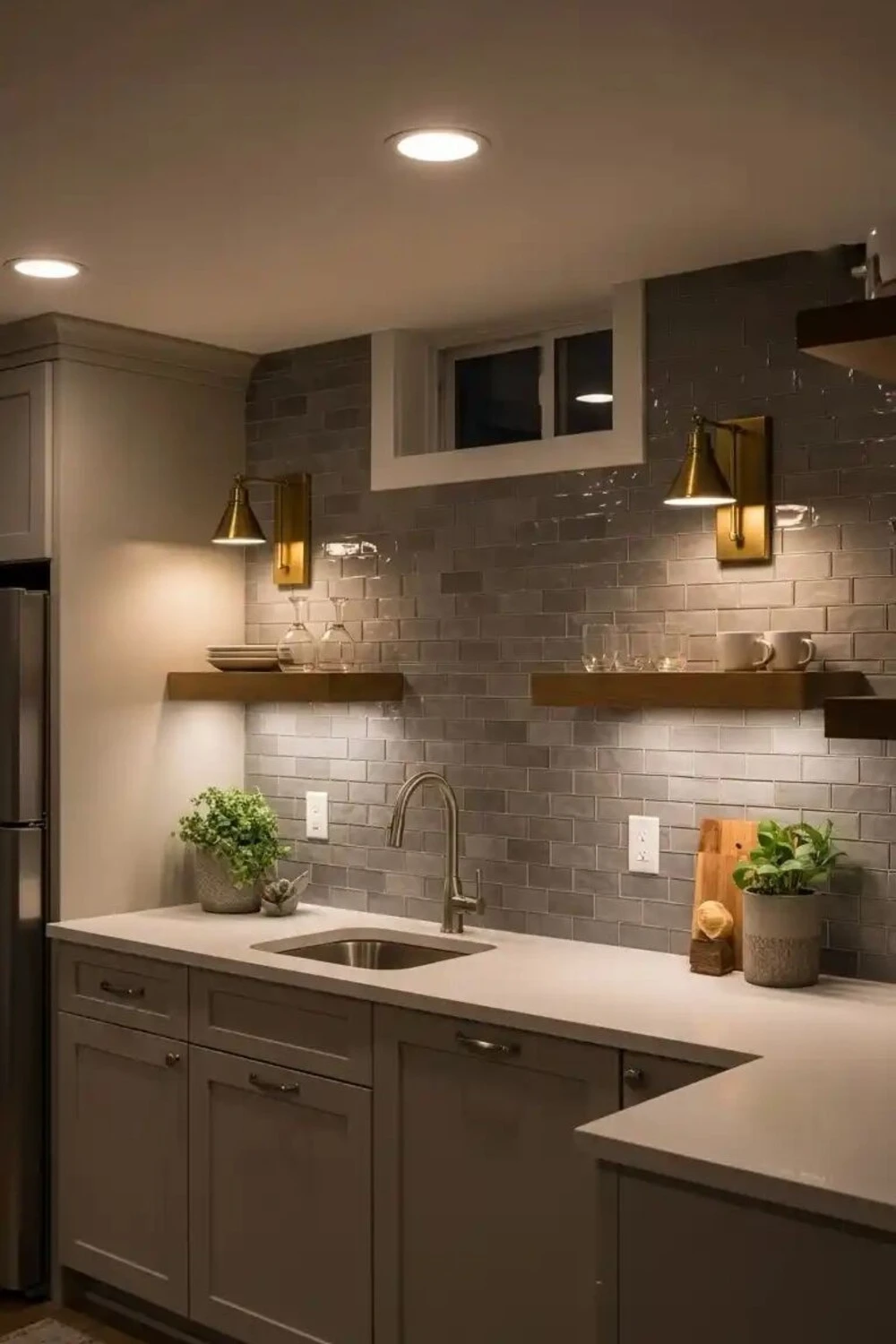
Nothing highlights a low ceiling more than a pendant light that you have to duck under. Large fixtures or hanging lights physically occupy the very space you are trying to “expand.”
The Fix: Use ultra-slim LED recessed lights, often called “wafer” lights. These sit completely flush with the ceiling, requiring almost no housing depth. To take it a step further, install LED strip lighting underneath your base cabinets or along the kickplates. This “toe-kick” lighting makes the cabinets appear to hover, adding a layer of airiness to the floor.
3. The Power of High-Gloss Finishes
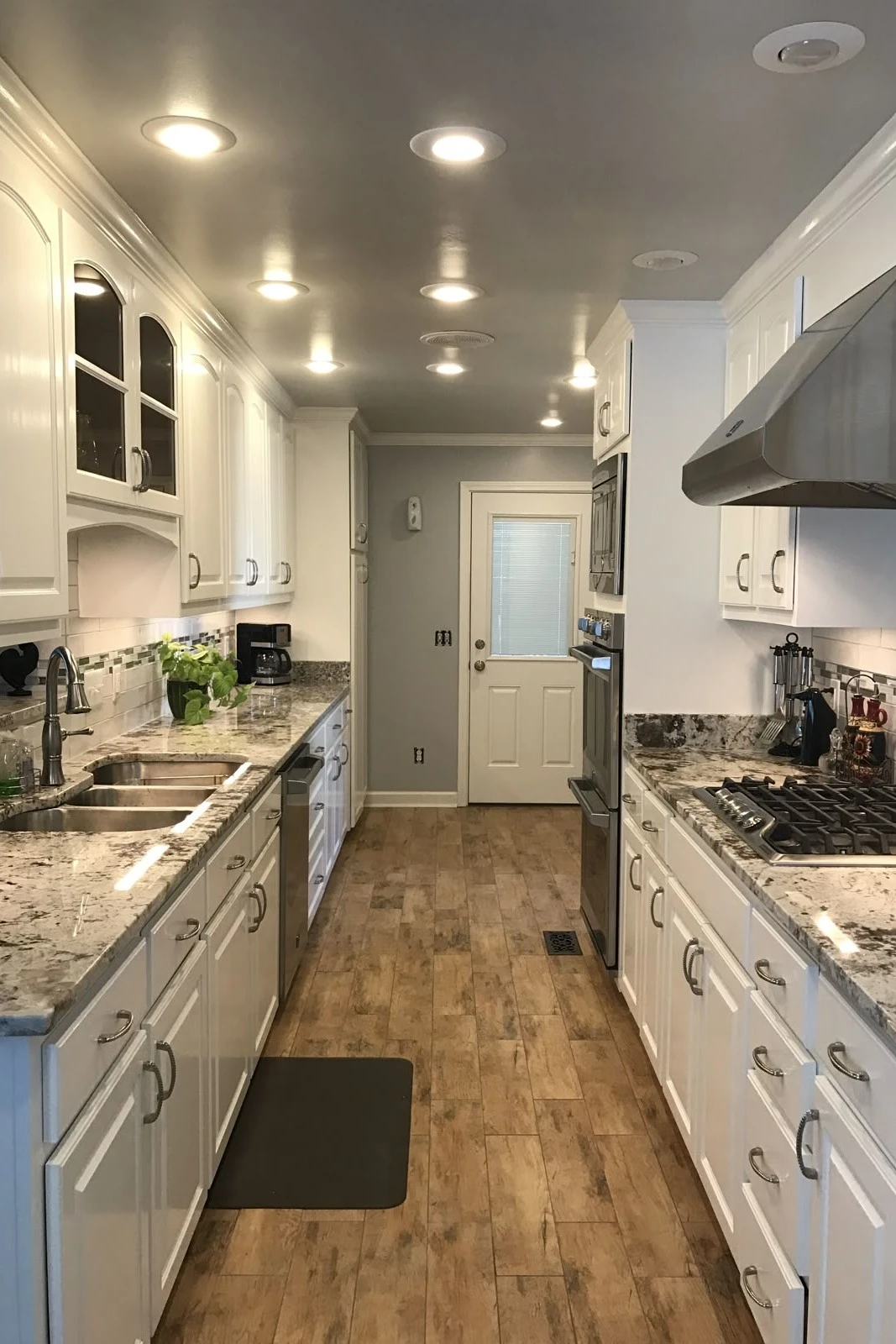
Matte finishes absorb light, which can make a small, low space feel “flat.” High-gloss surfaces, on the other hand, act like mirrors, reflecting light and images to create a sense of infinite depth.
The Fix: Consider a high-gloss paint for the ceiling itself. A soft, reflective white or “Retro Blue” can make the ceiling appear further away by mirroring the floor below. Pair this with a reflective backsplash—like glass tile or polished stone—to “push” the walls outward and bounce light into every corner.
4. Use a Monochrome Color Palette
When you paint your walls one color and your ceiling another, you create a hard horizontal line where they meet. This line acts as a visual “cap,” emphasizing exactly where the room ends.
The Fix: Use a “color drenching” technique. Paint the walls, trim, and ceiling the exact same shade—ideally a warm white, soft cream, or light grey. When the boundaries are blurred, the eye can’t easily find the corner where the wall turns into the ceiling, making the entire space feel like one continuous, open volume.
5. Floor-to-Ceiling “Pillars”
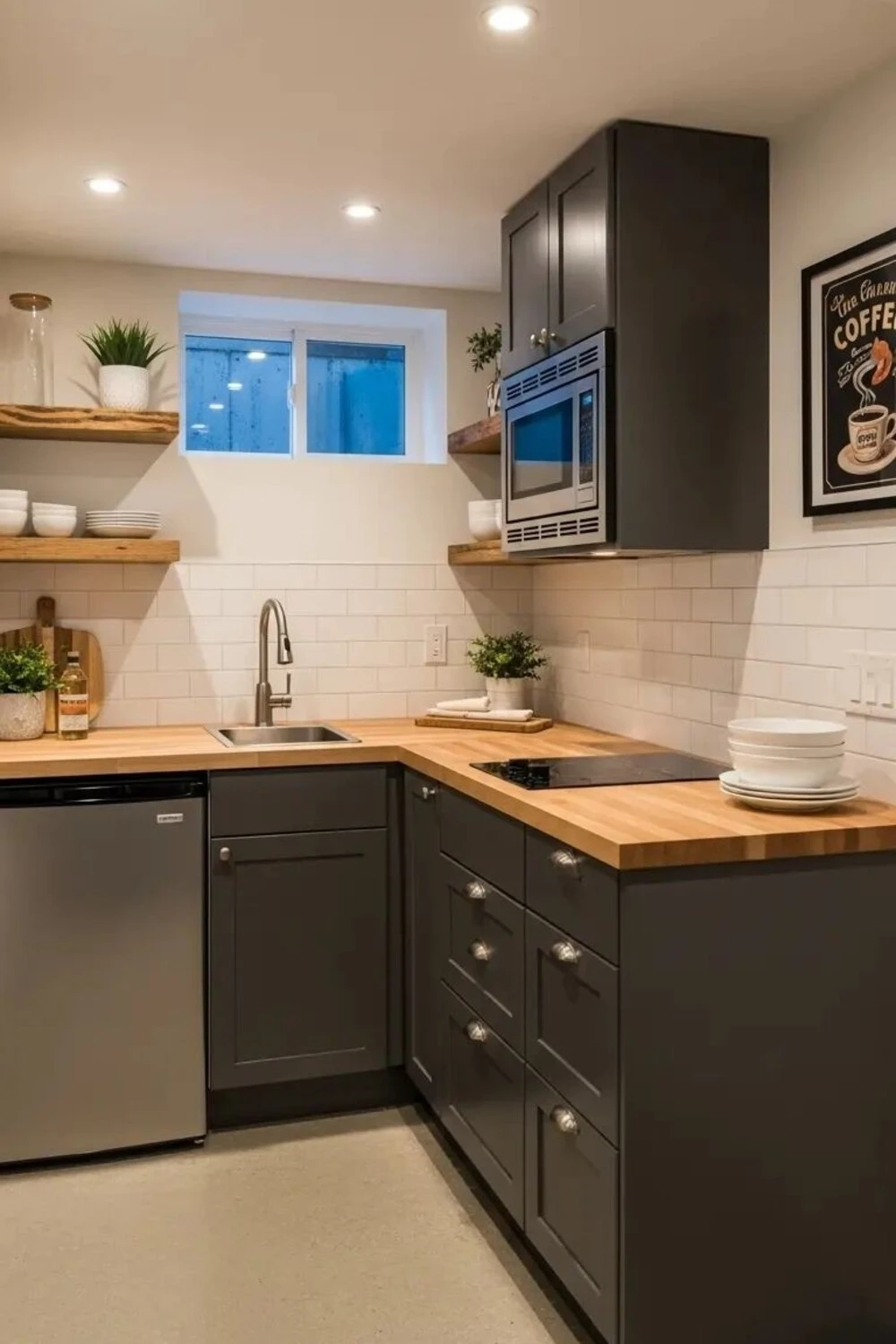
While we want to avoid bulk, one or two tall, slender elements can actually help. This is known as the “skyscraper effect.” A single tall element provides a scale for the rest of the room.
The Fix: If you have a pantry or a refrigerator, “box” it in with cabinetry that goes all the way to the ceiling joists. This creates a vertical “pillar” that stretches the height of the room. By having at least one item reach the very top, you establish a high point that makes the rest of the kitchen feel more spacious by comparison.
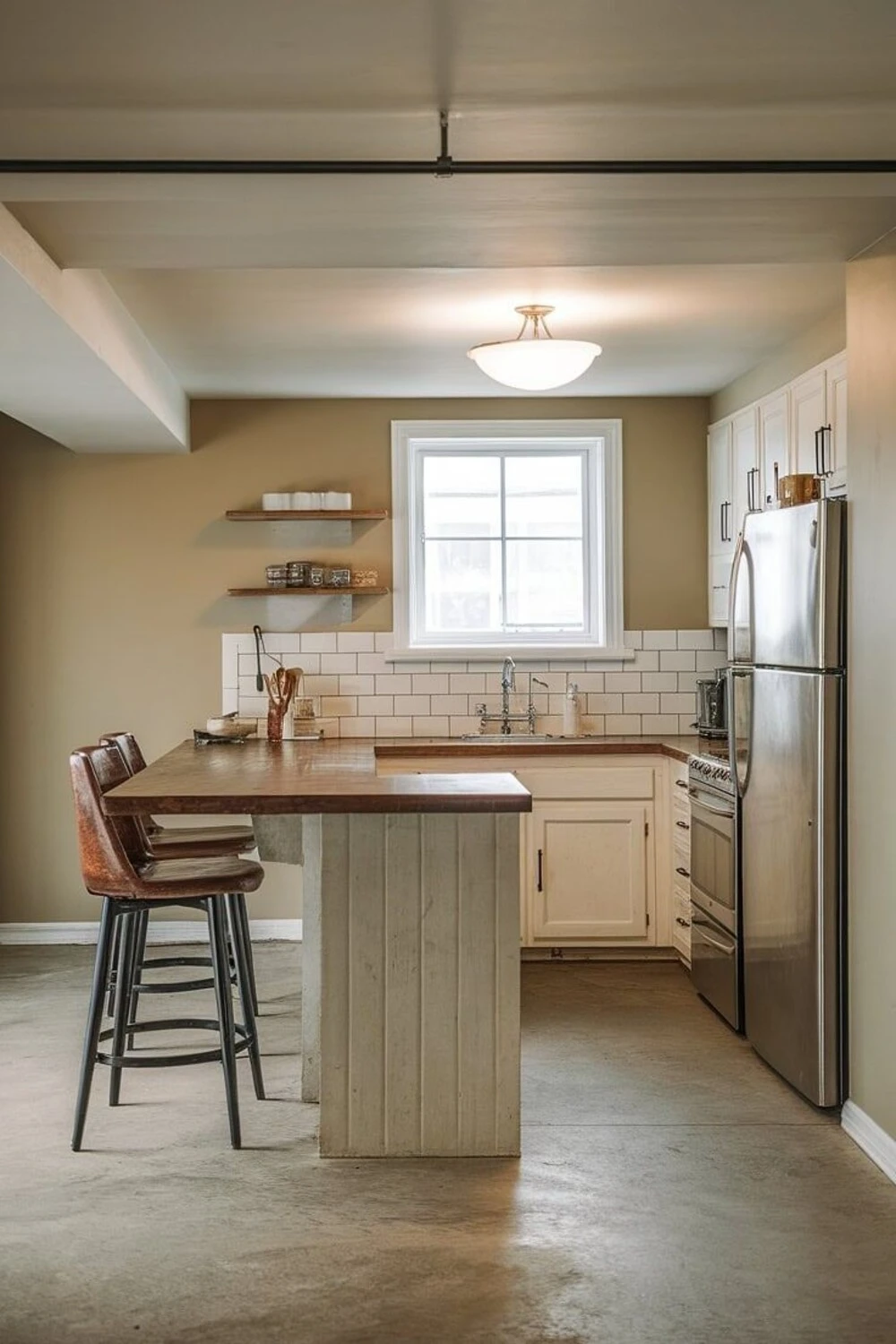
6. The Industrial “Open Joist” Look
Sometimes, the best way to handle a low ceiling is to get rid of it. Drywall and drop ceilings can steal anywhere from two to six inches of precious vertical space.
The Fix: Remove the ceiling material and expose the floor joists, pipes, and ductwork. To keep it from looking messy, paint everything a uniform color. A matte black creates a “hidden” void that feels deep and edgy, while a bright white opens everything up and emphasizes the architectural “bones” of the home. This “industrial chic” look can gain you nearly half a foot of actual clearance.
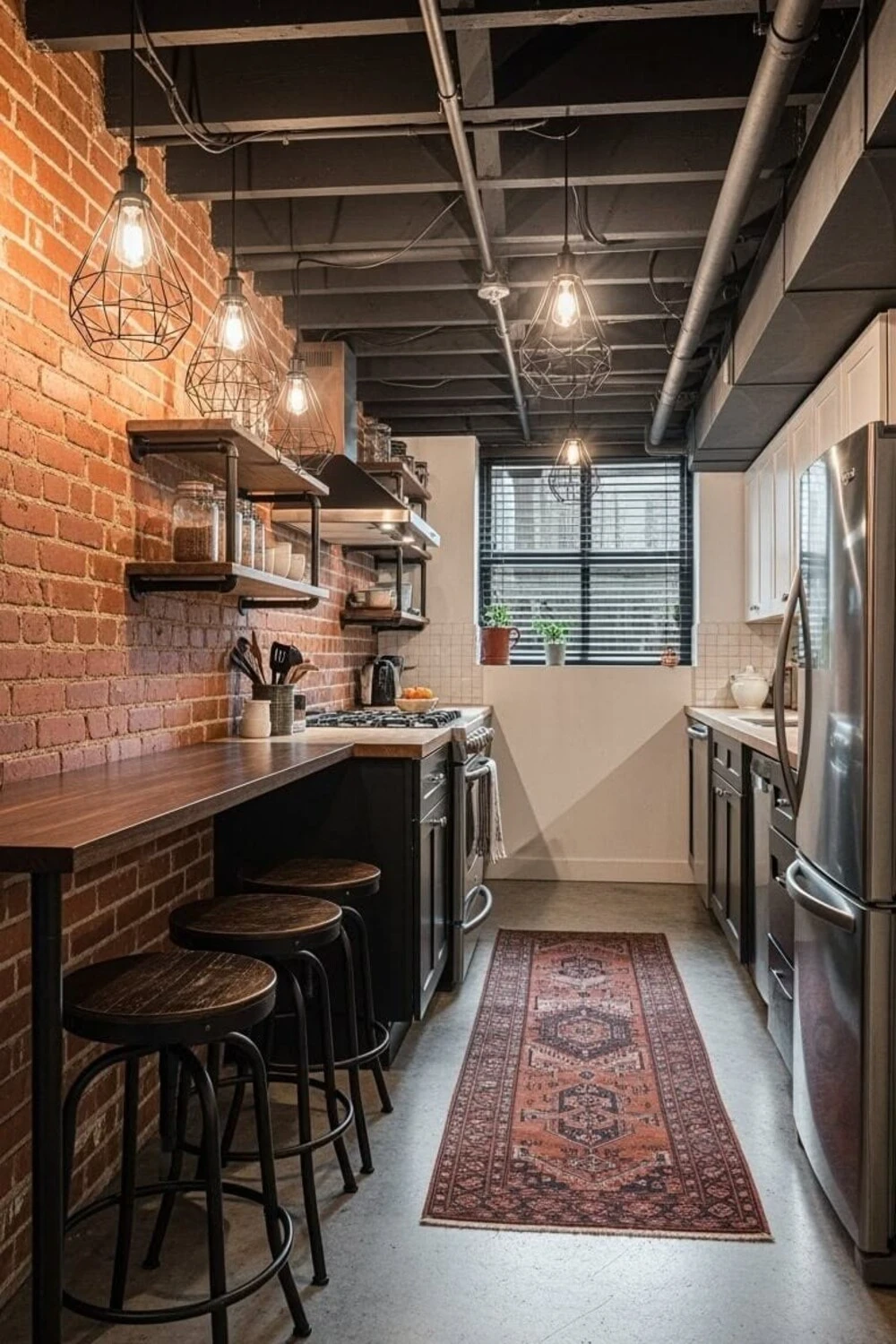
7. Think Vertically with Shiplap and Slats
Human eyes are easily fooled by patterns. Horizontal lines (like standard subway tile) tend to widen a room, which can inadvertently make it feel shorter. To counteract this, you need to emphasize the vertical axis.
The Fix: Install vertical shiplap or thin wood slats on a focal wall. By running these lines from the floor to the ceiling, you force the eye to track upward, tricking the brain into thinking the distance is greater than it is. Even a “Skinny Shaker” cabinet door—which has narrower vertical stiles—can help maintain this upward momentum.
Summary of Design Choices
| Element | The “Room Squeezer” | The “Space Maker” |
| Cabinetry | Wraparound Upper Cabinets | Floating Shelves & Tall Pantries |
| Lighting | Hanging Pendants | Flush-mount LED Wafers |
| Patterns | Horizontal Subway Tile | Vertical Shiplap or Slats |
| Paint Strategy | High-Contrast Ceiling/Walls | Monochrome Color Drenching |
Final Thoughts
A low-ceiling basement kitchen doesn’t have to feel like an afterthought. By focusing on vertical lines, reflective surfaces, and “invisible” lighting, you can create a kitchen that feels curated, intentional, and—most importantly—spacious.