Converting a basement into a functional living suite, a guest apartment, or the ultimate entertainment hub often comes down to one major challenge: space. Because basements are frequently interrupted by structural poles, utility rooms, or narrow floor plans, the galley kitchen is often the most efficient layout choice.
A galley kitchen—characterized by two parallel runs of cabinetry with a walkway in between—is a masterclass in ergonomics. In a basement, this “hallway” style allows you to pack full functionality into a slim footprint. Here are 10 clever basement galley kitchen ideas to help you maximize every square inch.
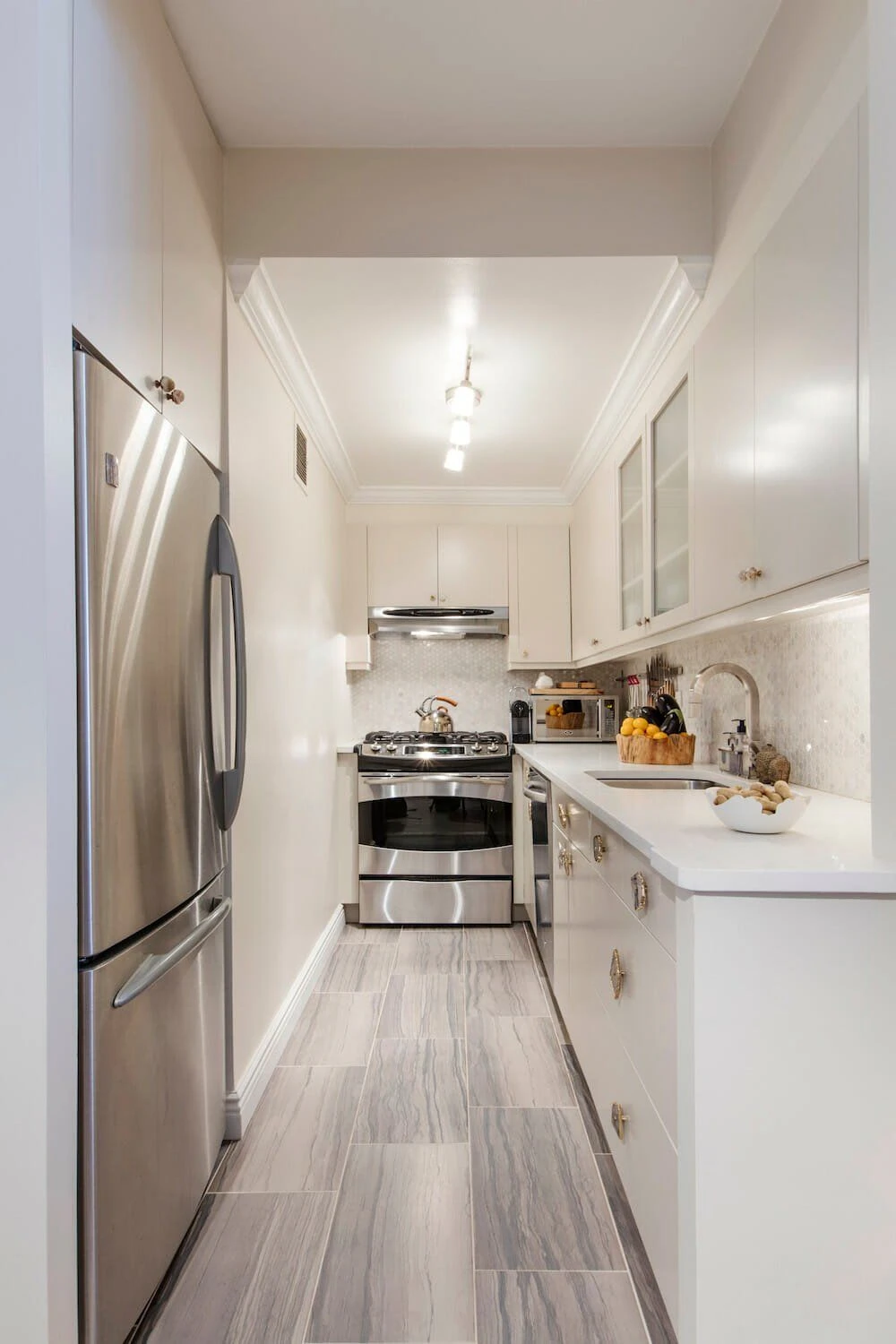
1. The “All-White” Reflection
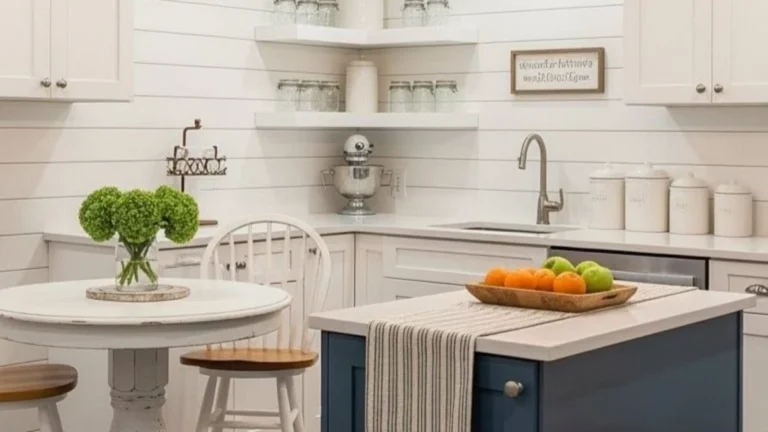
Basements are notorious for a lack of natural light. To combat the “cave” feeling, opt for high-gloss white cabinet. The reflective surface bounces what little light you have around the room, making the narrow corridor feel significantly wider and airier. Pair it with white quartz countertops for a seamless, expansive look.
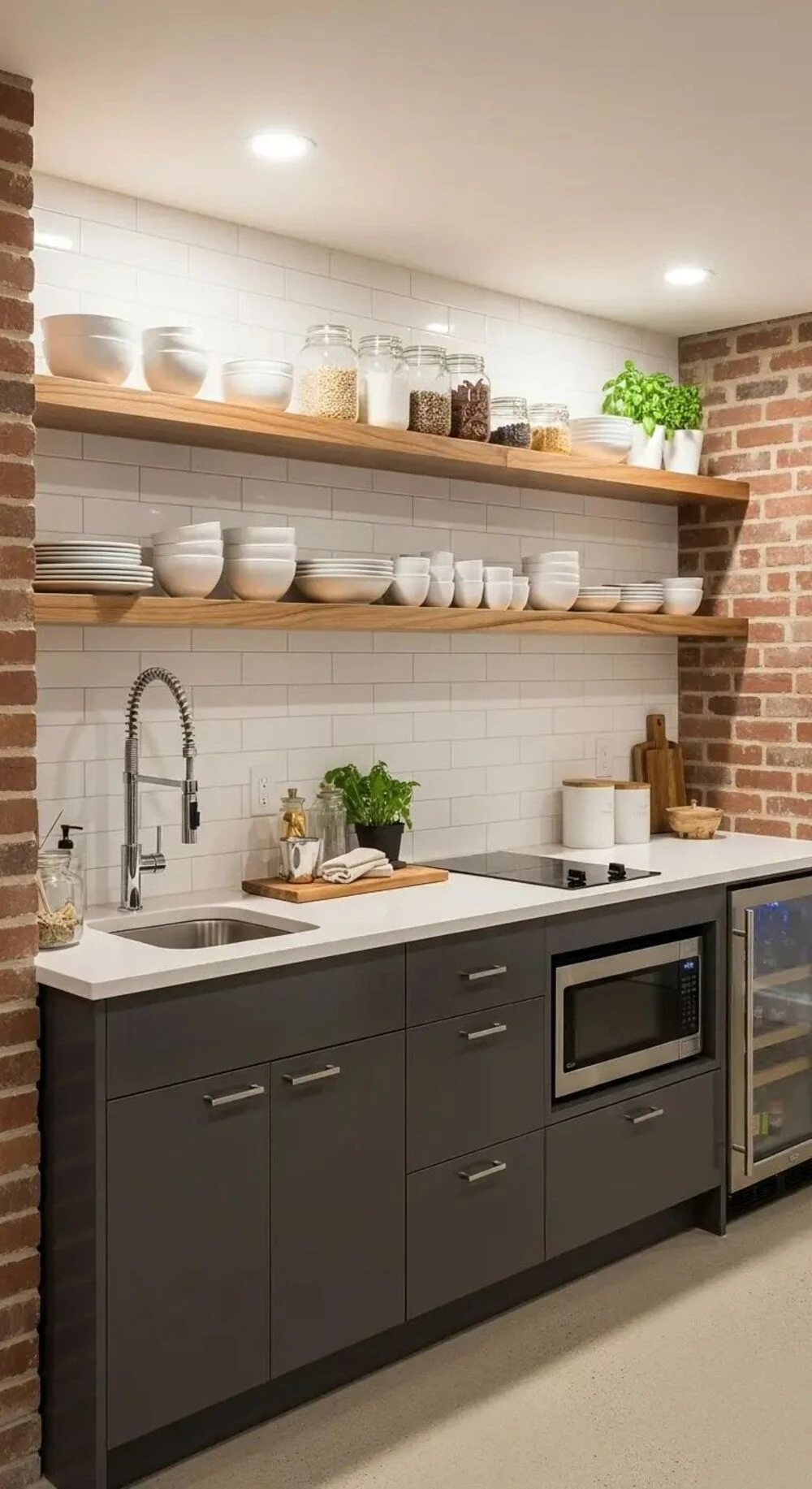
2. Swap Uppers for Floating Shelves
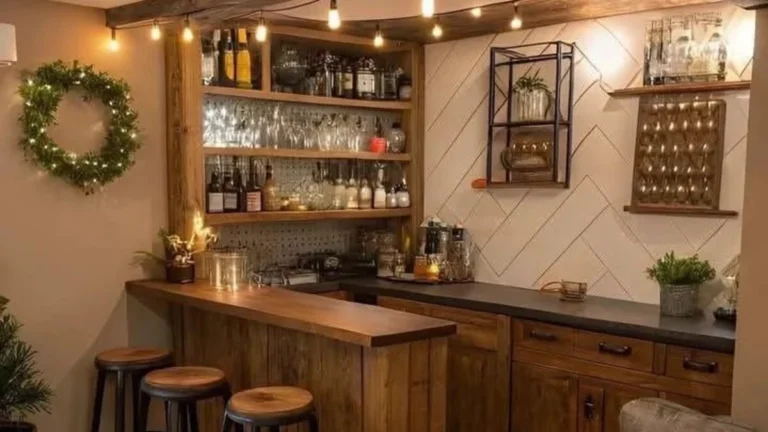
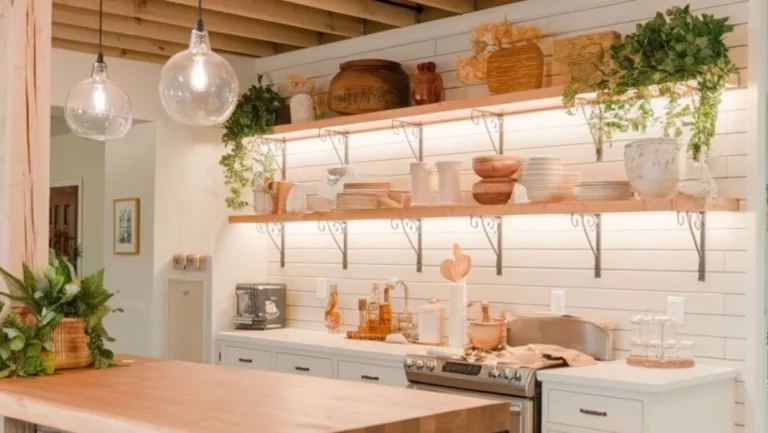
In a narrow galley, heavy upper cabinets can make the space feel “closed in” at eye level. By replacing them with natural wood or glass floating shelves, you open up the visual field. This is a perfect spot to display curated glassware or a few individualistic ornaments that add personality to the subterranean space.
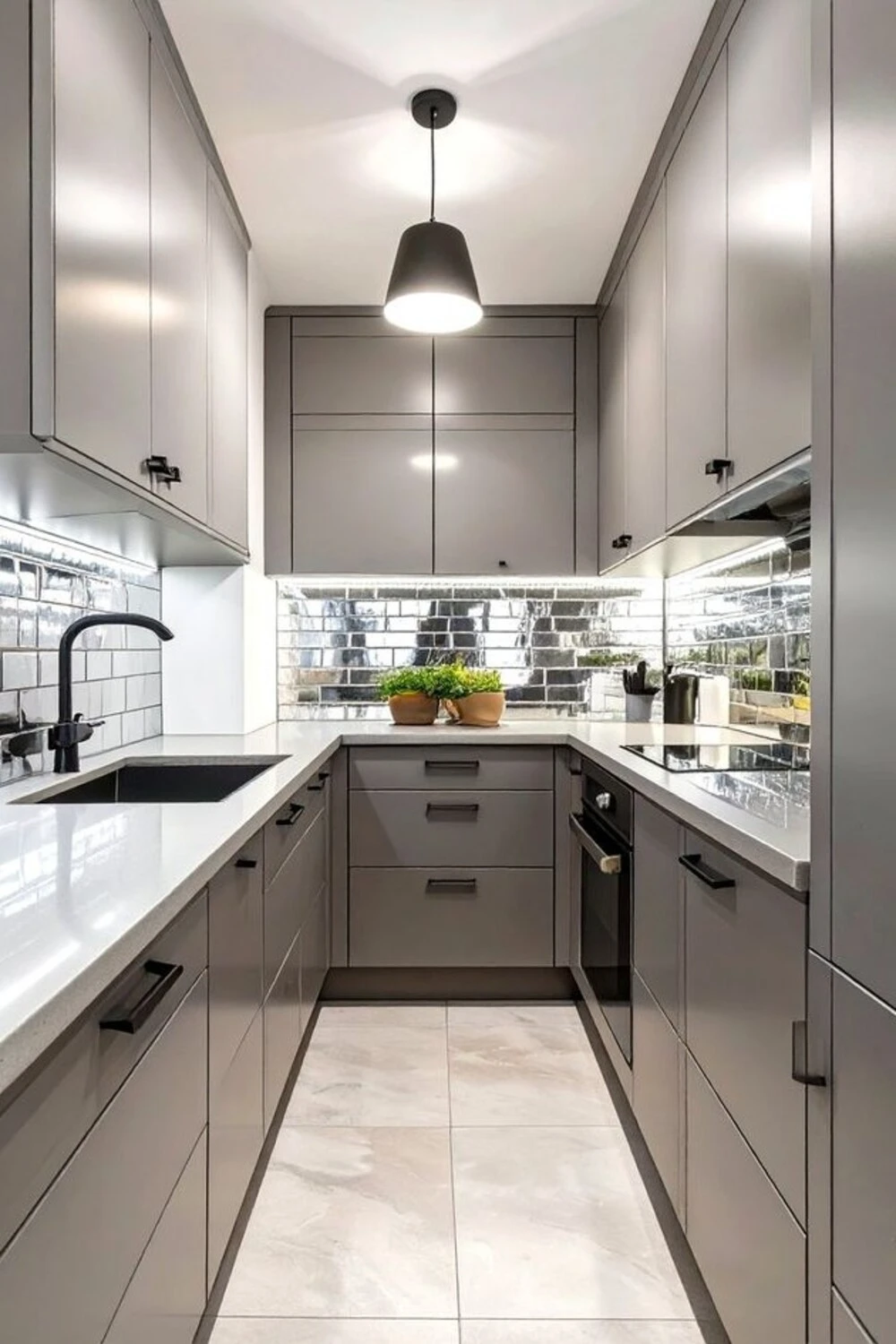
3. The Mirrored Backsplash Trick
This is a classic designer “cheat code.” Installing a mirrored backsplash—either a clean modern sheet or antiqued mirror tiles—visually doubles the width of your kitchen. It creates the illusion of a window where there isn’t one, instantly making the galley feel like it has twice the depth.
4. Integrated “Panel-Ready” Appliances
To keep a narrow kitchen from looking cluttered, hide the “heavy” elements. Panel-ready refrigerators and dishwashers blend directly into your cabinetry. This creates a continuous, furniture-like flow that makes the kitchen feel like a high-end extension of the living area rather than a utility zone.
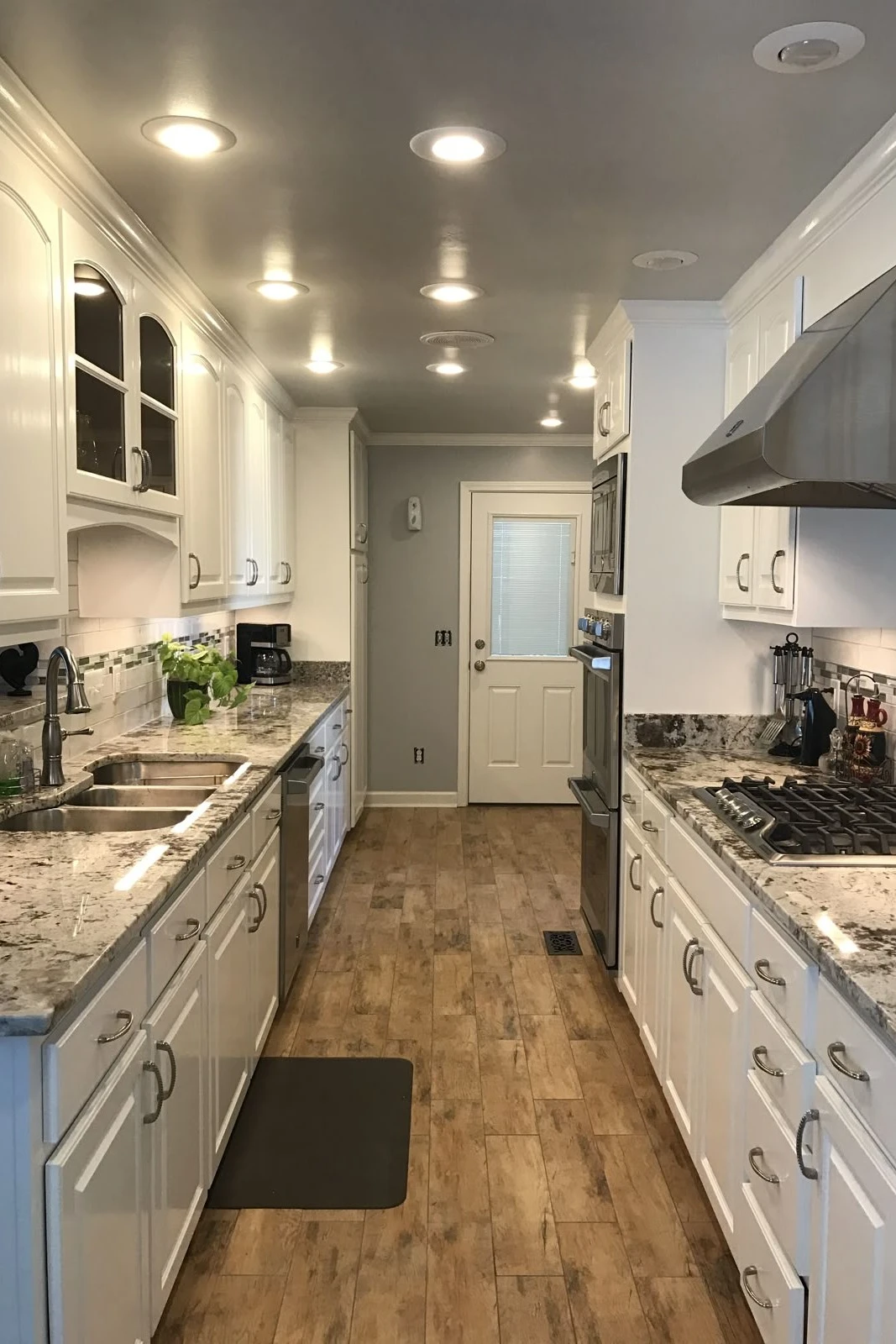
5. Vertical Storage Optimization
When horizontal space is limited, look up. Take your cabinetry all the way to the ceiling, even if the ceiling height is lower than standard. This provides extra storage for seasonal items and draws the eye upward, creating a sense of height. Use a library ladder if the space allows for a touch of “whimsical” charm.
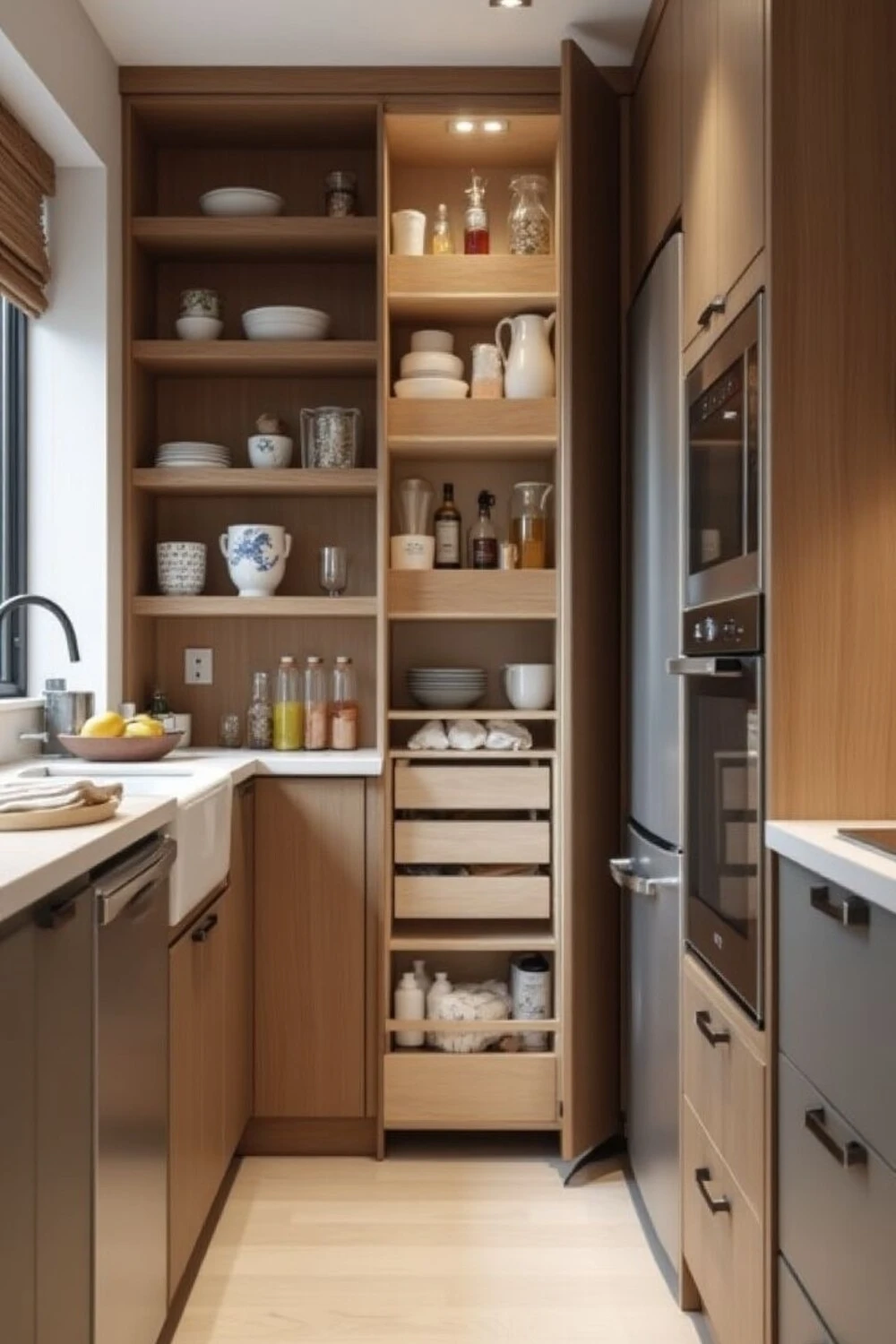
6. Add a Peninsula “Breakfast Bar”
If your galley kitchen ends in an open area, consider adding a small peninsula return. This provides a natural transition between the kitchen and the living room while offering much-needed seating without the footprint of a full dining table. It’s the perfect spot for morning coffee or a casual happy hour.
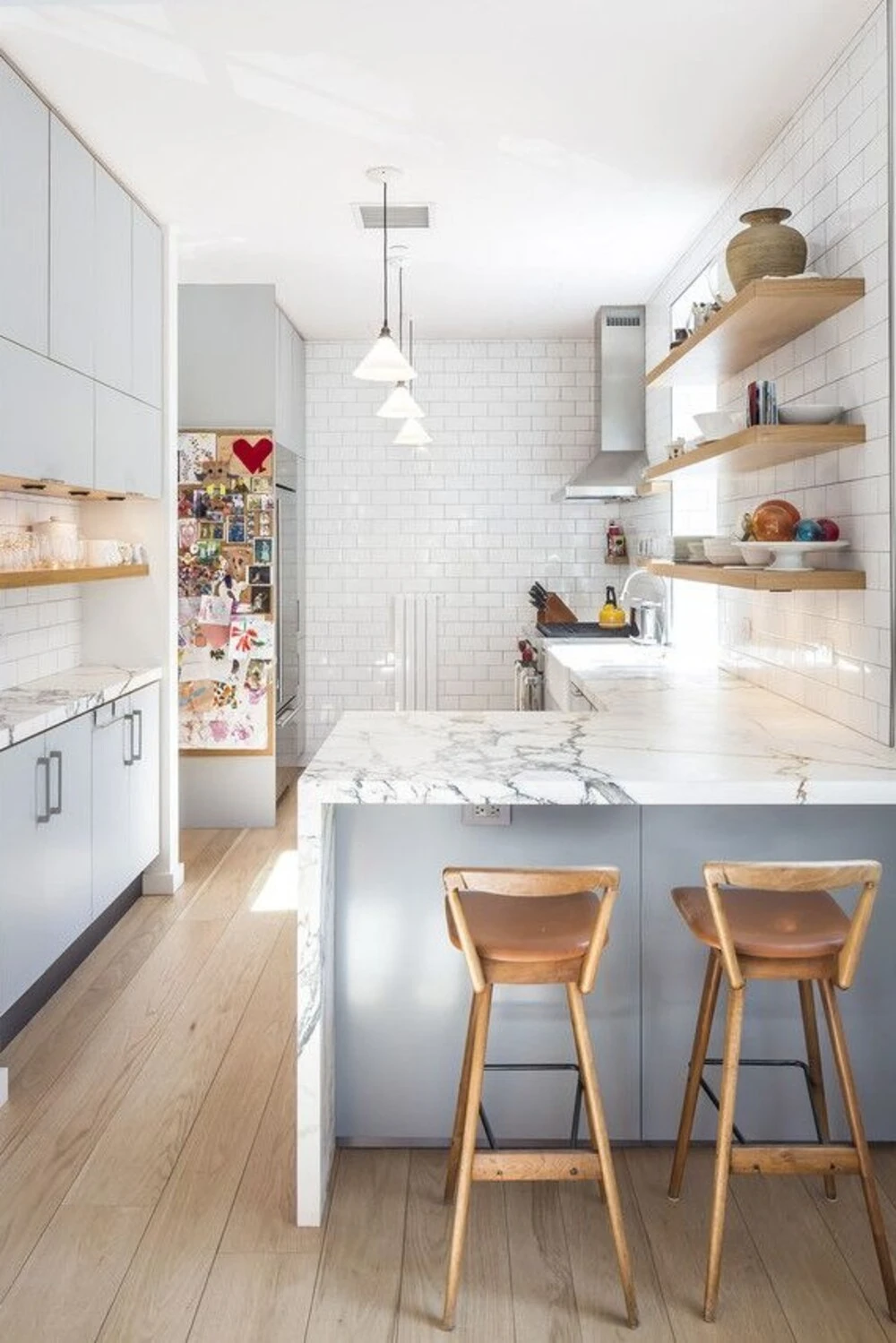
7. Toe-Kick and Under-Cabinet Lighting
Layered lighting is essential in a basement kitchen. Beyond recessed ceiling lights, install LED strips under your cabinets and along the “toe-kick” (the recessed space at the base of the cabinets). Toe-kick lighting makes the cabinets appear to “float,” which lightens the visual weight of the room.
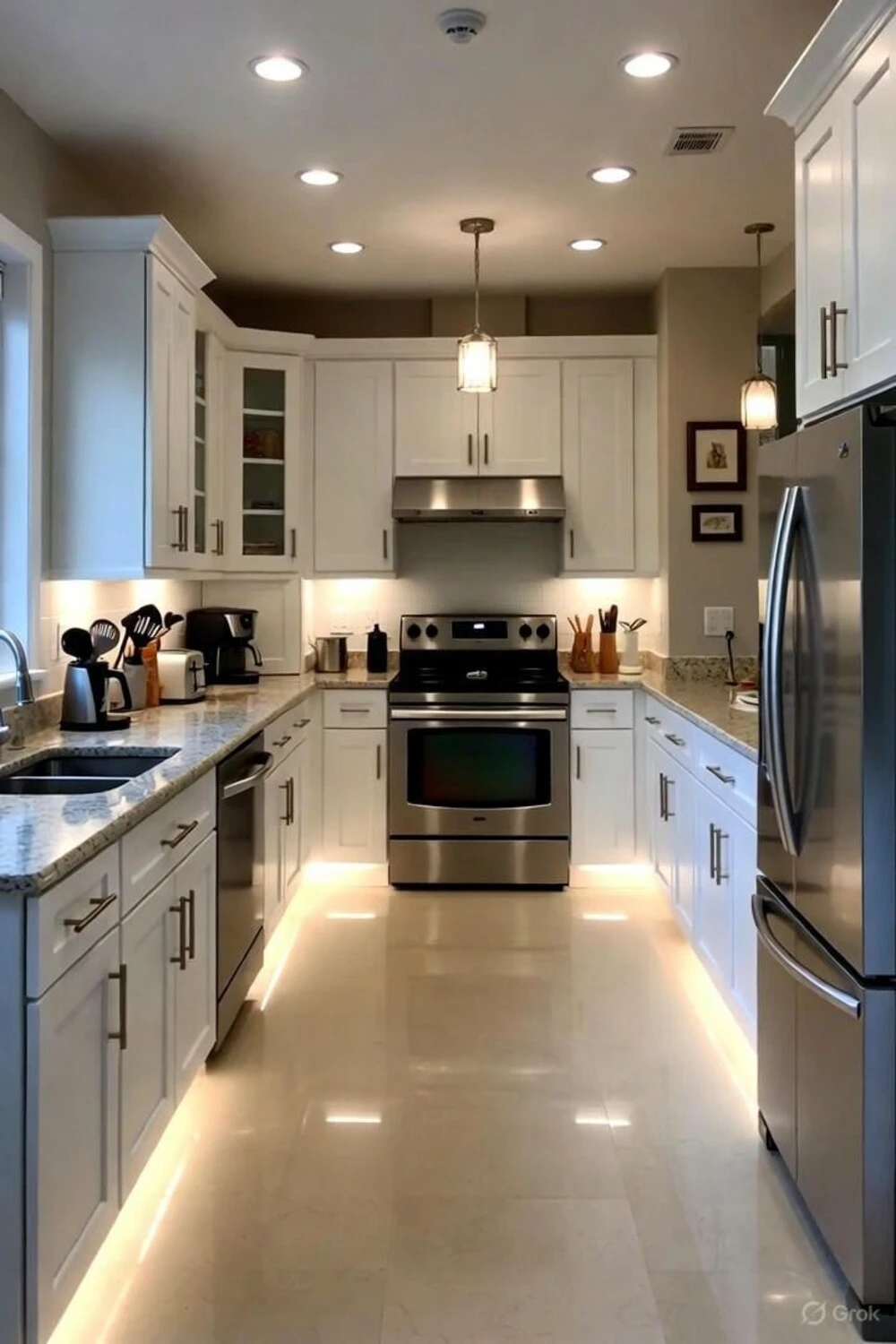
8. Bold Floor Patterns
Draw the eye down the length of the galley with a statement floor. Whether it’s a patterned cement tile or a long, textured runner rug, emphasizing the “run” of the kitchen can make the layout feel intentional and grand rather than cramped.
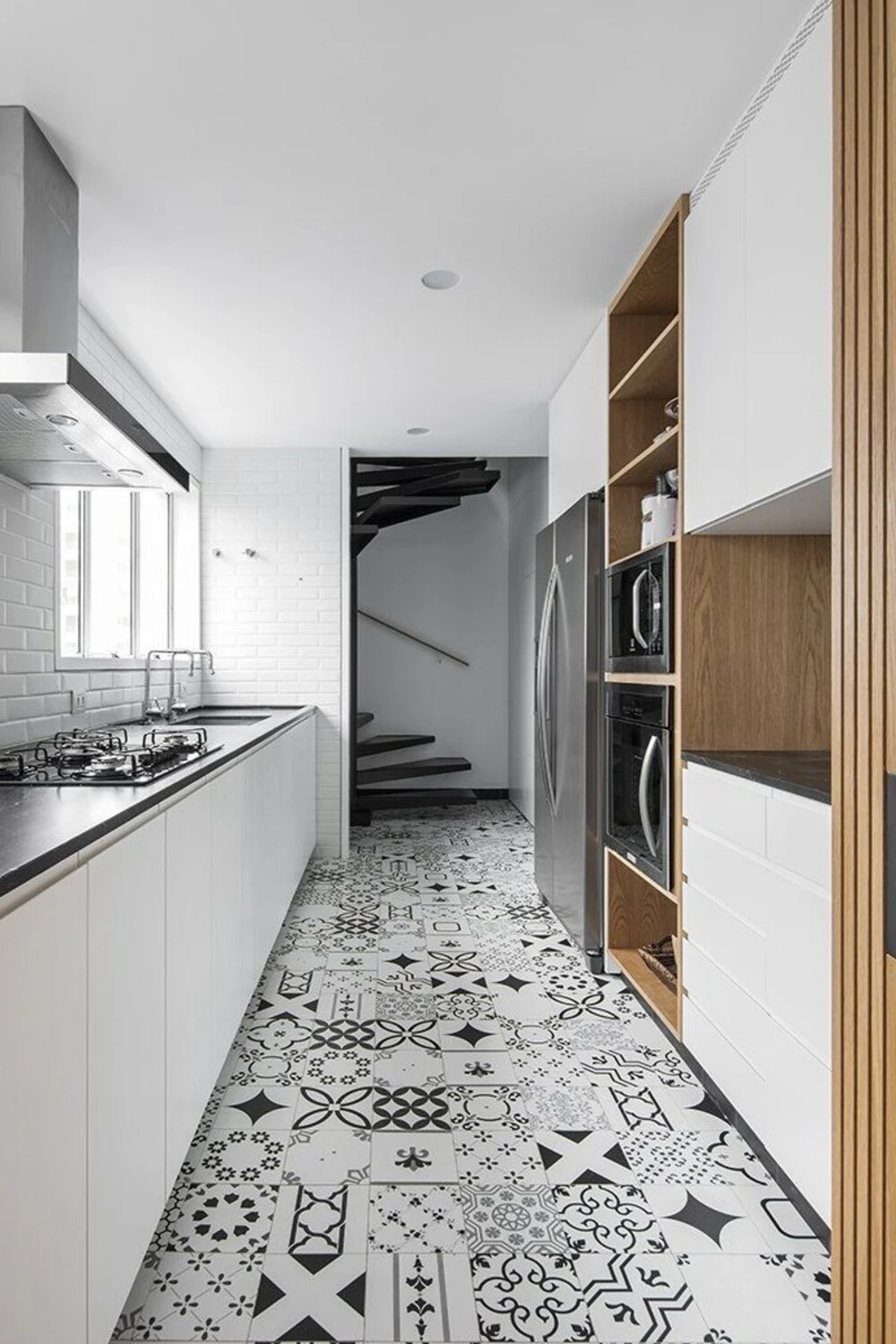
9. Compact “European-Style” Appliances
Standard 30-inch appliances can overwhelm a small basement kitchen. Look for 24-inch ranges, slimline dishwashers, and “apartment-sized” sinks. These “European-style” appliances provide 100% of the functionality while freeing up precious inches of countertop space for food prep.
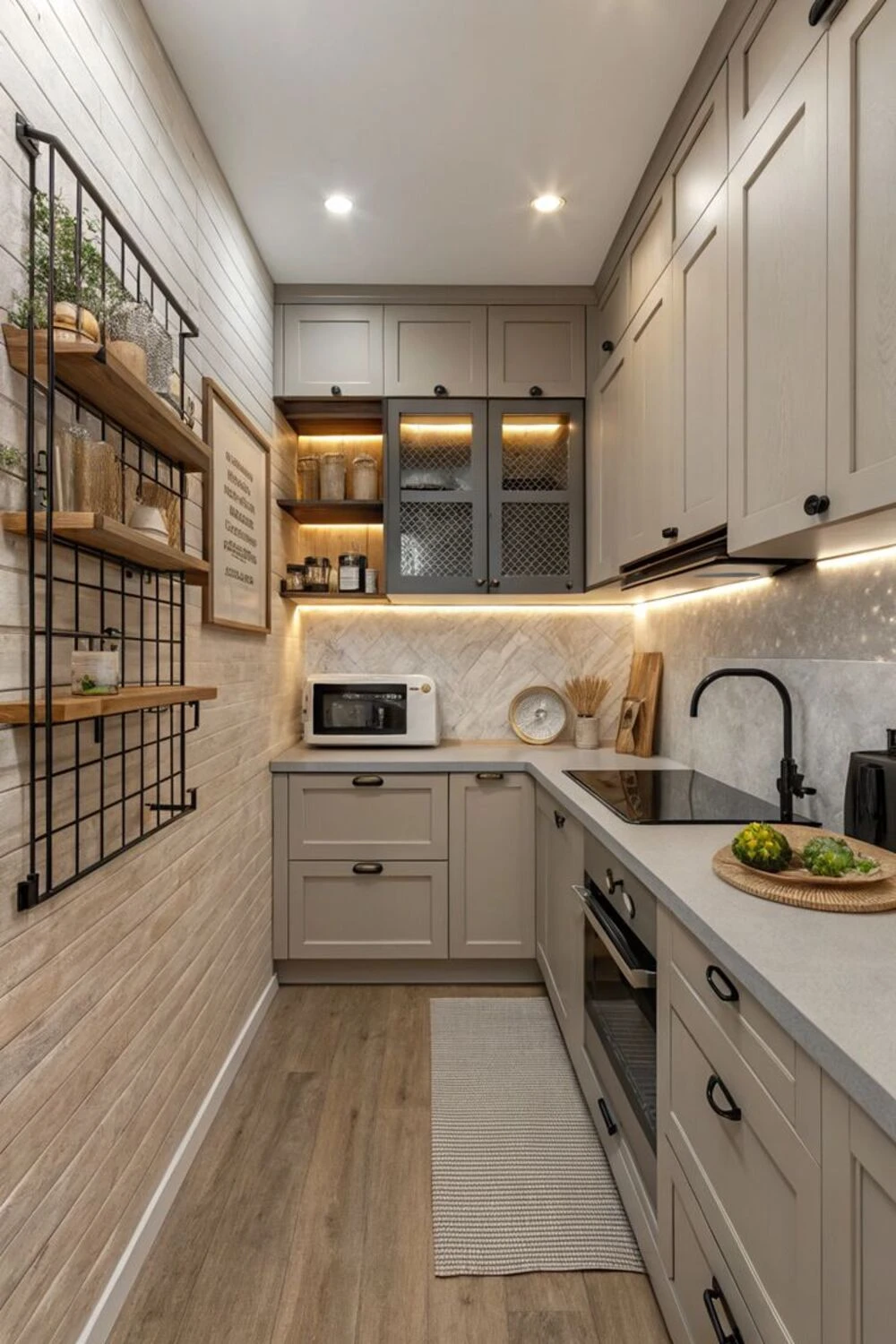
10. Glass-Front Cabinetry
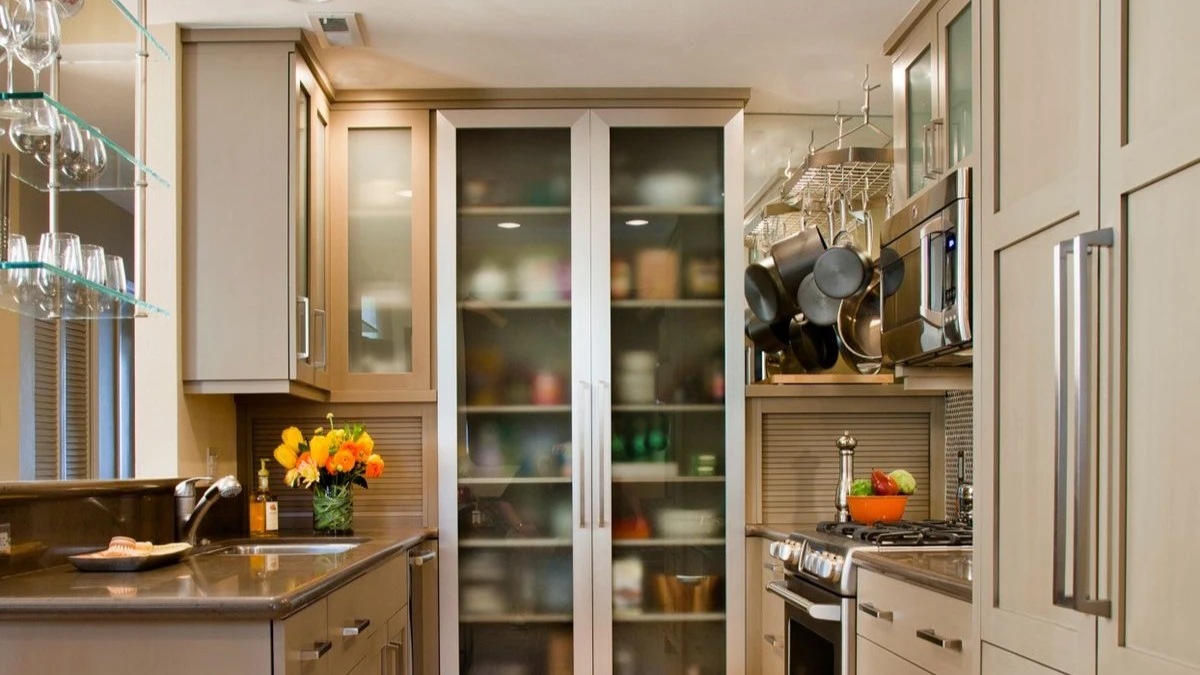
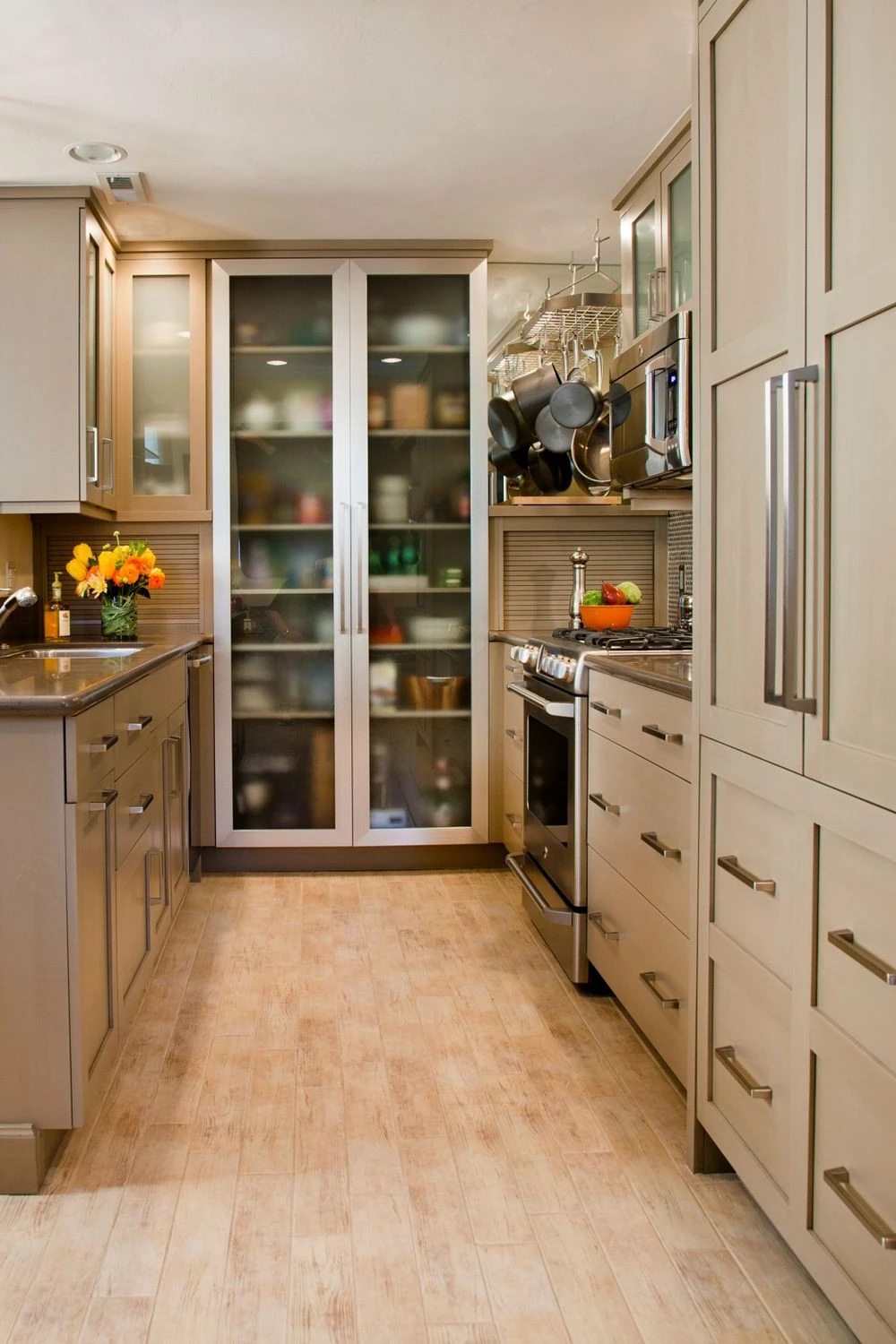
If you aren’t ready to commit to fully open shelving, glass-front cabinets are the perfect middle ground. They offer the protection of a cabinet door but allow the eye to see “through” to the back wall, which adds a sense of depth and prevents the narrow walls from feeling like they are “leaning in.”
Basement Kitchen Challenges
- Ceiling Height: If you have low-hanging pipes or ductwork in basement kitchen, don’t hide them in a massive soffit. Paint them the same color as the ceiling or leave them exposed for an “industrial loft” vibe.
- Moisture-Ready Flooring: Basements are prone to dampness. Skip the hardwood and opt for Luxury Vinyl Plank (LVP). It looks like wood but is completely waterproof and handles basement temperature fluctuations with ease.
- Ventilation: Since exterior venting is often difficult in a basement, invest in a high-quality recirculating range hood with charcoal filters to keep the air fresh.
Conclusion
A basement galley kitchen is a lesson in efficiency and style. By focusing on light-reflecting materials, smart appliance choices, and vertical storage, you can turn a narrow “hallway” into a high-functioning, beautiful space. Whether you’re building a guest suite or a specialized wine bar, these ideas ensure your basement feels like a destination, not an afterthought.