
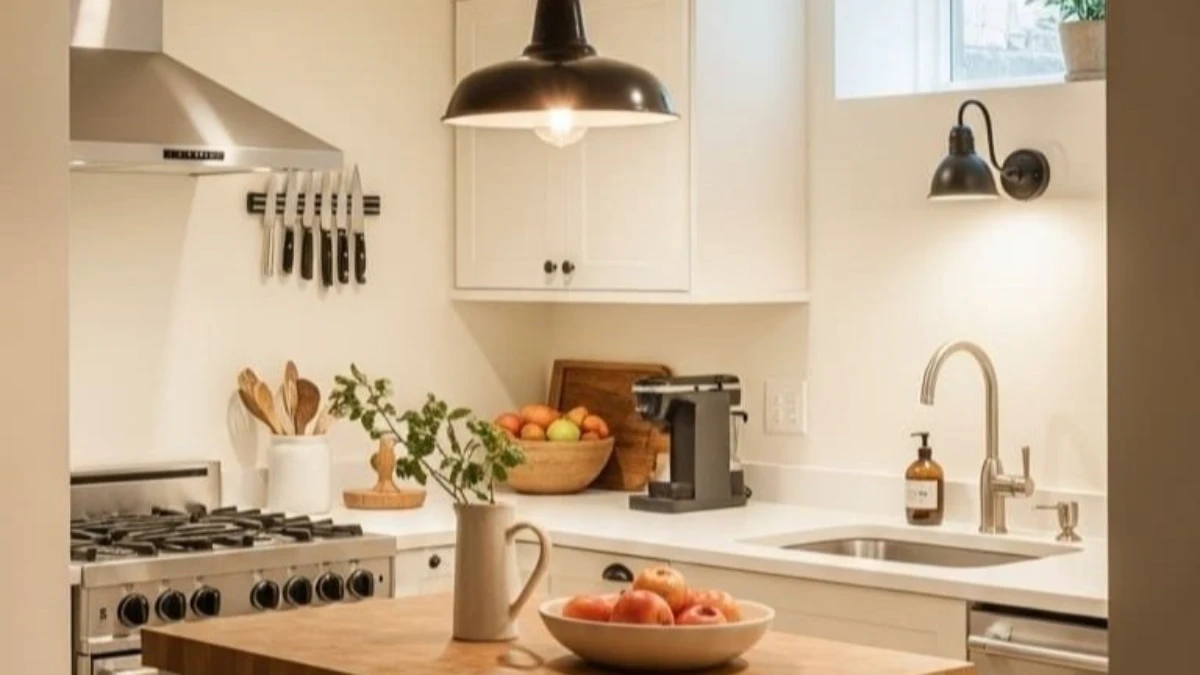
Basement kitchens are becoming increasingly popular, especially for homes with entertainment spaces, rental units, or in-law suites. While adding a kitchen to a basement can greatly increase functionality and home value, small basement kitchens come with unique challenges—limited square footage, low ceilings, and reduced natural light.
The key to a successful basement kitchen is smart planning. With the right layout, storage solutions, and materials, even a compact basement kitchen can feel efficient, stylish, and comfortable. Below are 9 small basement kitchen ideas designed to help you make the most of every inch.
1. Choose a Compact and Efficient Layout
Layout is everything in a small basement kitchen. Galley and single-wall layouts are often the most practical choices, as they keep appliances and work zones close together without wasting space.
Avoid oversized islands or unnecessary walkways. Instead, focus on creating an efficient flow between the sink, stove, and refrigerator. A well-planned layout makes a small kitchen feel purposeful rather than cramped.
2. Use Light Colors to Brighten the Space
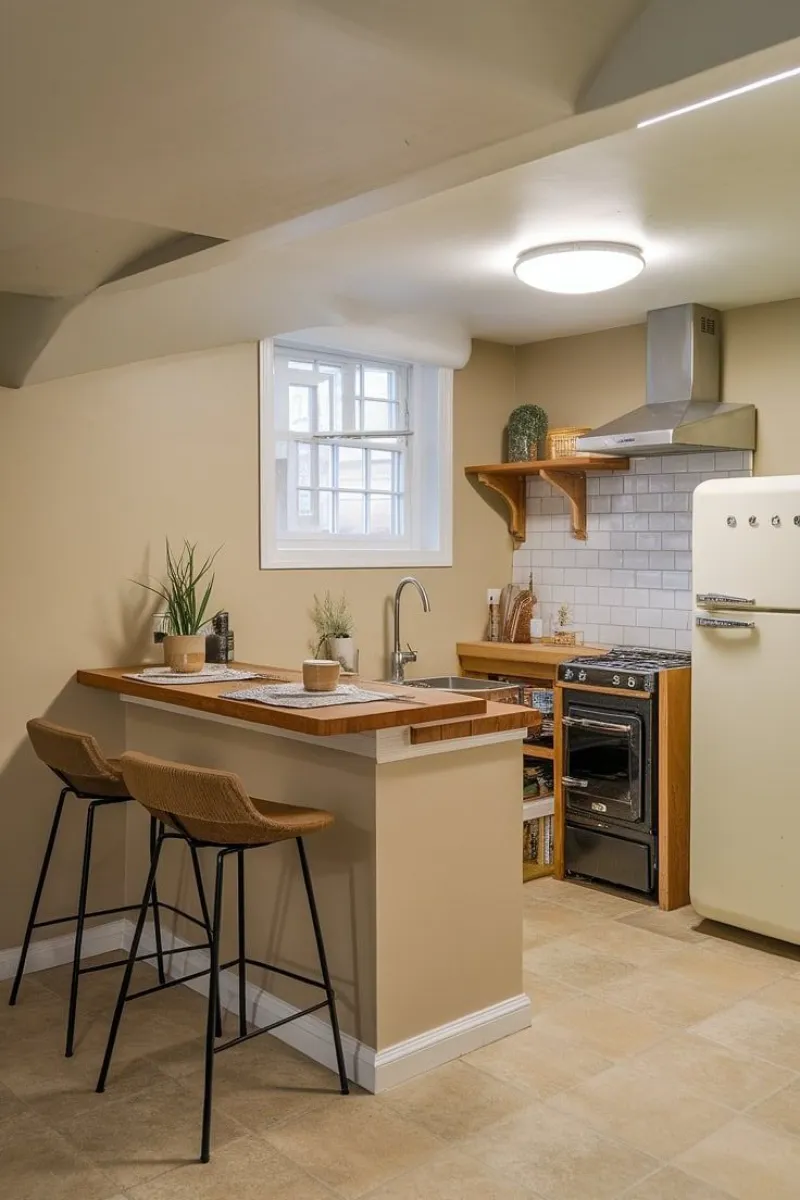
Basements typically lack natural light, making color choice especially important. Light-colored cabinets, walls, and countertops help reflect artificial light and make the space feel more open.
Whites, soft grays, warm beiges, and light wood tones work well in basement kitchens. These colors prevent the room from feeling dark or enclosed, even with low ceilings.
3. Maximize Vertical Storage
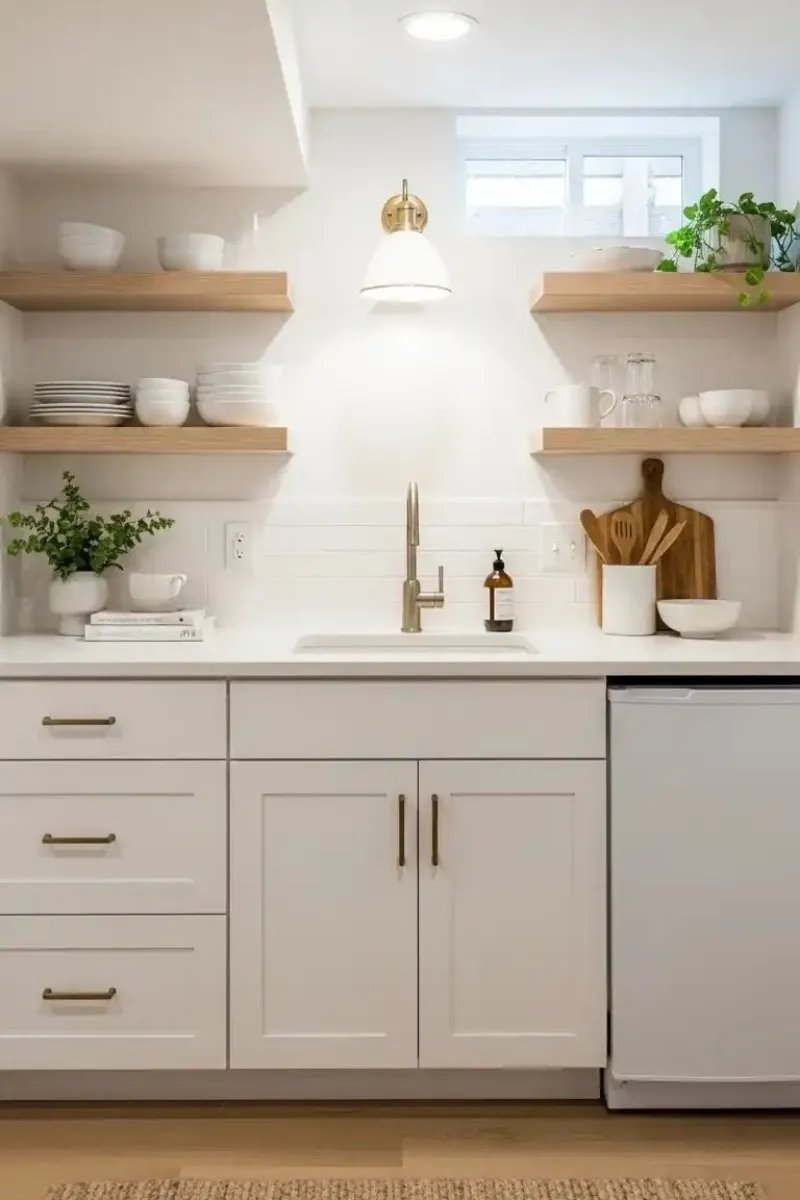
When floor space is limited, vertical storage becomes essential. Install cabinets that reach the ceiling to take advantage of wall height and reduce clutter on countertops.
Open shelving can also work well for frequently used items, but keep it minimal to avoid a crowded look. Combining closed storage with a few open shelves creates balance and keeps the kitchen visually clean.
4. Install Space-Saving Appliances
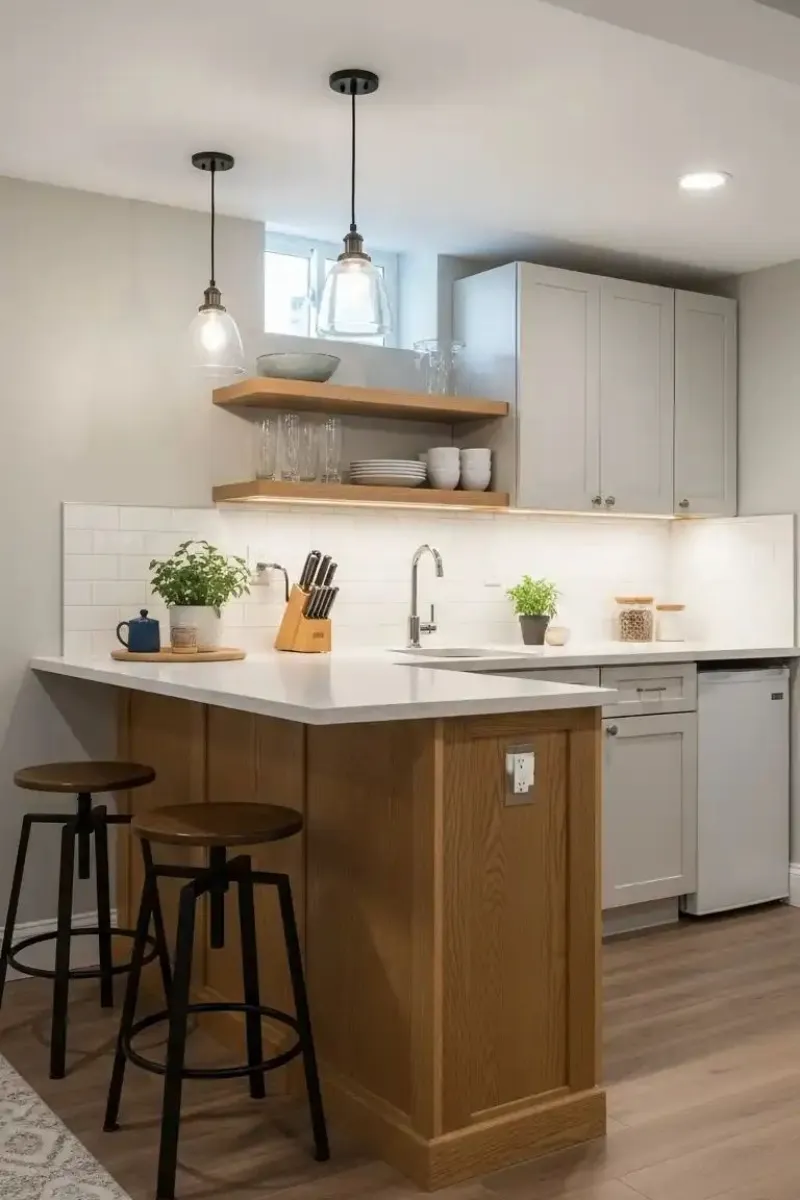
Standard appliances can overwhelm a small basement kitchen. Compact or apartment-size appliances are a smarter choice and still offer plenty of functionality.
Look for slim refrigerators, narrow dishwashers, combination microwave ovens, or two-burner cooktops. Choosing the right appliance sizes helps maintain proper proportions and improves usability.
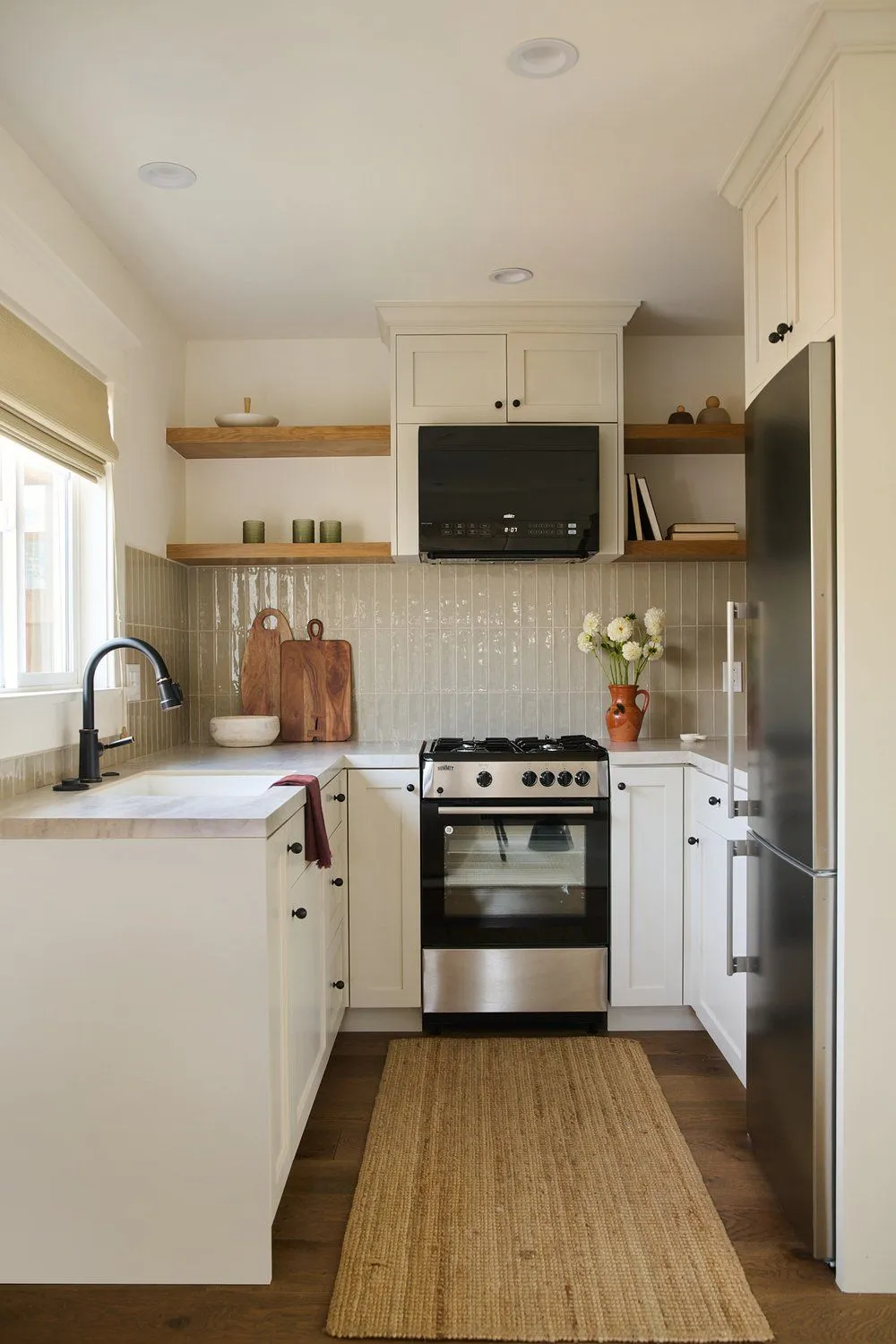
5. Improve Lighting with Layered Solutions
Lighting can make or break a basement kitchen. Since natural light is limited, layered lighting is essential. Recessed ceiling lights work well in low-ceiling basements and provide even illumination.
Add under-cabinet lighting to brighten work surfaces and reduce shadows. Task lighting and accent lighting help create depth and make the space feel more inviting.
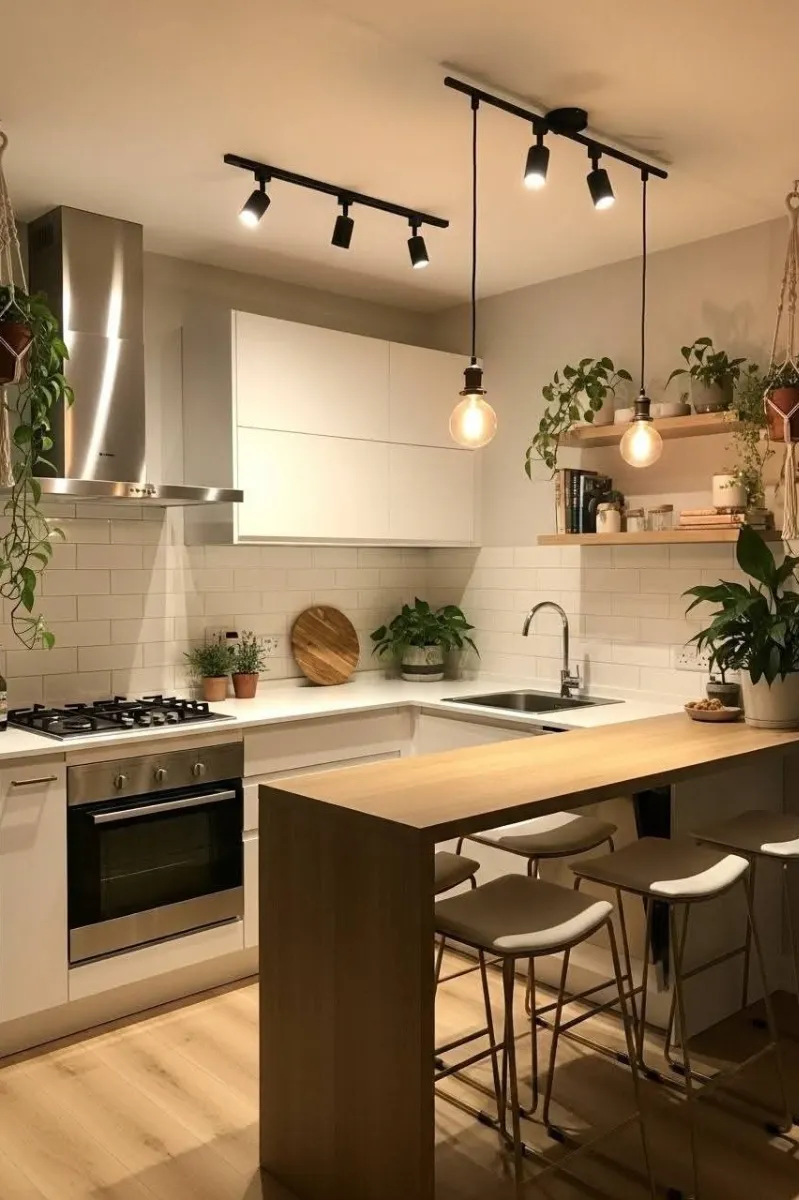
6. Keep the Design Simple and Cohesive
A simple, cohesive design helps small spaces feel larger. Stick to clean cabinet styles, minimal hardware, and a limited color palette.
Avoid mixing too many materials or finishes, which can visually clutter the space. Consistency in cabinetry, countertops, and flooring creates a seamless look that enhances openness.
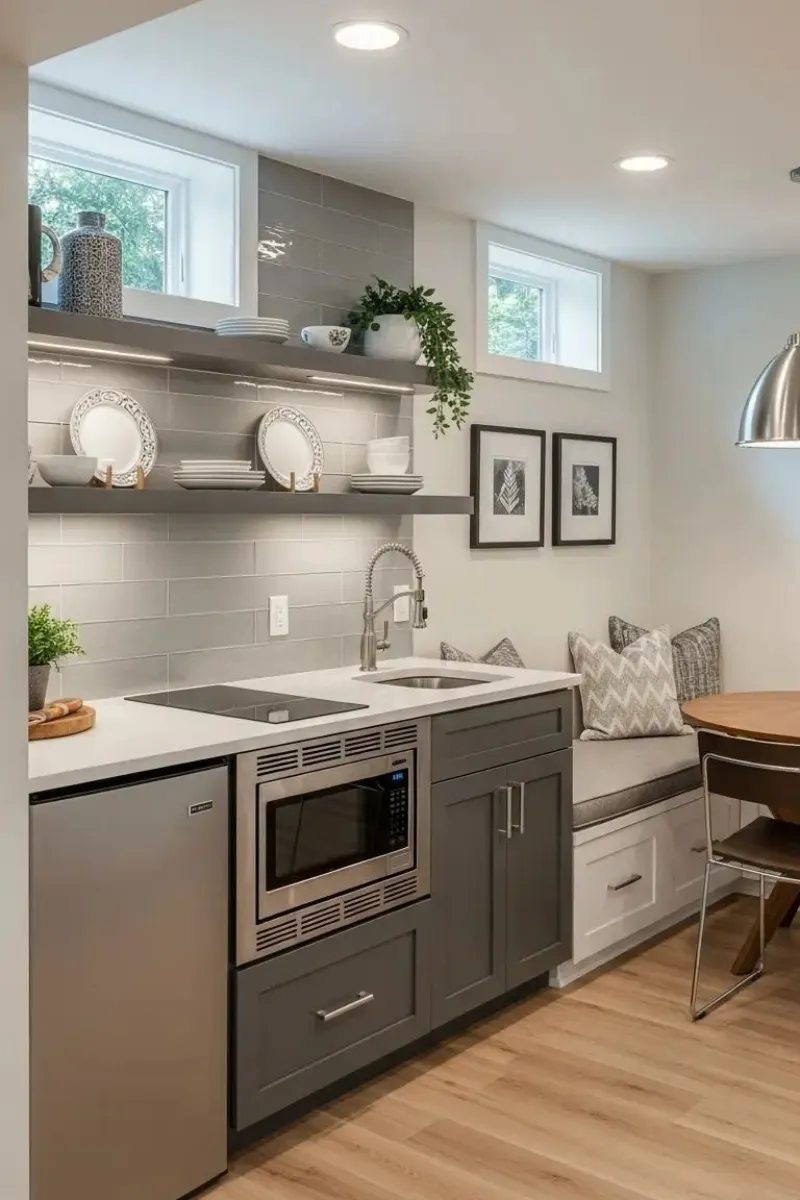
7. Add Multi-Functional Features
In small basement kitchens, multi-functional elements are especially valuable. Consider a narrow island or peninsula with built-in storage that doubles as a prep area and seating space.
Fold-down counters, pull-out cutting boards, or rolling carts can provide extra workspace when needed and be tucked away when not in use.
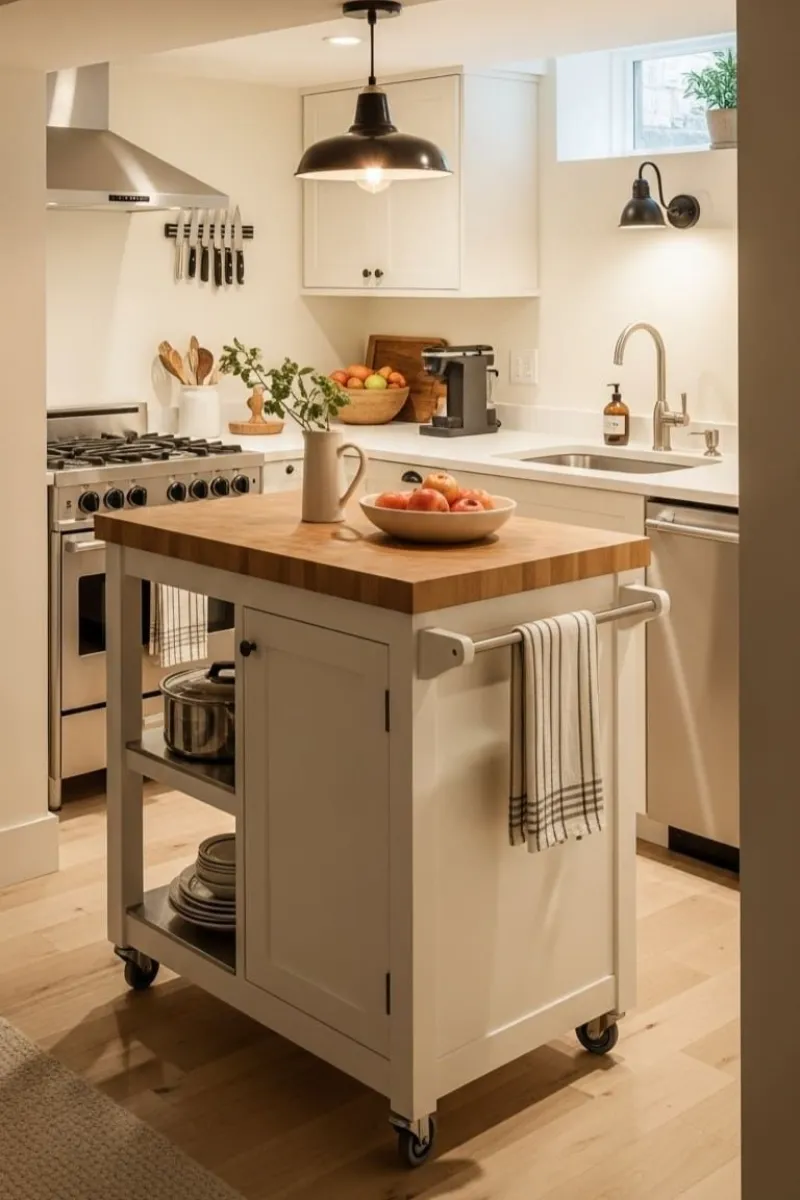
8. Make the Most of Corners and Awkward Spaces
Basements often have unusual layouts with columns, ducts, or awkward corners. Custom cabinetry, corner cabinets, and pull-out storage solutions help make these spaces usable.
Don’t leave dead zones unused—smart storage solutions can turn awkward areas into highly functional features.
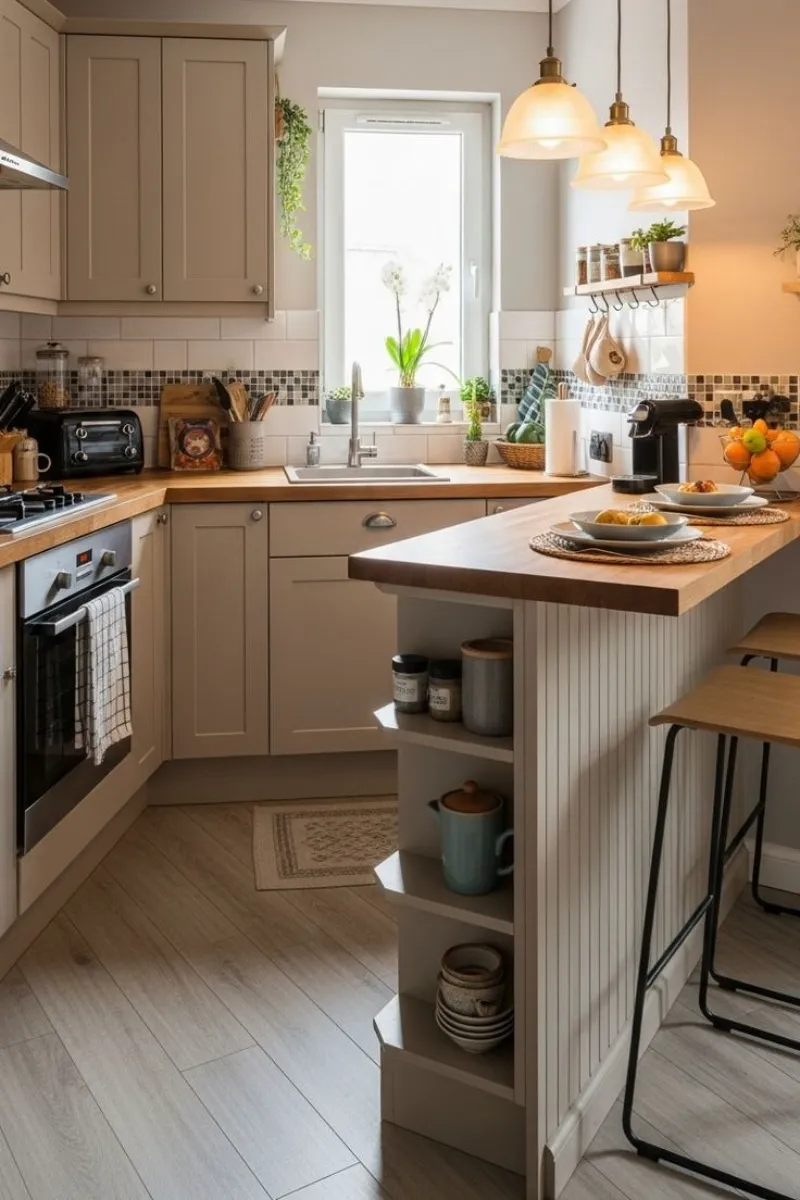
9. Use Durable, Basement-Friendly Materials
Basements are more prone to moisture, so choosing durable materials is crucial. Opt for moisture-resistant cabinets, waterproof flooring, and easy-to-clean surfaces.
Luxury vinyl plank flooring, sealed tile, and quartz countertops are popular choices for basement kitchens due to their durability and low maintenance requirements.
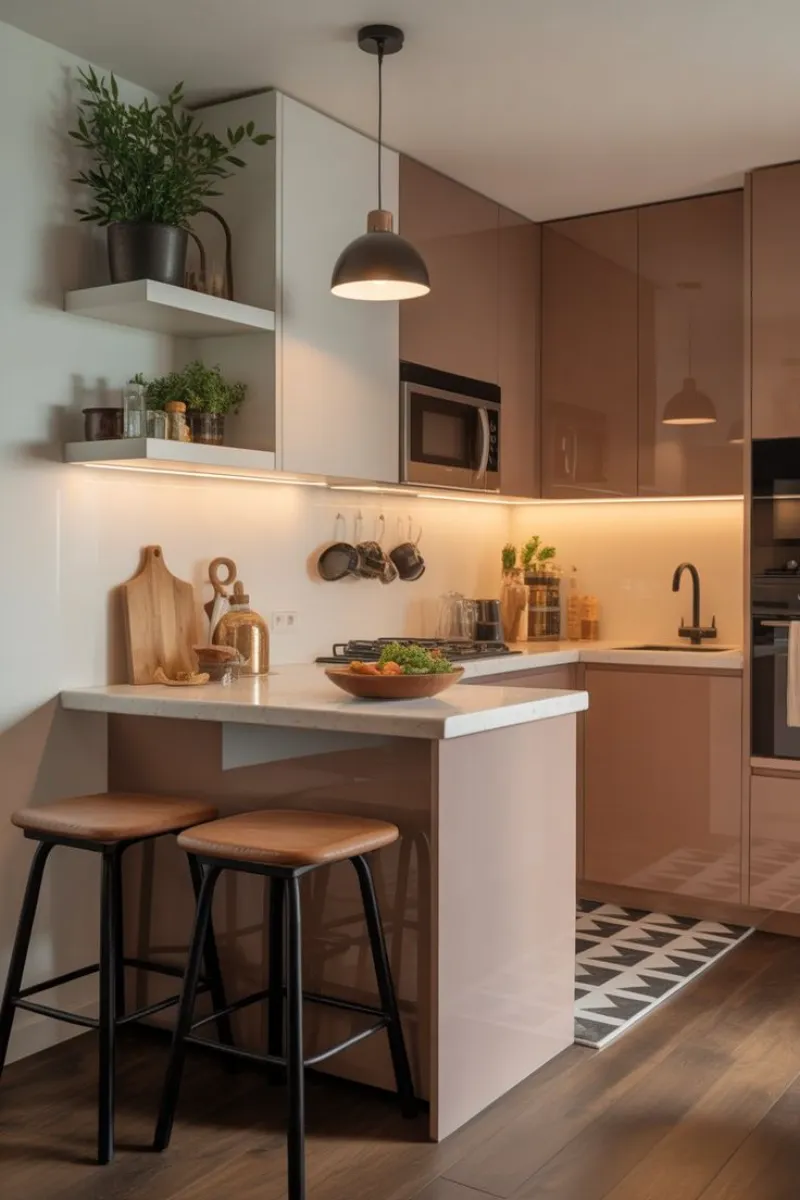
Cleaning Tips: Small Basement Kitchen Maintenance
Maintenance is especially important in basement kitchens due to humidity and limited airflow. Use a dehumidifier to control moisture levels and prevent mold or mildew.
Ensure proper ventilation, especially if the kitchen includes a cooktop or oven. Clean surfaces regularly, wipe up spills promptly, and inspect cabinets and flooring for signs of moisture damage. Good maintenance helps extend the life of your kitchen and keeps it safe and comfortable.
Final Thoughts
A small basement kitchen doesn’t have to feel tight or impractical. With thoughtful layout planning, smart storage, proper lighting, and durable materials, you can create a basement kitchen that feels functional and welcoming.
Looking for more kitchen design inspiration? You might also love: