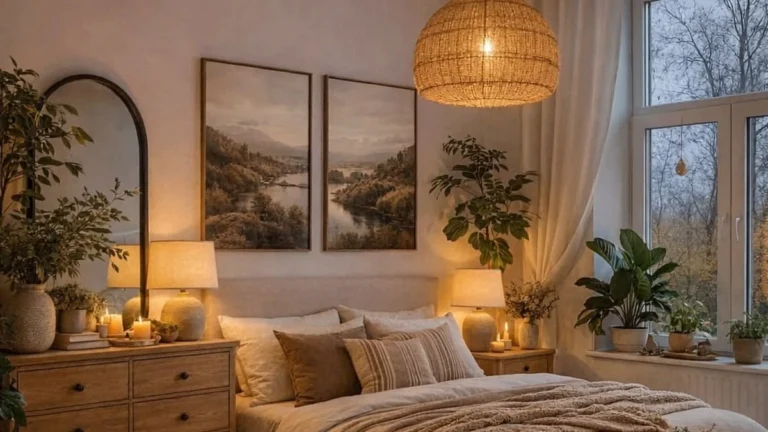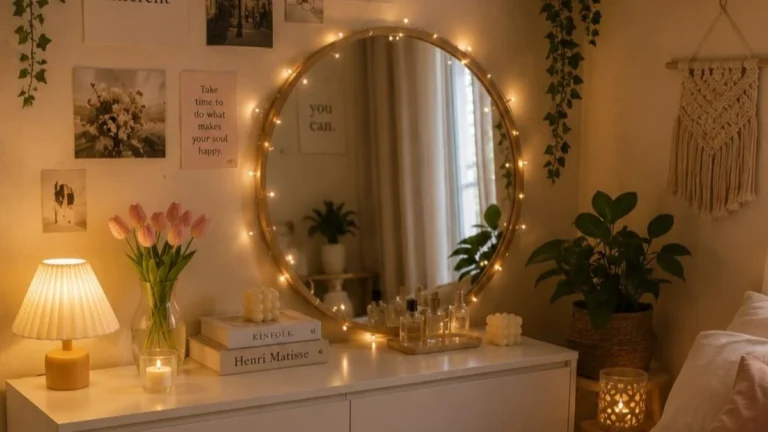
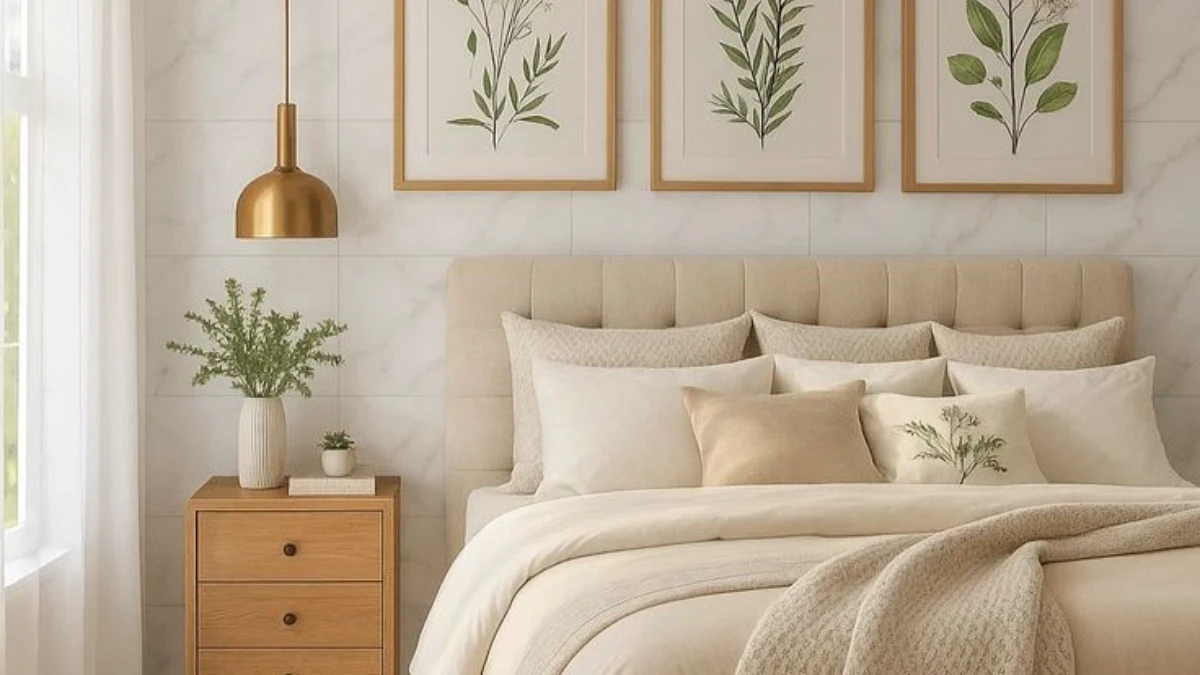
A white bedroom is timeless, calming, and incredibly versatile. It feels fresh, light, and uncluttered—exactly what many people want in a space designed for rest. But there’s a common challenge that comes with decorating in white: when it’s done wrong, the room can feel flat, cold, or even unfinished.
The good news is that a white bedroom doesn’t have to be dull or sterile. With the right mix of textures, materials, lighting, and subtle contrast, you can create a space that feels layered, cozy, and full of personality—without sacrificing that clean, serene look.
Below are practical, design-forward ways to decorate a white bedroom so it feels warm, interesting, and intentionally styled.
What Makes a White Bedroom Feel Boring?
A white bedroom usually feels boring for one of three reasons: lack of contrast, lack of texture, or overly minimal styling. When everything is the same shade and finish, the eye has nowhere to rest. Flat white walls paired with plain white bedding and minimal décor can easily tip into “showroom” territory rather than feeling like a lived-in home.
The solution isn’t adding bold color everywhere—it’s about layering thoughtfully and giving the room visual depth.
How to Decorate a White Bedroom Without Making It Boring
1. Add Warm Neutrals for Depth
One of the easiest ways to make a white bedroom more inviting is by introducing warm neutral tones. Shades like beige, cream, taupe, and soft greige soften the crispness of white and prevent the room from feeling too stark.
You might add these tones through bedding, throw pillows, curtains, or an area rug. Even subtle shifts in tone make a noticeable difference. A white bedroom layered with warm neutrals still feels clean, but it instantly becomes more welcoming and relaxed.
Wood furniture also plays a huge role here. Light oak, walnut, or even painted wood with warm undertones brings natural warmth into an otherwise all-white space.
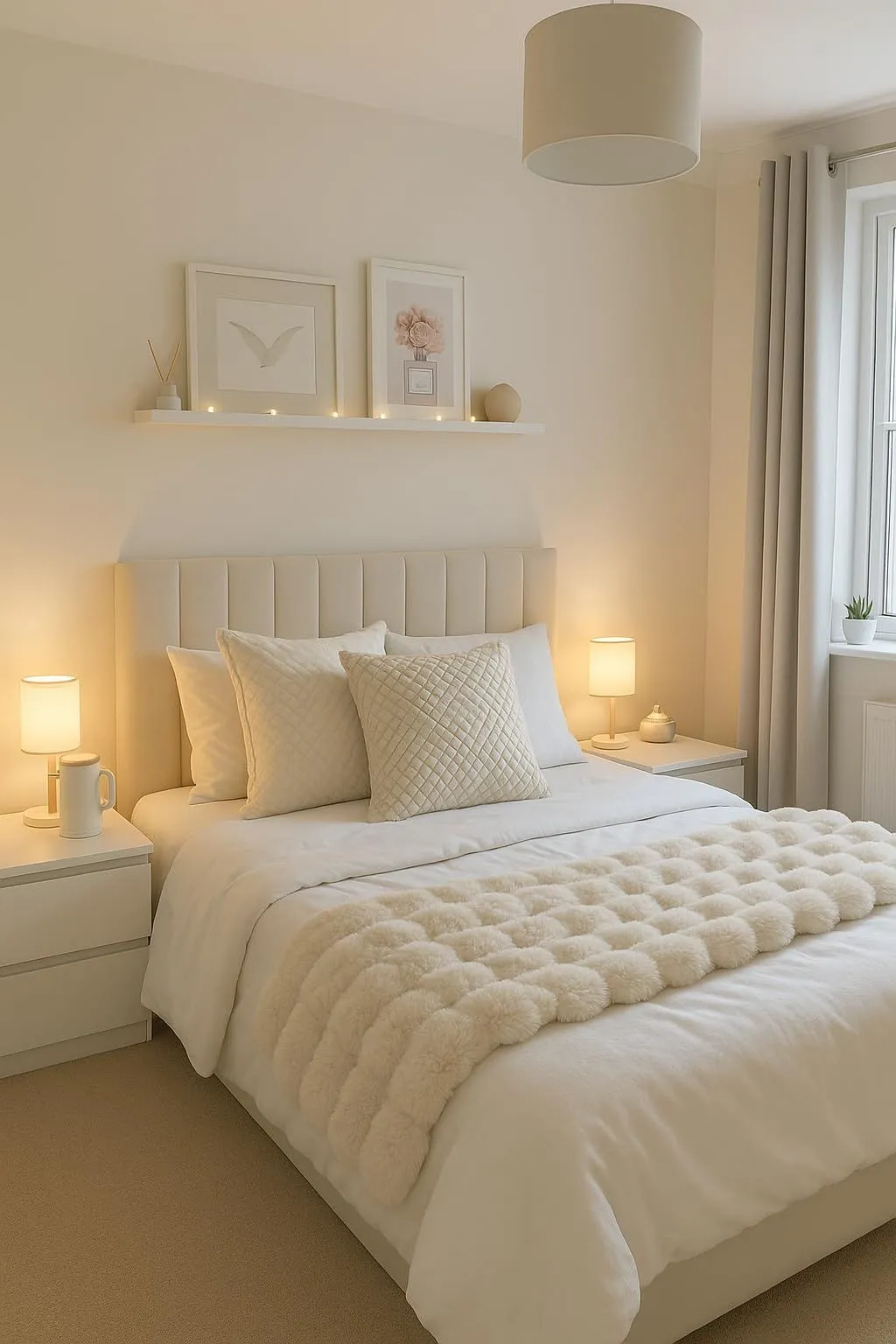
2. Use Texture Instead of More Color
Texture is the secret weapon of a beautiful white bedroom. When color is limited, texture does the heavy lifting.
Think beyond flat surfaces. Linen bedding, chunky knit throws, boucle accent chairs, woven rugs, and upholstered headboards all create contrast without changing the color palette. Mixing rough and smooth finishes—such as matte walls with glossy ceramics or soft textiles with metal accents—keeps the room visually interesting.
Even within white itself, texture matters. A smooth cotton duvet paired with a nubby wool throw and embroidered pillows creates layers that feel intentional rather than plain.
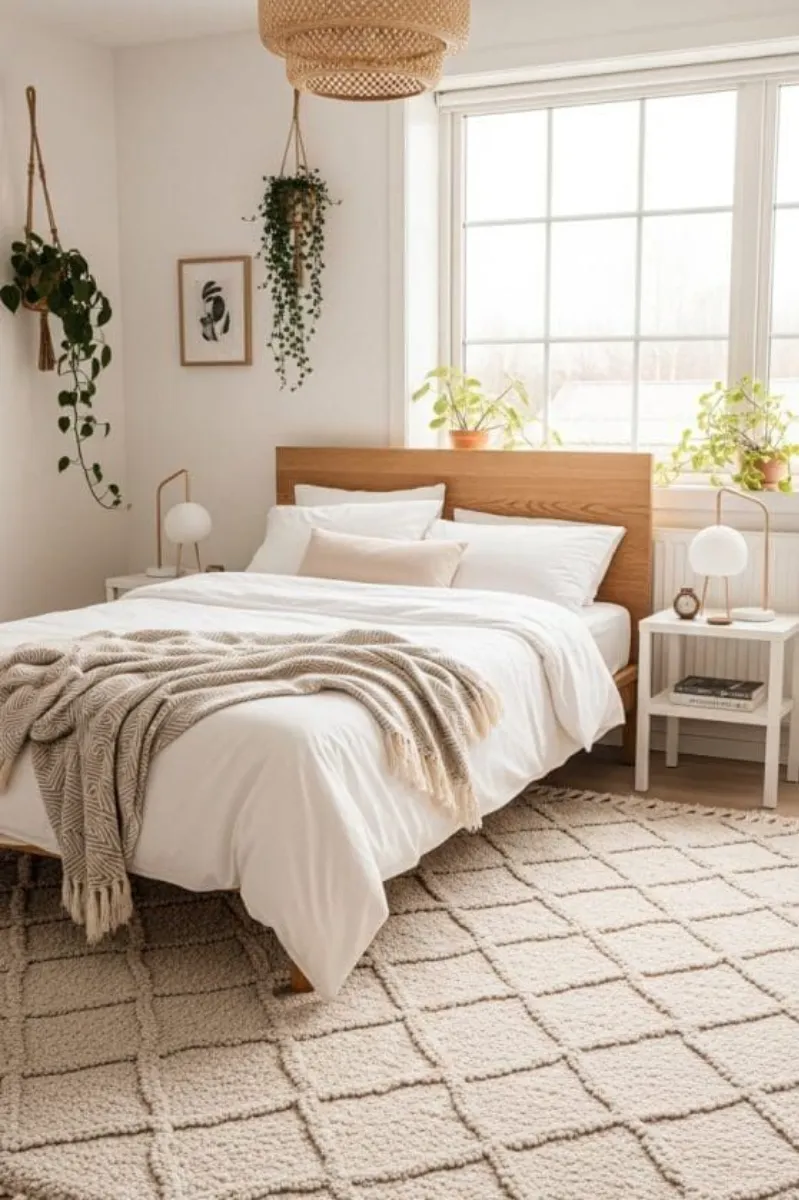
3. Introduce Contrast with Dark Accents
White bedrooms benefit greatly from a little contrast. Adding a few darker elements helps define the space and gives it structure.
This doesn’t mean turning the room dark. Small accents in black, charcoal, dark wood, or even deep bronze can ground the space beautifully. Picture black picture frames on white walls, a dark wood bench at the foot of the bed, or a black metal bedside lamp.
These details anchor the room visually and keep it from feeling washed out, while still allowing white to remain the star.
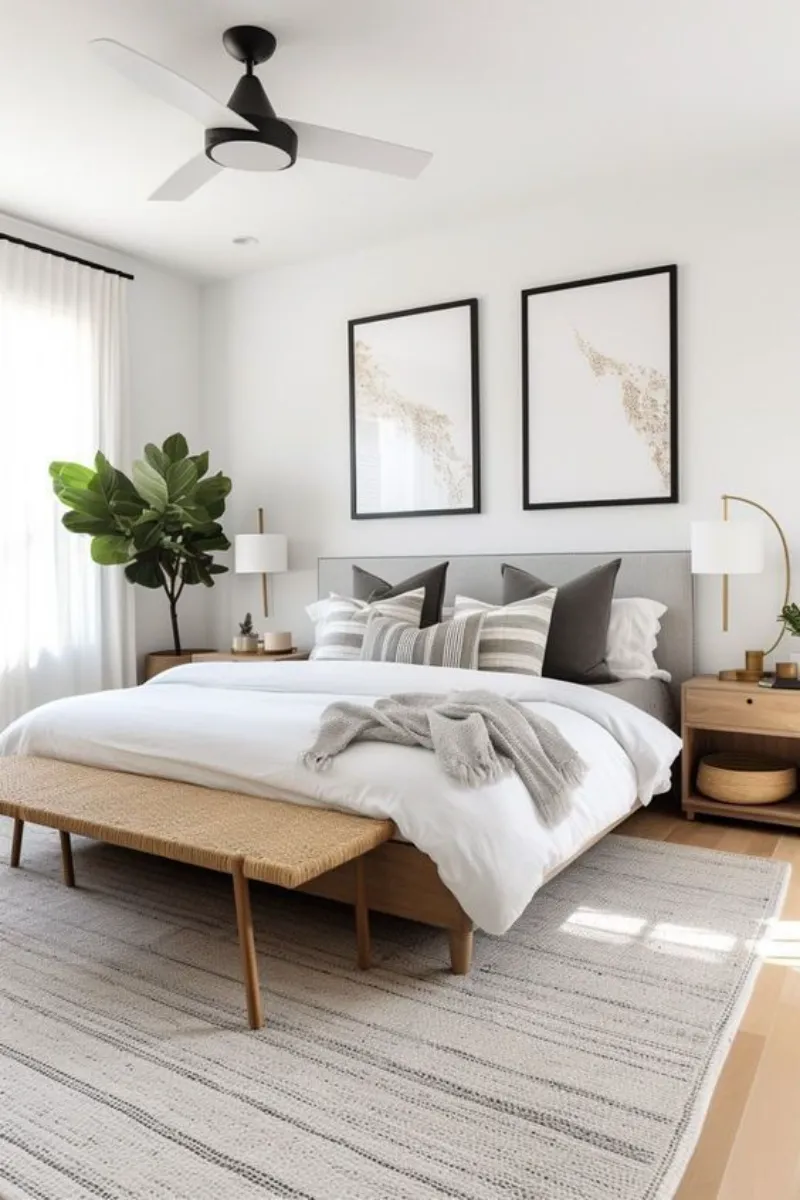
4. Bring in Natural Elements
Natural materials instantly make a white bedroom feel warmer and more organic. Wood, rattan, cane, jute, stone, and ceramic pieces all introduce subtle variation that complements white beautifully.
A woven basket, a rattan light fixture, or a simple wooden stool can add character without overwhelming the space. Plants are especially effective in white bedrooms—they add color, texture, and life in the most natural way possible.
Even a single potted plant or a vase of greenery can make the room feel fresher and more inviting.
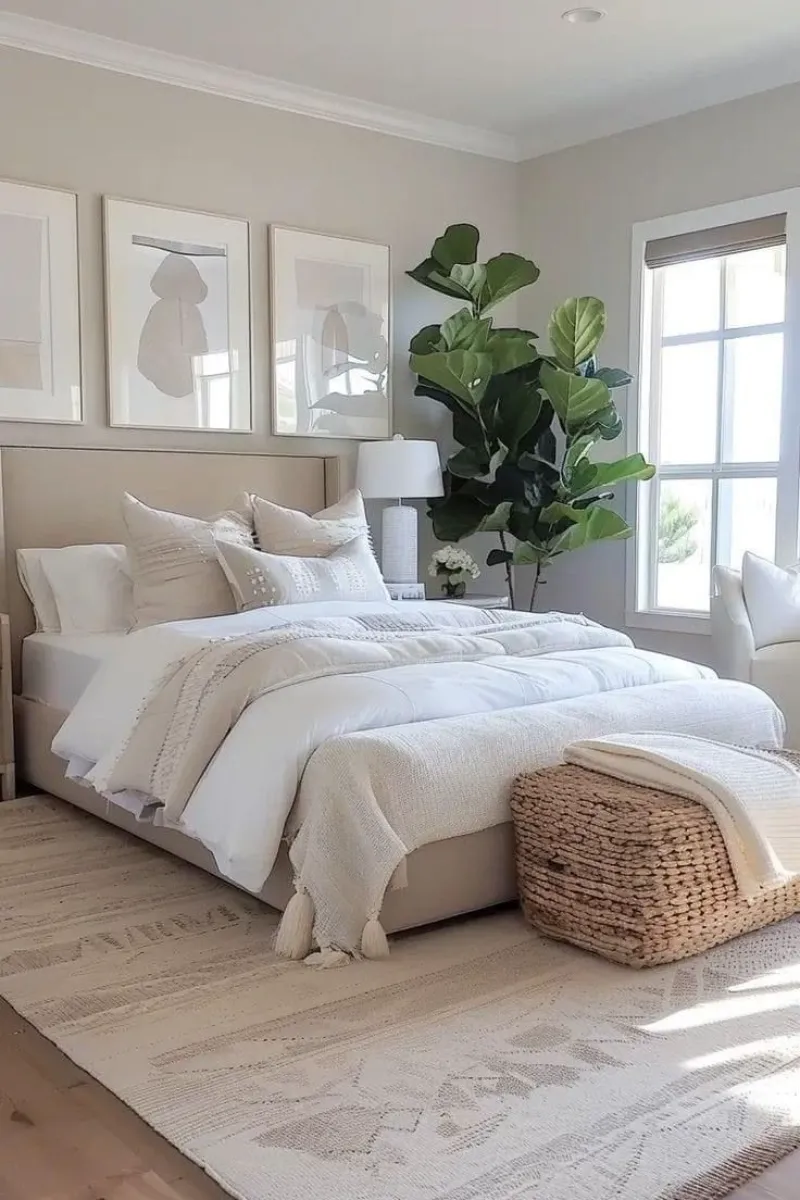
5. Create a Statement with an Accent Wall
A white bedroom doesn’t mean every surface has to be white. An accent wall is a smart way to add interest while keeping the overall look calm.
Instead of bold colors, consider texture-based accent walls. Wood paneling, board-and-batten, subtle wallpaper, or a limewash finish all add depth without disrupting the serene feel of the room. Soft neutral wallpapers or lightly textured finishes work especially well behind the bed, creating a focal point that feels elegant rather than loud.
The key is restraint—one statement wall is enough.
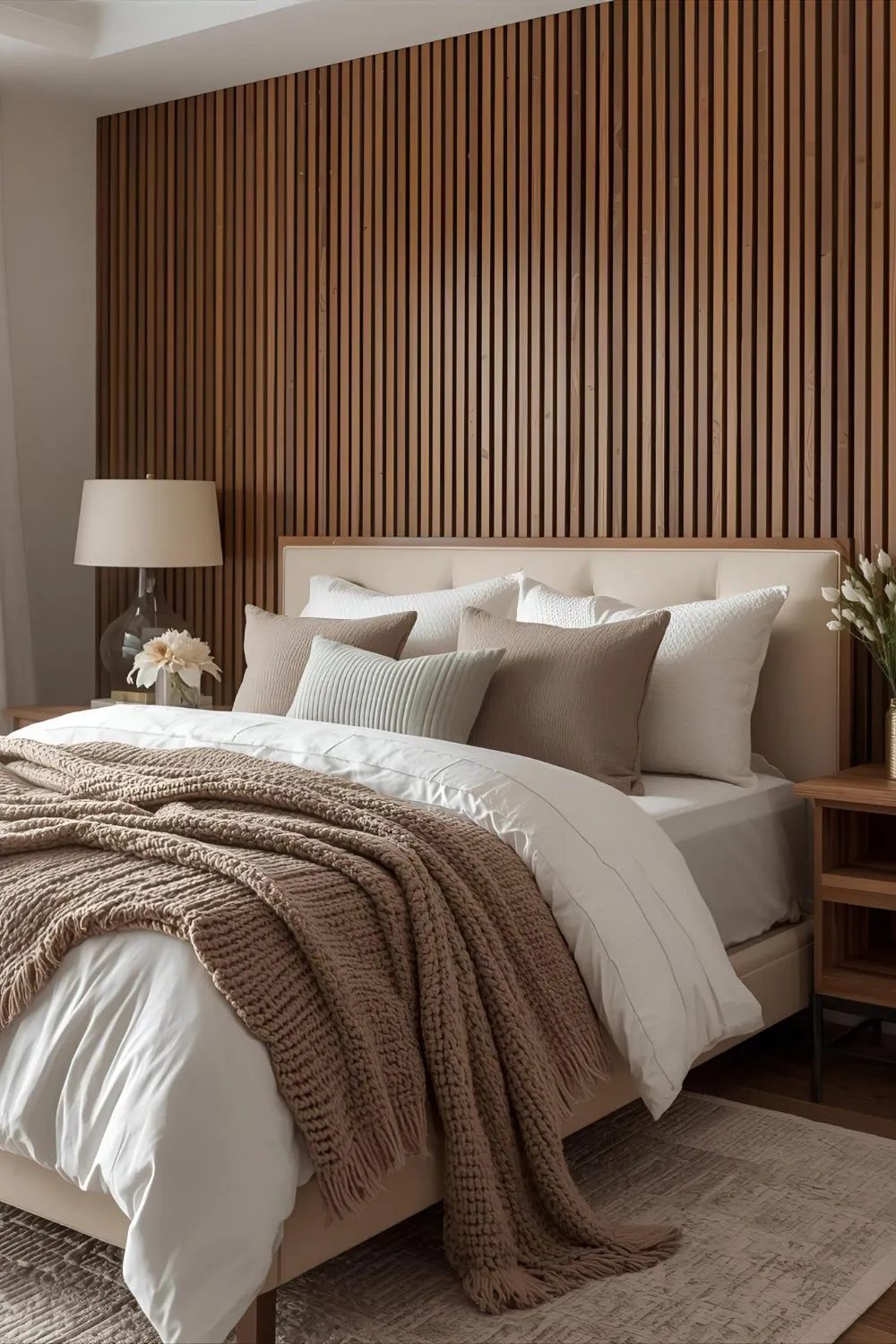
6. Layer Lighting for a Cozy Atmosphere
Lighting can make or break a white bedroom. Relying on a single overhead light often makes the space feel flat and harsh.
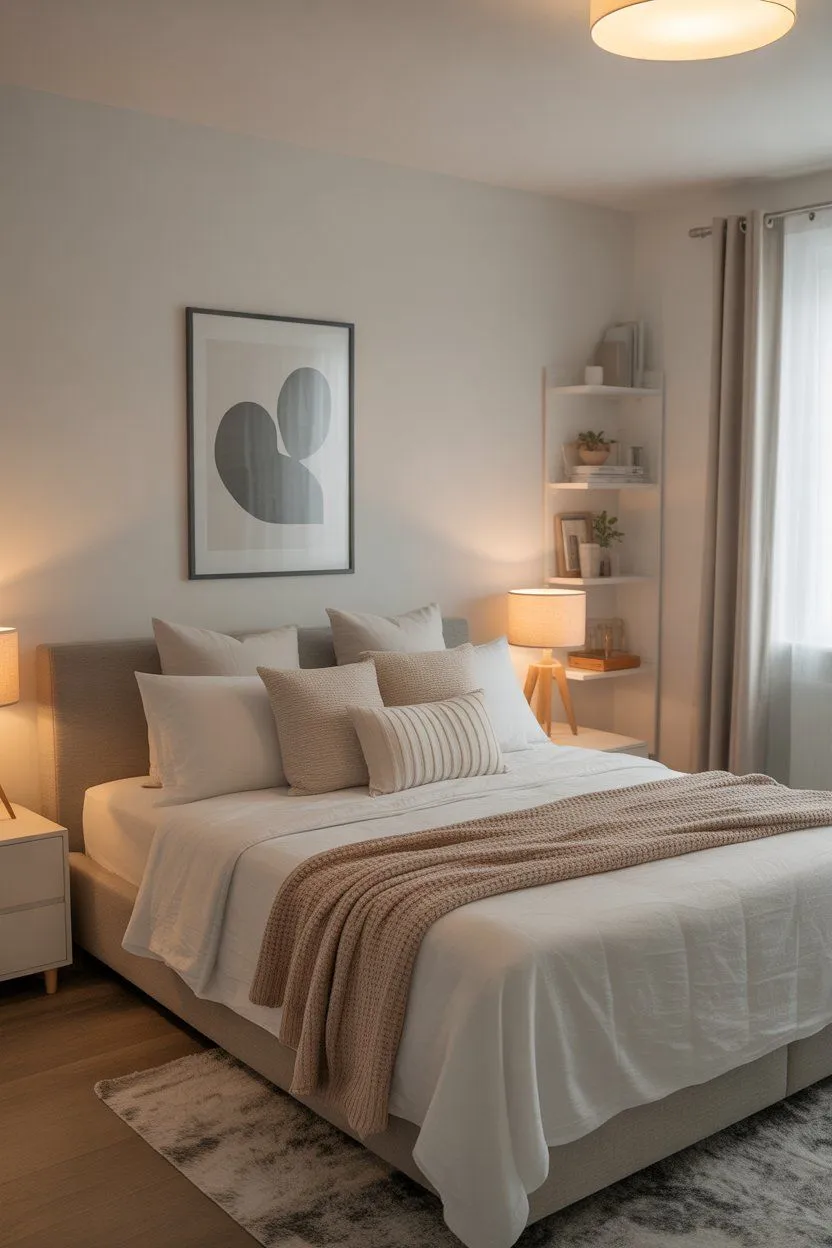
Layered lighting creates warmth and dimension. Combine ambient lighting (like ceiling fixtures), task lighting (bedside lamps or sconces), and accent lighting (table lamps or soft LED strips). Warm-toned bulbs are essential—they prevent white walls from feeling cold or clinical.
Soft lighting brings out texture, highlights décor, and creates the cozy mood that white bedrooms often lack.
7. Add Artwork and Personal Décor
Minimal doesn’t mean empty. Artwork and personal décor are what make a white bedroom feel like yours.
Black-and-white photography, abstract art, line drawings, or nature-inspired prints all work beautifully against white walls. Even simple frames add structure and visual contrast. The key is choosing pieces that feel intentional rather than filling space just for the sake of it.
Styling nightstands and dressers with a few meaningful objects—books, ceramics, or framed photos—adds personality without cluttering the room.

8. Mix Materials in Furniture and Décor
A room filled with matching furniture finishes can feel flat, especially in a white space. Mixing materials adds depth and prevents the bedroom from looking one-dimensional.
Pair a wooden bed frame with metal lighting, or an upholstered headboard with a sleek glass nightstand. Combining different finishes—matte, glossy, soft, and hard—keeps the room visually engaging while still cohesive.
The goal isn’t contrast for its own sake, but balance.
9. Use Patterns Carefully
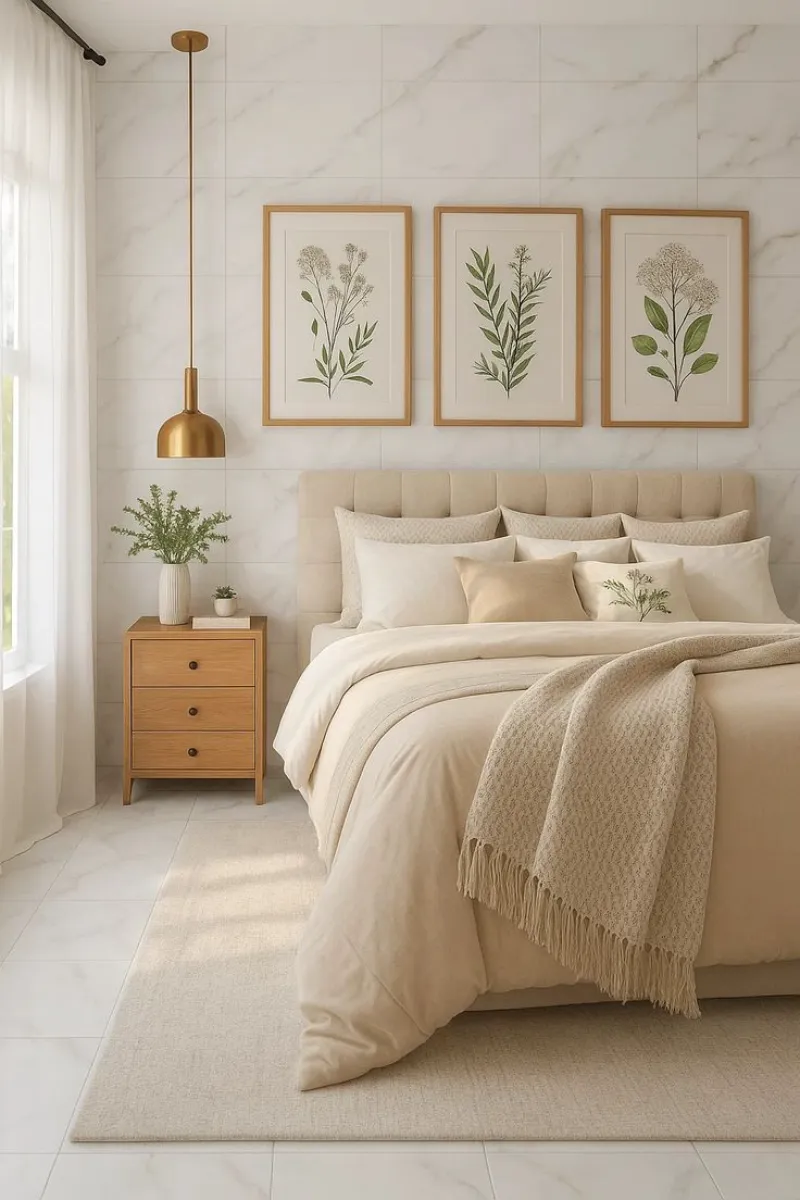
Patterns can absolutely work in a white bedroom when used thoughtfully. Subtle stripes, soft florals, or minimalist geometric designs add interest without overpowering the space.
Patterned rugs, pillows, or bedding introduce movement and texture, especially when the rest of the room is neutral. Keeping patterns in soft tones or low contrast ensures the bedroom still feels calm and restful.
Avoid layering too many patterns at once. One or two carefully chosen pieces are usually enough.
10. Style with Layers and Negative Space
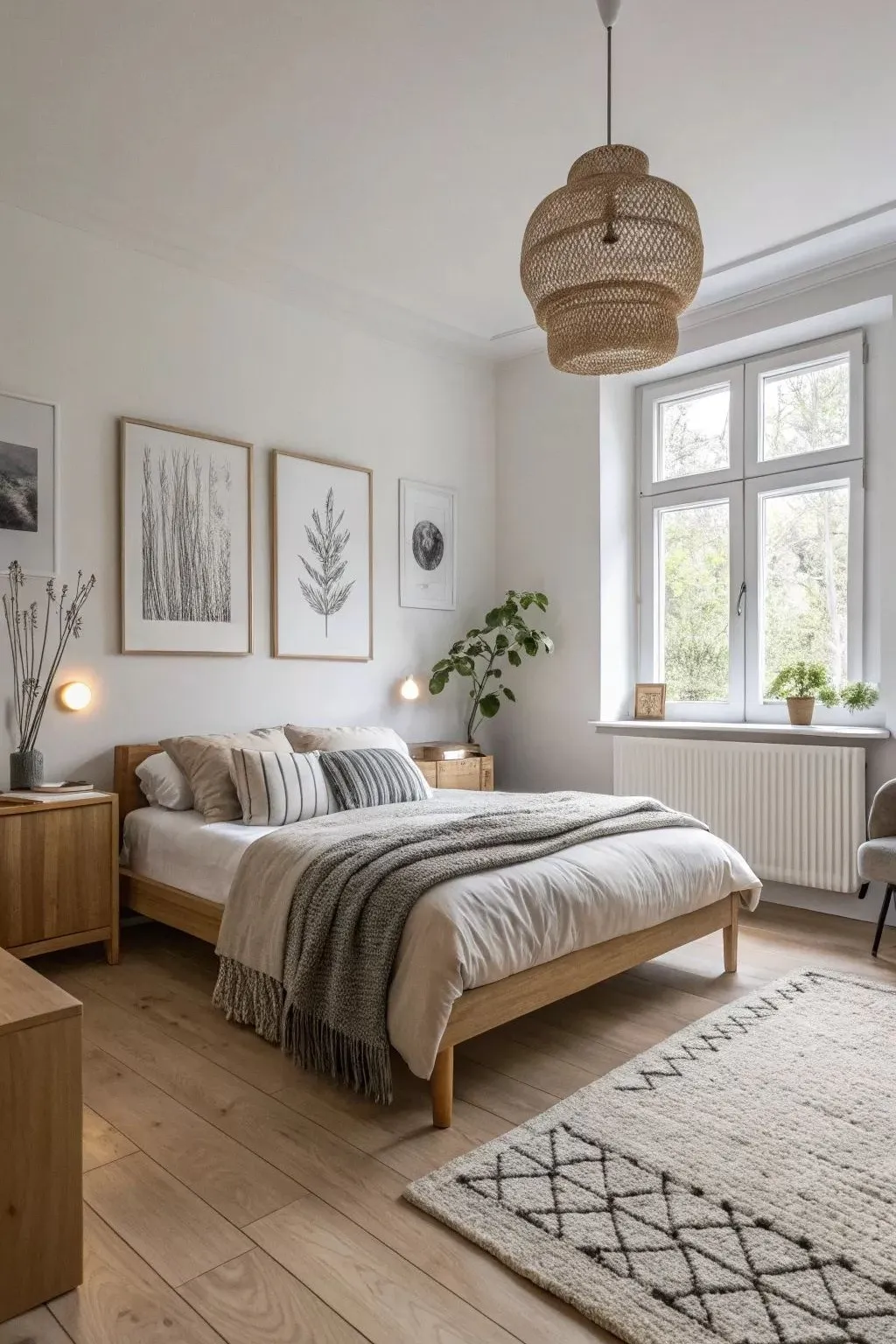
One of the most overlooked aspects of decorating a white bedroom is knowing when to stop. Negative space is just as important as décor.
Allowing certain areas to remain uncluttered gives the eye room to rest and helps the space feel peaceful rather than busy. Instead of filling every surface, focus on a few well-placed elements that work together.
Layering doesn’t mean excess—it means thoughtful placement, balance, and breathing room.
Final Thoughts
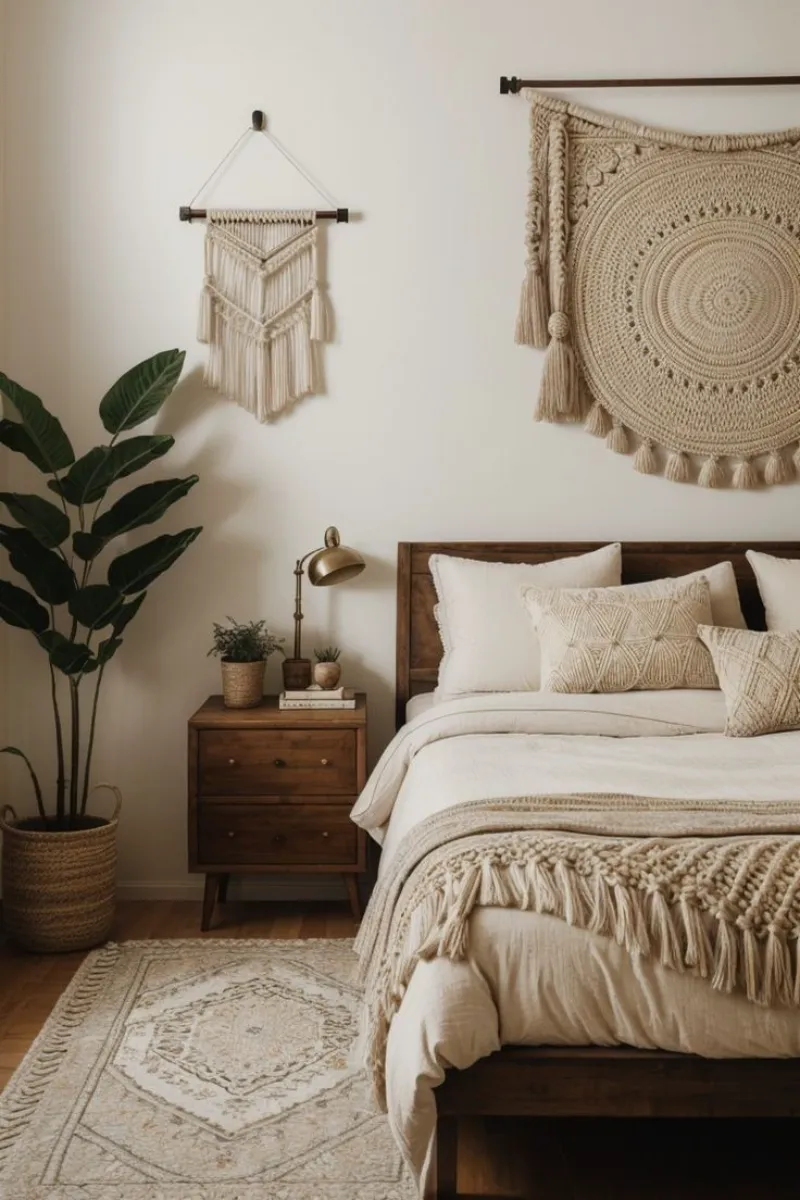
Decorating a white bedroom without making it boring is all about balance. White provides a beautiful foundation, but it needs warmth, texture, and contrast to truly shine.
By layering neutrals, mixing materials, adding subtle contrast, and focusing on texture and lighting, you can create a white bedroom that feels calm yet full of character. Whether your style is modern, minimalist, or cozy and relaxed, white can adapt effortlessly when styled with intention.
A well-designed white bedroom isn’t empty—it’s refined, soothing, and quietly interesting.