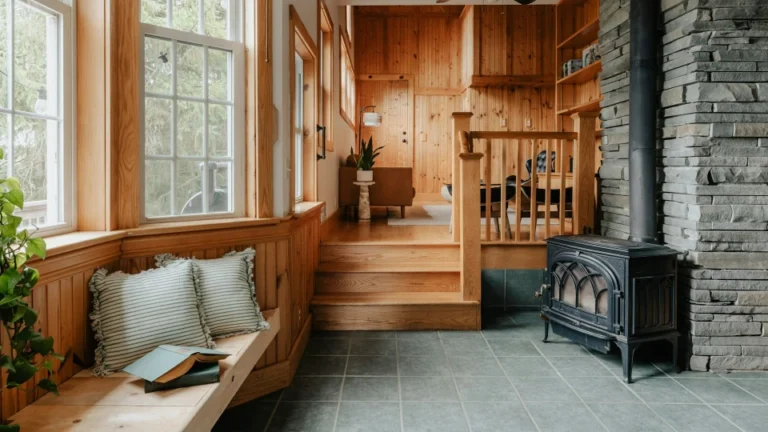
A window-seat reading nook is one of those features that sells a whole room. It promises slow mornings, good light, and a spot that’s yours. But the part that makes or breaks a window-seat reading nook is the thing most people design around last: the window itself. Get the window right and the nook is bright, comfortable, and warm enough to actually use in winter. Get it wrong and you’ve built a beautiful seat nobody wants to sit in. Here’s how to plan the nook and the window together, so the finished corner works as well as it looks.
Start With the Window, Not the Cushion
The window sets the footprint. A bay window, which pushes out from the wall in three angled panes, creates a ready-made alcove that a window seat drops right into. A bow window curves out in four or five sections for a softer, rounder bump-out. Both give you the depth a seat needs without stealing floor space from the room. If a full bay or bow isn’t in the budget, a large picture window flanked by two operable casements gets you most of the light and a flat sill deep enough to build against.
One thing to decide early: do you want the window to open? A fixed picture window gives you the biggest, cleanest view and the tightest seal, but no breeze. Pairing it with a casement or two, which crank open on a hinge, lets you crack the nook on a spring afternoon. For a reading spot, most people want at least one pane that opens.
Size the Seat So People Actually Relax
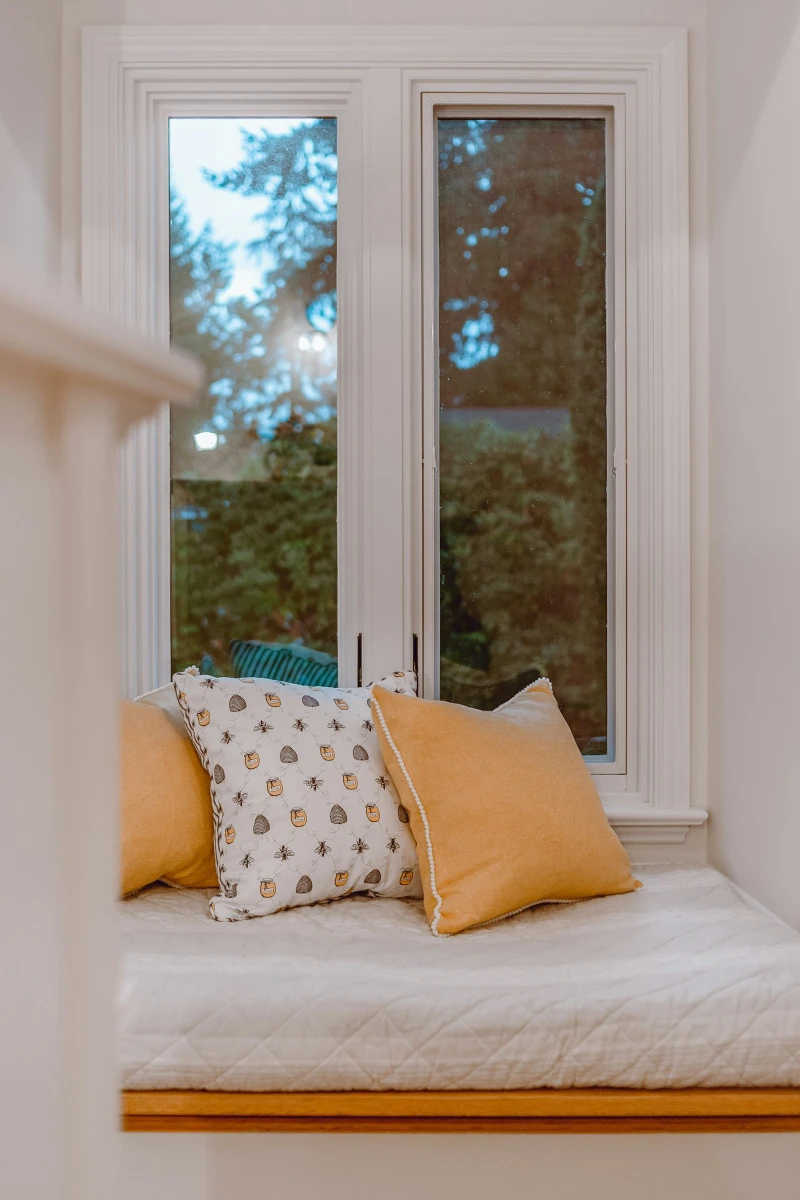
A window seat that’s too shallow turns into a shelf. Aim for a seat depth of about 20 to 24 inches so an adult can pull their knees up or stretch out sideways. Keep the seat height around 16 to 18 inches, the same as a normal chair, so it’s easy to sit down and get up. Give yourself 30 to 36 inches of headroom above the cushion, more if the nook tucks under a sloped ceiling or a low sill.
Build in storage while you’re at it. Drawers or a hinged lid under the seat are the natural home for blankets and off-season pillows, and they earn the nook its keep in a small room.
Get the Light Right
Which way the window faces changes the whole feel of the nook.
- North-facing: soft, even light all day with almost no glare. The best light for reading, and the reason artists love north windows.
- South-facing: bright and warm, especially in winter when the low sun reaches deep into the room. Plan for a shade you can lower on high-summer afternoons.
- East-facing: gentle morning light, ideal if the nook is your coffee-and-a-book spot.
- West-facing: strong, warm evening light and the most glare. You’ll want a good shade here.
Whatever the orientation, glass with a low-E coating is worth asking for. This microscopically thin layer reflects heat and filters ultraviolet light, which cuts glare and slows the fading the sun does to book spines, upholstery, and rugs over time.
Make the Nook Comfortable in Every Season
Here’s where the window quietly decides whether the nook gets used. A single-pane or old, leaky window turns a sunny seat into the coldest spot in the house by December, and a sweltering one by July. You’re sitting right against the glass, so you feel every draft and every degree it lets through.
If the existing window is old, foggy between the panes, or drafty around the frame, the nook will never feel as good as it looks. Upgrading to energy-efficient replacement windows fixes the comfort problem and the light problem at once: double-pane insulated glass, a tight modern seal, and a low-E coating keep the seat closer to room temperature year-round. Vinyl and fiberglass frames both hold up well and ask for little upkeep, so the window stays easy to live with long after the cushions are broken in.
Style It Like You Mean It
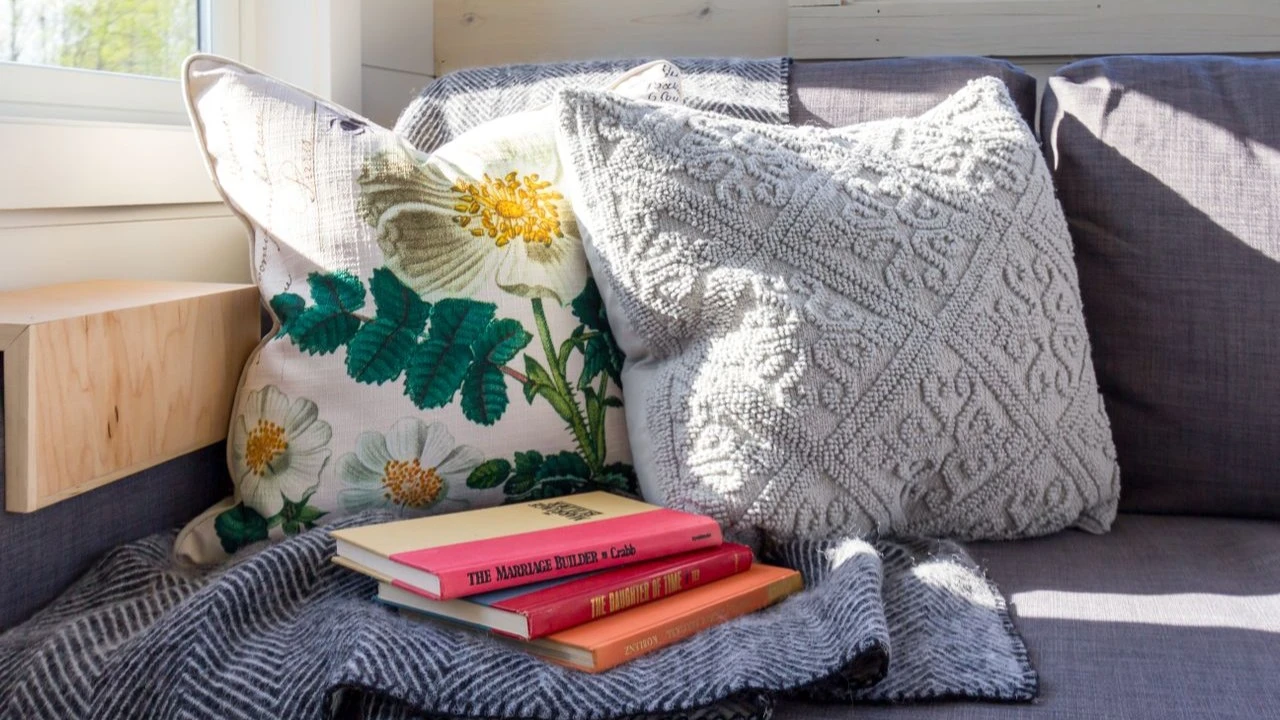
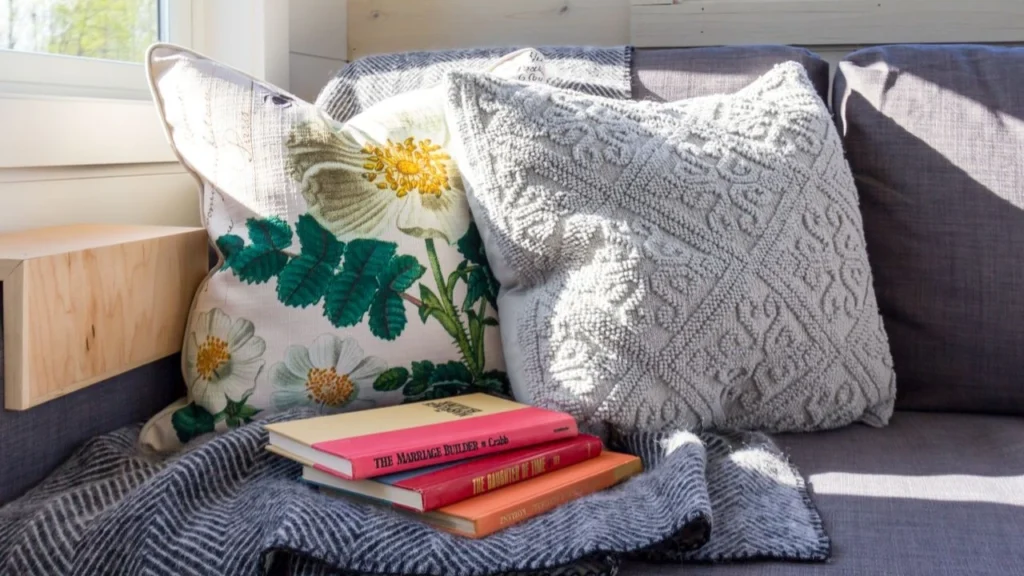
Now the fun part. A custom cushion in a durable, tight-weave fabric is the anchor; add a bolster against each side wall so you can lean either direction. Layer in a few pillows in mixed textures and one throw you actually want to reach for. Mount a slim wall sconce or a plug-in reading light so the nook works after dark without a bulky lamp eating the seat. A narrow ledge or a small stack of shelves within arm’s reach keeps a current book and a mug close. Keep the palette calm and let the view be the loudest thing in the corner.
The Bottom Line
A window-seat reading nook is only as good as the window behind it. Design the two together: choose a bay, bow, or picture window that carves out the alcove, point it at the light you want, and make sure the glass is sealed and efficient enough to keep the seat comfortable in January and July. Do that, and you don’t just get a nook that photographs well. You get the one spot in the house everyone fights over.