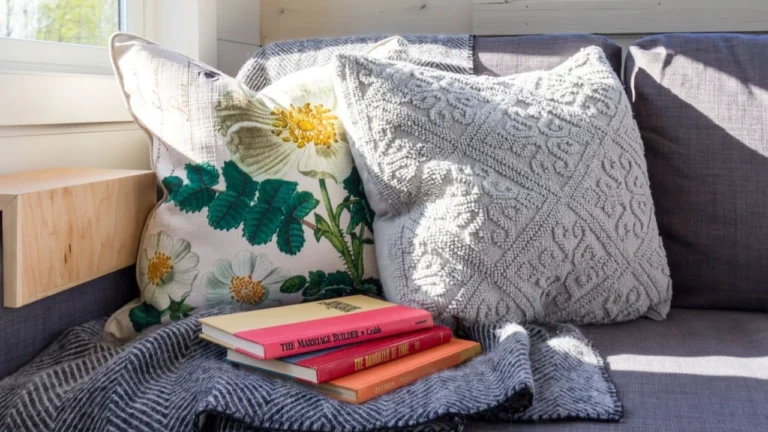
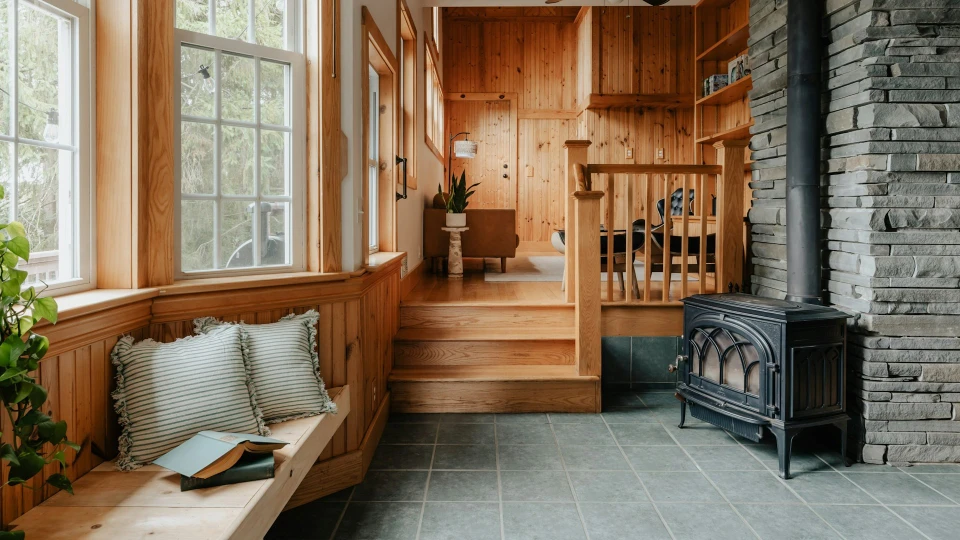
Every cozy reading nook looks amazing in October. Then January shows up, and the corner you built for slow Sunday mornings turns into the one spot in the house nobody wants to sit in. A reading nook that’s actually warm all winter takes a little more than a chunky blanket and a string of lights. It takes understanding why that corner runs cold in the first place, and then fixing it in the right order. Here’s how to make a reading nook that stays warm from the first cold snap through the last frost.
Why Reading Nooks Run Cold
The spots that make the best nooks are almost always the hardest to heat. You tuck a nook into a bay window, a dormer, a bonus room over the garage, or a quiet corner far from the middle of the house. Every one of those places has the same problem: it sits near an exterior wall or a big pane of glass, and a long way from where the warm air actually comes out.
Cold glass pulls heat right out of the room, and your body reads it as a chill even when the thermostat says a comfortable number. Add a small draft around an old window and a heating vent stuck on the far side of the house, and the nook can run several degrees colder than the room it’s attached to. The coziest corner in the house is just fighting physics, and you can win that fight.
Start by Sealing the Drafts
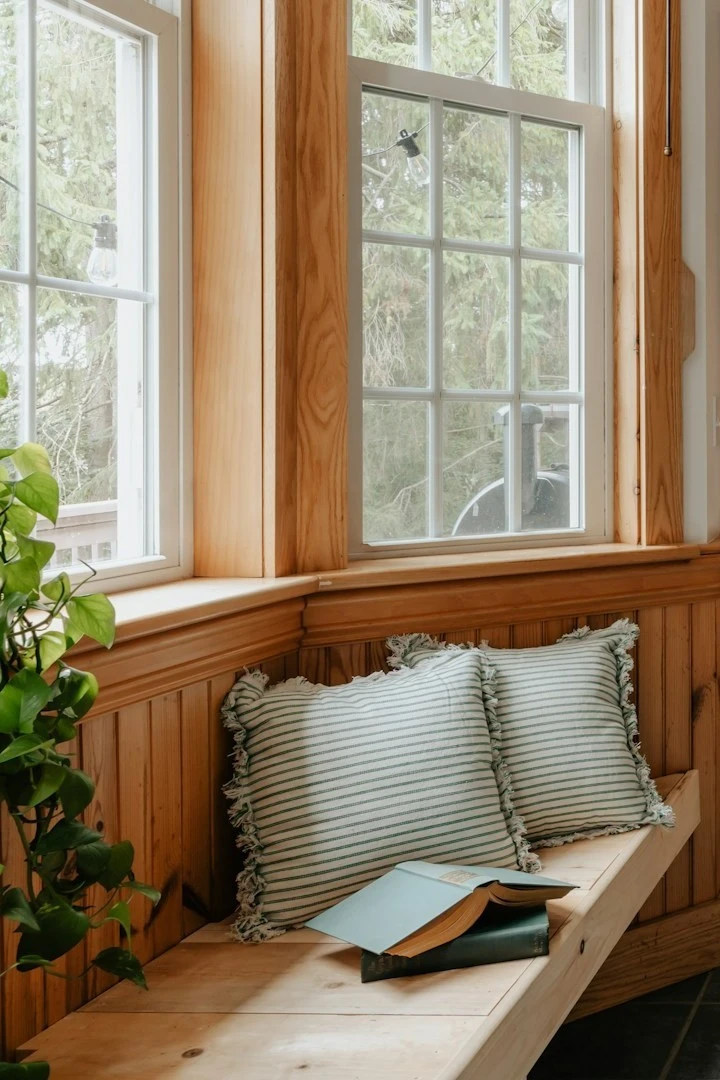
Before you touch the heating system, stop the cold air getting in. This is the cheapest fix and often the biggest one.
- Run your hand around the window frame on a windy day. If you feel air moving, add weatherstripping and a fresh bead of caulk around the trim.
- Hang cellular shades, sometimes called honeycomb shades. Their pockets trap a layer of air against the glass and cut the chill noticeably.
- A lined curtain you close at night puts one more barrier between the seat and the cold pane.
Seal first. There’s no point pumping more heat into a corner that leaks it straight back out.
Fix the Airflow You Already Have
A lot of cold nooks are really an airflow problem. Warm air is getting made; it just isn’t reaching the corner.
Check the obvious things first. Is a vent hidden behind the reading chair, a bookshelf, or the window seat itself? Move whatever’s blocking it. Are the vents in that room open all the way? Is the return vent, the big grille that pulls air back to the system, clear of furniture? In plenty of homes, one far room stays cold simply because the ductwork was never balanced to push enough air that far, and a technician can adjust the dampers to even it out.
When the Nook Needs Real Heat
Sometimes the drafts are sealed, the vents are clear, and the corner is still cold. That usually points at the heating system itself. An aging or undersized furnace or heat pump can keep the main rooms comfortable while it quietly gives up on the far corners. An oversized system has the opposite problem: it shuts off too fast to push heat all the way to the spots farthest from it, a pattern called short-cycling.
That’s the point to bring in a pro, because a properly sized heating and cooling system heats evenly instead of leaving a cold pocket in your favorite corner.
When replacing the whole system isn’t on the table, there are targeted fixes. Zoning splits the home into areas with their own thermostats, so the nook’s end of the house gets its own call for heat. A ductless mini-split, a small wall unit that needs no ductwork, can add quiet, steady warmth to a single hard-to-heat room like a bonus-room nook or a converted attic. Either one turns the coldest seat in the house into one you can use in a T-shirt.
Add the Kind of Warmth You Can Feel
Once the corner holds real heat, a few finishing touches make it feel even warmer than the number on the thermostat.
Indoor air gets dry in winter, and dry air feels colder. Keeping indoor humidity around 30 to 40 percent makes the same temperature feel warmer, and it’s easier on your skin and wood furniture too. A humidifier on the system handles the whole house at once.
- A wool rug underfoot, a heavy knit throw, and a cushion with some loft all hold warmth and read as cozy the second you sit down.
- Don’t forget the light. A warm-toned reading lamp makes the nook feel snug even on a gray afternoon, and good light means you’ll actually use it.
Warm Enough to Actually Use
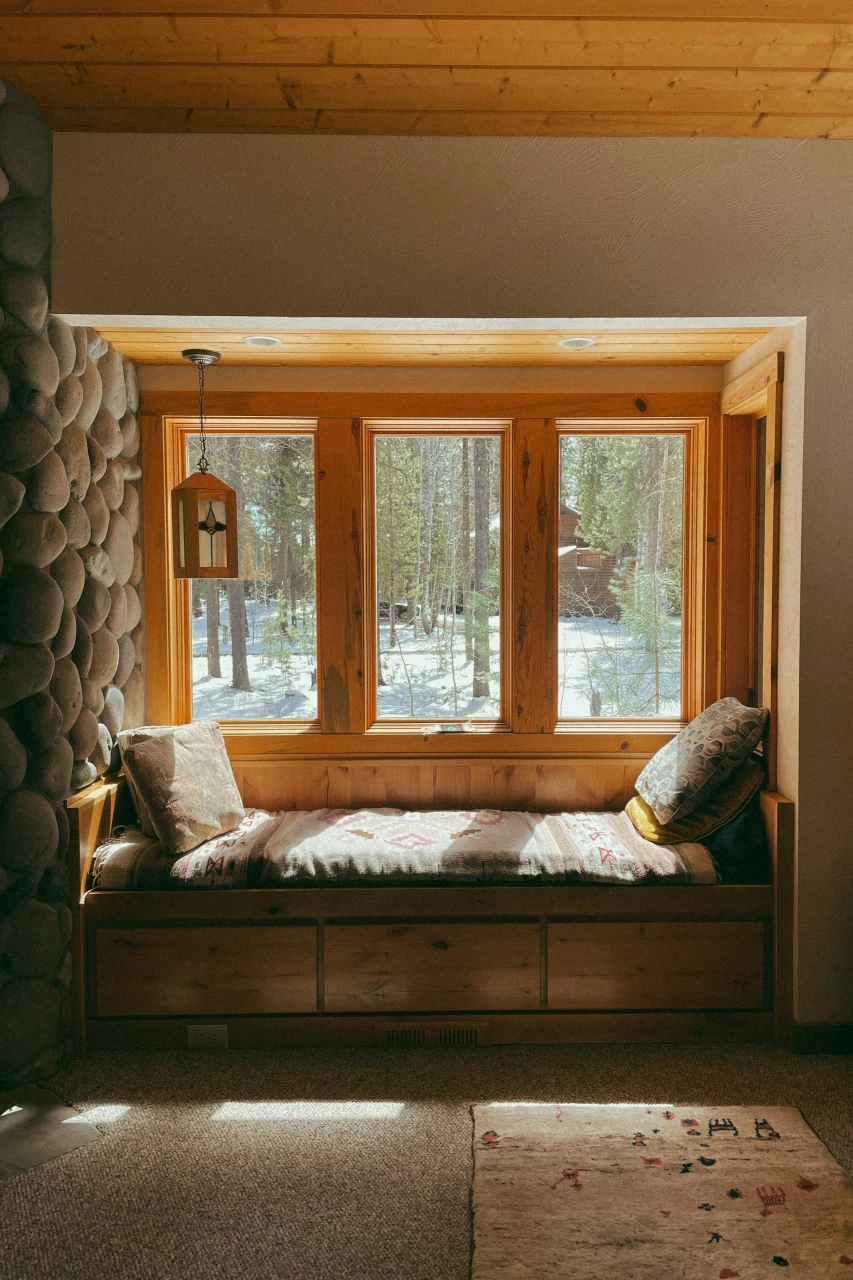
A reading nook that’s warm all winter is built in layers. Seal the drafts, clear and balance the airflow, make sure the heating system can reach the corner, and finish with humidity and soft textures you can feel. Do it in that order and you get more than a pretty corner for the photos. You get the seat everyone in the house quietly competes for on a cold Sunday.